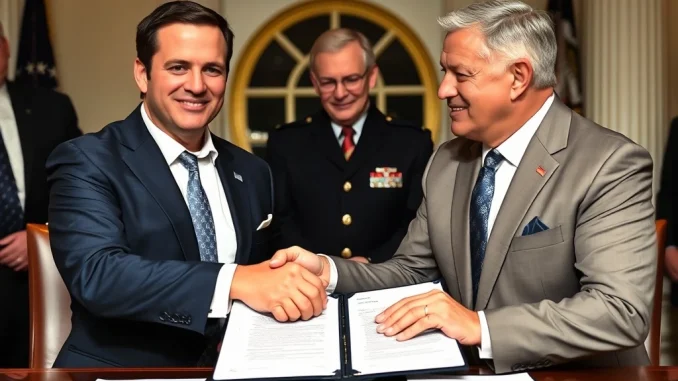
The crypto world recently witnessed a significant moment as two of its most prominent leaders, Coinbase CEO Brian Armstrong and Circle CEO Jeremy Allaire, were spotted at the White House. Their presence wasn’t just a casual visit; it was to attend a signing ceremony for what has been informally dubbed the ‘Genius Act’ – a landmark piece of crypto legislation aimed at bringing clarity to stablecoin regulation. This event signals a major step forward for the digital asset industry, indicating a growing recognition and willingness from policymakers to engage with the crypto space.
Understanding the Need for Stablecoin Regulation
Stablecoins are a critical component of the cryptocurrency ecosystem, acting as a bridge between traditional fiat currencies and the volatile world of digital assets. Unlike Bitcoin or Ethereum, their value is pegged to a stable asset like the U.S. dollar, making them essential for trading, remittances, and decentralized finance (DeFi). However, their rapid growth has also brought calls for robust oversight.
- Stability and Trust: Regulation aims to ensure that stablecoins are truly stable, backed by verifiable reserves, and transparent in their operations. This builds trust among users and financial institutions.
- Consumer Protection: Clear rules can protect consumers from potential risks, such as market manipulation, fraud, or the collapse of poorly managed stablecoin projects.
- Financial Stability: As stablecoins grow in market capitalization and utility, regulators are concerned about their potential impact on broader financial stability, especially if a major stablecoin were to fail.
- Innovation and Growth: Paradoxically, well-crafted regulation can foster innovation by providing a clear framework for businesses to operate within, attracting more institutional capital and mainstream adoption.
Coinbase CEO Brian Armstrong’s Vision for Crypto Policy
Brian Armstrong, the visionary behind Coinbase, has long been a vocal advocate for clear and sensible crypto regulation. His attendance at the White House underscores Coinbase’s commitment to working with lawmakers to shape the future of digital assets. Coinbase, as a publicly traded company and one of the largest crypto exchanges globally, has a vested interest in a regulated environment that fosters growth while protecting users.
Armstrong has often emphasized the importance of a ‘regulate to innovate’ approach, arguing that prescriptive rules stifle growth. Instead, he champions a framework that allows for flexibility, adapts to technological advancements, and recognizes the unique characteristics of blockchain technology. His presence at such a significant signing ceremony indicates that his advocacy, and that of Coinbase, is yielding tangible results in the ongoing dialogue between Silicon Valley and Washington D.C.
Circle CEO Jeremy Allaire’s Role in Stablecoin Advancement
Jeremy Allaire, the driving force behind Circle and the USDC stablecoin, arguably has an even more direct stake in stablecoin regulation. USDC is one of the largest and most widely used stablecoins, known for its transparency and full backing by reserves. Allaire has been at the forefront of advocating for a clear regulatory framework that differentiates stablecoins from other cryptocurrencies and recognizes their potential as a foundational layer for a new digital economy.
Circle has actively engaged with regulators worldwide, sharing insights and expertise to help craft effective policies. Allaire’s presence at the White House signals the culmination of years of advocacy, aiming to solidify USDC’s position as a regulated, trusted digital dollar. This proactive engagement from the Circle CEO is crucial for ensuring that future legislation supports, rather than hinders, the responsible growth of stablecoins.
The White House Crypto Engagement: A New Era?
The attendance of these leading crypto figures at the White House for a legislative signing ceremony marks a notable shift in the relationship between the U.S. government and the crypto industry. For years, the industry has sought clarity and a cohesive federal approach to digital assets, often facing a fragmented regulatory landscape. This event suggests that the White House crypto strategy is evolving towards more direct engagement and a recognition of crypto’s growing importance.
While the specifics of the ‘Genius Act’ may still be unfolding, the very act of a signing ceremony at this level sends a powerful message: the U.S. is serious about establishing a framework for digital assets. This move could pave the way for broader crypto legislation covering other areas like exchanges, DeFi, and NFTs, potentially positioning the U.S. as a leader in the global digital economy.
What Does This Crypto Legislation Mean for You?
The potential implications of robust stablecoin regulation are far-reaching, affecting everyone from individual investors to large financial institutions. Here’s a quick look at some key impacts:
Benefits:
- Increased Trust and Adoption: With clear rules, more individuals and businesses may feel confident using stablecoins for transactions, leading to wider adoption.
- Reduced Risk: Regulatory oversight can minimize the risk of stablecoin de-pegging or issuer insolvency, offering greater security for users.
- Innovation with Guardrails: Companies can innovate more freely, knowing the regulatory boundaries, potentially leading to new products and services built on stablecoins.
- Interoperability: Standardized regulation could facilitate greater interoperability between different stablecoins and traditional financial systems.
Challenges:
- Compliance Burden: New regulations often come with significant compliance costs, especially for smaller players in the crypto space.
- Potential for Over-Regulation: There’s always a risk that legislation could be too restrictive, stifling innovation or pushing crypto activities offshore.
- Jurisdictional Complexity: Ensuring consistent regulation across different states and federal agencies remains a challenge.
- Defining ‘Stablecoin’: The precise definition and scope of stablecoins under new laws will be crucial and could lead to ongoing debates.
The ‘Genius Act’ (or whatever its formal name becomes) is expected to provide much-needed clarity on issues like reserve requirements, auditing standards, and consumer redemption rights. For the average user, this could mean more secure and reliable stablecoin options, making it easier to navigate the crypto landscape.
A Compelling Summary: The Road Ahead for Crypto
The presence of Coinbase CEO Brian Armstrong and Circle CEO Jeremy Allaire at the White House for a signing ceremony marks a truly pivotal moment for the cryptocurrency industry. It signifies a maturation of the crypto space and a growing understanding among policymakers of its potential and complexities. While the ‘Genius Act’ specifically targets stablecoin regulation, its impact will likely ripple across the entire digital asset ecosystem, setting a precedent for future crypto legislation. This historic event at the White House crypto discussions is not just about rules; it’s about building a foundation for a more secure, trustworthy, and integrated digital financial future. The journey towards comprehensive and effective crypto regulation is ongoing, but this ceremony represents a monumental stride in the right direction.
Frequently Asked Questions (FAQs)
Q1: What is the ‘Genius Act’ mentioned in the article?
While the article refers to a ‘Genius Act’ as the legislation being signed, it’s important to note that this might be an informal or symbolic name. In the context of the article, it represents a significant piece of U.S. legislation focused on establishing a clear regulatory framework for stablecoins, aimed at increasing transparency, stability, and consumer protection within the crypto market.
Q2: Why are Coinbase and Circle CEOs attending this signing ceremony?
Coinbase, as a major cryptocurrency exchange, and Circle, as a leading issuer of the USDC stablecoin, have significant stakes in the future of stablecoin regulation. Their CEOs, Brian Armstrong and Jeremy Allaire respectively, have been vocal advocates for clear and sensible crypto legislation. Their attendance signifies their support for regulatory clarity and their active participation in shaping the future of digital asset policy in the U.S.
Q3: How will stablecoin regulation benefit the average crypto user?
For the average crypto user, robust stablecoin regulation is expected to bring increased trust, security, and stability. This means stablecoins will likely be more reliably backed, subject to regular audits, and offer clearer redemption rights, reducing risks like de-pegging or issuer insolvency. It could also lead to wider adoption and easier integration with traditional financial systems.
Q4: What are the potential challenges of new crypto legislation?
While beneficial, new crypto legislation can also pose challenges. These include increased compliance costs for businesses, potentially stifling innovation if regulations are too restrictive, and the complexity of harmonizing rules across different jurisdictions. There’s also an ongoing debate about how best to define and categorize various digital assets under new legal frameworks.
Q5: Does this mean the U.S. government is fully embracing cryptocurrency?
The attendance of crypto CEOs at the White House for a legislative signing ceremony indicates a significant shift towards more direct engagement and recognition of crypto’s importance by the U.S. government. It suggests a willingness to establish regulatory frameworks, which is a form of embracing the technology, but it doesn’t necessarily mean a full, uncritical endorsement of all aspects of cryptocurrency. It’s a step towards integration and oversight.