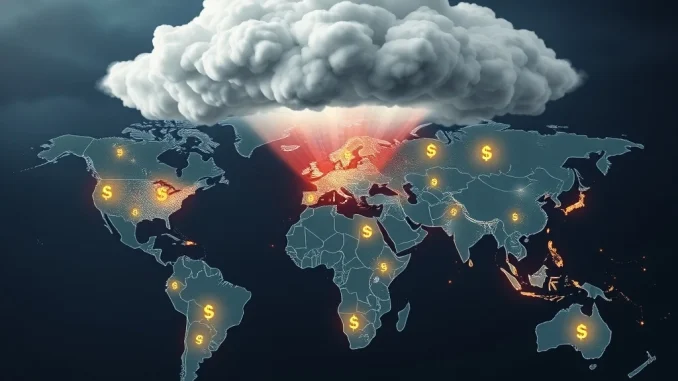
In the rapidly evolving landscape of cryptocurrencies, stablecoins have emerged as a crucial bridge between traditional finance and the decentralized world. Designed to maintain a stable value, typically pegged to fiat currencies like the U.S. Dollar, they promise efficiency, lower transaction costs, and greater financial inclusion. Yet, as nations increasingly eye these digital assets for sovereign use or to bypass conventional banking systems, a critical question arises: could unilateral stablecoin adoption by individual countries unleash unforeseen dangers, potentially leading to a wave of global contagion and widespread financial instability?
The Double-Edged Sword of Unilateral Stablecoin Adoption
The allure of stablecoins is undeniable. For many nations, they represent a pathway to modernize payment systems, reduce remittance costs, and even foster economic independence. However, emerging analyses suggest that a fragmented, uncoordinated approach to stablecoin integration could introduce profound systemic risks. Imagine a scenario where a country, seeking to leverage blockchain technology, decides to anchor its entire digital economy to a stablecoin. While seemingly innovative, this move could inadvertently expose its financial system to external shocks in unprecedented ways.
The core concern revolves around how these digital assets interact with existing global financial mechanisms. If stablecoins become a primary substitute for traditional reserves without robust, internationally coordinated frameworks, they could amplify existing vulnerabilities rather than mitigate them.
Why Are Volatility Spillovers a Major Concern?
One of the most significant hidden dangers highlighted by experts is the amplification of traditional financial risks, particularly the potential for volatility spillovers. Chen Yulu, President of Nankai University, articulated this concern at the 2025 International Financial Forum, pointing to the interplay between U.S. Treasury bond price swings and U.S. Dollar (USD) fluctuations. These factors already have a substantial impact on global markets. If stablecoins are over-relied upon, especially those pegged to the USD, this dynamic could be severely exacerbated.
Consider the following potential risks:
- Exacerbated Market Shocks: A sudden fluctuation in the USD’s value, or a significant shift in U.S. Treasury bond prices, could directly impact the stability of USD-pegged stablecoins. For a nation heavily reliant on such a stablecoin, this could translate into immediate and severe economic disruption.
- Liquidity Crises: If confidence in the underlying reserve asset (like the USD) wavers, or if the stablecoin’s reserves are insufficient or illiquid, panic-driven redemptions could overwhelm its base, leading to a rapid depreciation of the stablecoin’s value.
- Feedback Loops: Unilateral stablecoin adoption could create dangerous feedback loops. A country anchoring its digital currency to a USD-linked stablecoin might find itself increasingly exposed to the USD’s volatility, potentially propagating external shocks back into its domestic monetary framework.
The Mechanism of Global Contagion Through Digital Currency
The concept of global contagion is not new to finance, but digital currency introduces novel pathways for its spread. Unlike traditional financial crises, which often originate within specific banking sectors or national economies, a stablecoin-induced contagion could bypass conventional safeguards due to its decentralized and often opaque nature.
How could this contagion manifest?
- Cross-Border Ripple Effects: A loss of confidence in a major stablecoin in one jurisdiction could trigger panic-selling and redemptions across borders, affecting other countries whose financial systems or digital payment networks are interconnected through that same stablecoin.
- Undermining Trust: A significant stablecoin failure could erode trust not only in digital assets but also in the broader financial system, including fiat currencies, if the lines between them become blurred in the public perception.
- Lack of Coordinated Response: The fragmented nature of stablecoin ecosystems means that traditional regulatory tools and international cooperation mechanisms might be insufficient to address a rapid, global crisis. Regulators could find themselves with limited tools to mitigate spillovers, leading to uncontained panic.
This decentralized structure, while offering certain benefits, poses significant challenges for oversight and crisis management. Without clear, unified regulatory frameworks, the global financial system remains vulnerable.
Mitigating Financial Instability: A Call for Multilateral Collaboration
The potential for financial instability underscores the urgent need for a coordinated global approach to stablecoins. Chen Yulu’s call for multilateral collaboration emphasizes building a robust digital currency liquidity network based on shared principles. These principles include:
- Intrinsic Value: Ensuring that digital currencies, particularly stablecoins, have clear, transparent, and robust backing to maintain their value and inspire confidence.
- Systemic Stability: Designing frameworks that prioritize the stability of the broader financial system, preventing digital currency innovations from becoming sources of systemic risk.
- Inclusive Outreach: Leveraging digital currencies to promote financial inclusion while ensuring that new systems do not inadvertently exclude vulnerable populations or create new forms of inequality.
Such a collaborative effort would involve international bodies, central banks, and financial regulators working together to establish common standards, oversight mechanisms, and contingency plans for digital currencies. This would move beyond fragmented national policies, creating a more resilient global financial architecture.
While the benefits of stablecoins—such as reduced transaction costs and enhanced financial inclusion—are compelling, the systemic risks associated with their unilateral adoption remain largely underexplored in current policy frameworks. The debate is no longer about whether stablecoins will play a role in the future of finance, but how they can be integrated safely and responsibly to prevent a cascade of global financial disruptions.
Conclusion: Navigating the Digital Frontier Responsibly
The journey into the digital currency era is fraught with both immense opportunity and significant peril. While stablecoin adoption holds the promise of revolutionizing global finance, the warnings from experts like Chen Yulu serve as a crucial reminder: uncoordinated national initiatives could inadvertently pave the way for unprecedented volatility spillovers and widespread global contagion, threatening the very fabric of our financial systems. Preventing future financial instability hinges on a collective commitment to robust regulation, transparent frameworks, and, most importantly, multilateral collaboration. Only through a unified, thoughtful approach can the world harness the true potential of digital currency while safeguarding against its inherent risks.
Frequently Asked Questions (FAQs)
Q1: What is unilateral stablecoin adoption?
Unilateral stablecoin adoption refers to a situation where individual nations or jurisdictions independently promote and integrate stablecoins into their financial systems without significant international coordination or standardized global frameworks. This approach can lead to fragmented regulations and varying levels of oversight across borders.
Q2: How can stablecoins cause global contagion?
Stablecoins can cause global contagion if a major stablecoin experiences a crisis (e.g., loss of peg, liquidity issues, or regulatory crackdown). Given their interconnectedness to traditional assets (like the USD) and their use across borders, a crisis in one stablecoin could trigger panic-driven redemptions and sell-offs that ripple through other digital asset markets and potentially impact conventional financial systems worldwide.
Q3: What are volatility spillovers in the context of stablecoins?
Volatility spillovers occur when price fluctuations or instability in one market or asset class (e.g., U.S. Treasury bonds or the U.S. Dollar) directly impact the stability and value of stablecoins pegged to them. If a country heavily relies on such a stablecoin, these external volatilities can spill over into its domestic economy, creating financial instability.
Q4: What are the main hidden dangers of stablecoin adoption, according to experts?
According to experts like Chen Yulu, the main hidden dangers include the amplification of traditional financial risks, significant volatility spillovers from U.S. Treasury bond and USD fluctuations, challenges in decentralized oversight, and the potential for fragmentation of the international monetary architecture if multiple countries pursue parallel stablecoin systems without coordination.
Q5: What solutions are proposed to mitigate these risks?
The primary solution proposed is multilateral collaboration among nations to establish a coordinated digital currency liquidity network. This involves adhering to principles such as ensuring intrinsic value, prioritizing systemic stability, and promoting inclusive outreach. The goal is to create common standards and regulatory frameworks to manage risks collectively.