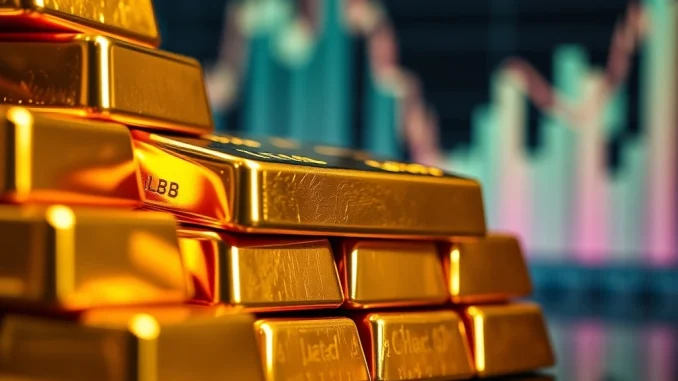
The financial world recently observed a significant event. The **spot gold price** experienced a remarkable surge. It reached $4,110 per ounce, marking its highest level since October 24. This notable increase immediately captured the attention of investors and market analysts worldwide. Indeed, gold remains a crucial asset in times of economic uncertainty. This rally underscores its enduring appeal as a safe-haven investment. Therefore, understanding the underlying drivers of this upward movement becomes essential for anyone tracking global **investment trends**.
Understanding the Recent Spot Gold Price Rally
Spot gold refers to the price of gold for immediate delivery. This price reflects current market conditions. On its recent ascent, the **spot gold price** climbed to $4,110. This value represents a significant milestone. It marks the highest point since October 24, indicating strong market momentum. Historically, gold prices often react to various global factors. These factors include economic data, geopolitical events, and currency fluctuations. The current rally suggests a confluence of several such influences. Investors closely monitor these movements. They seek to position their portfolios advantageously.
Several elements contribute to gold’s appeal. For instance, gold typically acts as a hedge against inflation. It also provides stability during economic downturns. This recent price action confirms gold’s role. It serves as a reliable store of value. Many consider it a safe haven asset. Consequently, its performance offers valuable insights. It reflects broader market sentiment. Analysts are now dissecting the specific triggers for this rally. They want to determine its sustainability. Furthermore, understanding these drivers helps predict future movements. It aids both institutional and retail investors.
Key Drivers Behind Gold Market Analysis
A comprehensive **gold market analysis** reveals several critical factors fueling the recent price surge. Firstly, persistent global economic uncertainties play a significant role. Investors often flock to gold during periods of instability. This includes concerns about inflation and potential recessions. Secondly, geopolitical tensions contribute to gold’s attractiveness. Conflicts and political unrest increase demand for safe assets. Gold offers a tangible form of security in such environments. Central bank policies also exert considerable influence. Changes in interest rates or monetary easing can impact gold’s value. When real interest rates are low or negative, gold becomes more appealing. This is because it does not yield interest itself.
Moreover, the strength of the U.S. dollar affects gold prices. A weaker dollar typically makes gold cheaper for international buyers. This boosts demand. Conversely, a stronger dollar can suppress prices. Emerging market demand also influences the market. Countries like China and India are major gold consumers. Their purchasing power and cultural affinity for gold drive substantial demand. These intertwined factors create a complex market dynamic. Each element contributes to gold’s overall **market performance**. Investors must consider all these aspects. They then make informed decisions.
- Global economic uncertainties increase gold demand.
- Geopolitical tensions enhance gold’s safe-haven appeal.
- Central bank monetary policies significantly influence prices.
- U.S. dollar strength impacts gold’s affordability for global buyers.
- Strong demand from key emerging markets provides consistent support.
Precious Metals and Broader Investment Trends
The performance of gold rarely occurs in isolation. It often reflects broader **precious metals** market trends. Silver, platinum, and palladium also react to similar economic forces. However, gold often leads these movements. Its status as the primary safe haven is undisputed. For example, silver prices frequently track gold. Yet, silver’s industrial demand introduces additional volatility. Platinum and palladium, used heavily in automotive catalysts, respond more to industrial output. Therefore, gold’s recent rally suggests a general flight to quality. Investors are seeking refuge from perceived risks in other asset classes.
This shift aligns with observable **investment trends**. Many investors are diversifying their portfolios. They move away from riskier assets. This includes certain equities or even some digital currencies. Gold provides a traditional hedge. It offers a counter-balance to market volatility. The current environment sees a cautious approach from many large funds. They are increasing their exposure to tangible assets. This strategy aims to preserve capital. It also seeks to generate stable returns. Thus, gold’s surge is not just about gold itself. It signifies a broader recalibration of investment strategies. This recalibration happens across global markets. It highlights a renewed focus on foundational value.
Gold’s Role as a Safe-Haven Asset
Gold’s reputation as a safe-haven asset is well-established. During times of crisis, its value often rises. This contrasts with many other assets. Investors buy gold to protect their wealth. They seek to safeguard against currency debasement or economic collapse. The recent **spot gold price** increase exemplifies this behavior. People lose confidence in traditional financial instruments. They turn to gold. Its intrinsic value provides comfort. Moreover, gold has no counterparty risk. This makes it unique among financial assets. It does not depend on a government or corporation for its worth. Consequently, gold remains a cornerstone for risk-averse investors. It offers a dependable anchor in turbulent financial waters.
Analyzing Gold’s Market Performance and Future Outlook
Examining gold’s **market performance** requires looking beyond daily fluctuations. The current price of $4,110 is significant. It shows strong buying pressure. Technical indicators also support this upward trend. Moving averages often signal sustained momentum. Volume analysis can confirm the strength of the rally. However, market dynamics are fluid. Future outlooks must consider various scenarios. Potential headwinds could include a stronger U.S. dollar. Rising real interest rates could also dampen enthusiasm. These factors increase the opportunity cost of holding gold. Conversely, continued inflation concerns could provide further tailwinds. Escalating geopolitical tensions would also bolster gold’s appeal. Central bank buying continues to be a supportive factor. Many central banks are diversifying reserves. They are increasing their gold holdings.
Analyst forecasts vary widely. Some predict further gains. They cite ongoing global uncertainties. Others suggest a period of consolidation. They expect the market to digest recent gains. Nevertheless, the long-term outlook for gold remains generally positive. Its role as a hedge against systemic risk endures. Investors should monitor key economic indicators. These include inflation data and central bank announcements. They should also watch geopolitical developments. These elements will shape gold’s trajectory. Informed decisions rely on continuous vigilance. They also depend on a balanced perspective. The gold market offers both opportunities and challenges.
Navigating Current Investment Trends in the Gold Market
Investors have several avenues for participating in the gold market. Each option presents different advantages and risks. Physical gold, such as bars or coins, offers direct ownership. This provides tangible security. However, storage and insurance costs apply. Gold Exchange-Traded Funds (ETFs) offer an accessible way to gain exposure. These funds track gold prices. They eliminate the need for physical storage. Mining stocks represent another option. Investing in gold mining companies can provide leverage to gold price movements. However, these stocks also carry company-specific risks. These risks include operational challenges or regulatory changes. Therefore, a diversified approach is often recommended. This mitigates risks while capturing potential upside.
Current **investment trends** show increased interest in diversification. Investors are seeking assets that perform well during economic uncertainty. Gold fits this criterion perfectly. Many financial advisors suggest allocating a portion of a portfolio to gold. This allocation acts as a defensive measure. It helps balance riskier assets. Before investing, individuals should conduct thorough research. They must understand their own risk tolerance. Consulting a financial professional is also advisable. They can help tailor strategies. The gold market offers resilience. It provides a historical track record of preserving wealth. Navigating it successfully requires careful planning and continuous education.
The recent surge in **spot gold price** to $4,110 highlights its enduring significance. It serves as a powerful indicator of prevailing market anxieties and evolving investment priorities. The interplay of global economic uncertainty, geopolitical tensions, and central bank policies continues to shape its trajectory. As investors navigate complex financial landscapes, gold consistently offers a reliable sanctuary. Its role as a hedge against inflation and a store of value remains paramount. This remarkable rally underscores gold’s foundational importance in a diversified portfolio, appealing to those seeking stability and long-term wealth preservation. Vigilance and informed decision-making are crucial for capitalizing on future gold market movements.
Frequently Asked Questions (FAQs)
Q1: What is spot gold price?
Spot gold price refers to the current market price at which gold can be bought or sold for immediate delivery. It reflects the real-time supply and demand dynamics in the global gold market.
Q2: Why did the spot gold price reach $4,110?
The spot gold price surged to $4,110 due to a combination of factors. These include ongoing global economic uncertainties, geopolitical tensions, and specific central bank monetary policies. Increased demand for safe-haven assets during volatile periods often drives such rallies.
Q3: How do global economic uncertainties affect gold prices?
Global economic uncertainties, such as inflation fears, recession concerns, or currency instability, typically increase demand for gold. Investors view gold as a reliable store of value and a hedge against economic downturns, leading to higher prices.
Q4: Is gold a good investment during high inflation?
Historically, gold has been considered a strong hedge against inflation. When the purchasing power of fiat currencies declines due to inflation, gold often retains or increases its value, protecting investors’ wealth.
Q5: How can I invest in gold?
You can invest in gold through various methods. These include purchasing physical gold (bars, coins), investing in gold Exchange-Traded Funds (ETFs) that track gold prices, or buying shares in gold mining companies. Each option carries different levels of risk and accessibility.
Q6: What is the long-term outlook for gold’s market performance?
The long-term outlook for gold generally remains positive. Its role as a safe-haven asset, hedge against inflation, and demand from central banks and emerging markets provide continuous support. However, short-term fluctuations are always possible based on economic data and geopolitical events.