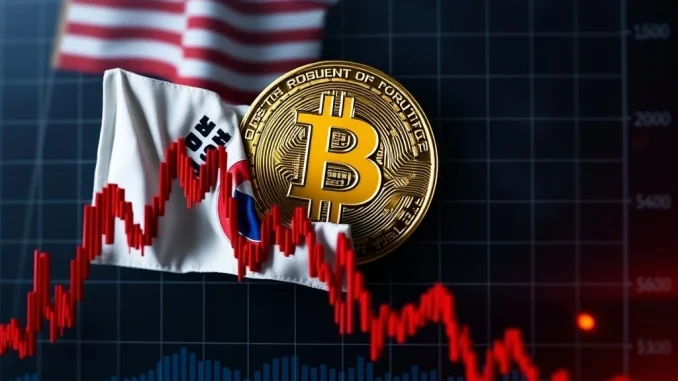
The South Korean Won has plummeted below 1,400 per dollar for the first time since May, sending shockwaves through financial and cryptocurrency markets. As the U.S. Federal Reserve’s aggressive rate hikes widen the gap with South Korea’s policies, investors are scrambling for hedges—and crypto is emerging as a surprising winner.
Why is the South Korean Won collapsing?
The Won’s dramatic fall stems from three key factors:
- Widening U.S.-Korea interest rate differentials (Fed at 5.5% vs. BOK at 3.5%)
- Surging energy import costs worsening trade deficits
- Global capital flight to dollar-denominated assets
This perfect storm has pushed the Won down 15% year-to-date, with no immediate relief in sight.
How the cryptocurrency market is reacting
South Korea’s crypto traders are responding with:
| Trend | Impact |
|---|---|
| Kimchi Premium resurgence | Stablecoins trading 2-5% above global prices |
| Bitcoin inflows | Up 27% in July on major Korean exchanges |
| Regulatory concerns | Authorities monitoring capital outflows |
The ‘Kimchi Premium’—where crypto trades higher in Korea—could intensify as investors seek dollar-pegged assets.
What this means for your crypto strategy
With currency volatility at extreme levels:
- Monitor USDT/KRW pairs for arbitrage opportunities
- Consider Bitcoin as a potential inflation hedge
- Watch for potential government intervention
- Diversify across stablecoins to mitigate won risk
The Bank of Korea faces tough choices between defending the currency and avoiding economic contraction.
Will the Won recover? Key factors to watch
The currency’s fate hinges on:
- Fed’s September rate decision
- Global energy price trends
- BOK’s policy response
- Crypto market regulations
Until these variables stabilize, expect continued turbulence in both traditional and crypto markets.
FAQs
Q: What is the Kimchi Premium?
A: The price difference where cryptocurrencies trade higher in South Korea versus global markets, often during currency crises.
Q: How does a weak Won affect Bitcoin prices?
A: Historically, Won depreciation leads to increased Korean Bitcoin buying, sometimes creating temporary local price premiums.
Q: Should I convert Won to stablecoins now?
A: While stablecoins offer dollar exposure, consider transaction costs and potential regulatory changes before moving large amounts.
Q: What’s the Bank of Korea likely to do next?
A: Most analysts expect either rate hikes or direct currency market intervention, though timing remains uncertain.