The cryptocurrency market often presents both immense opportunities and considerable risks. Recently, a striking report highlighted how major South Korean crypto exchanges generated substantial revenue from tokens under investment warnings. This revelation sparks important discussions about market dynamics and investor protection. These platforms collected nearly $67 million in trading fees from such volatile assets, primarily due to heightened speculative activity.
Unpacking the Staggering $67 Million in Fees
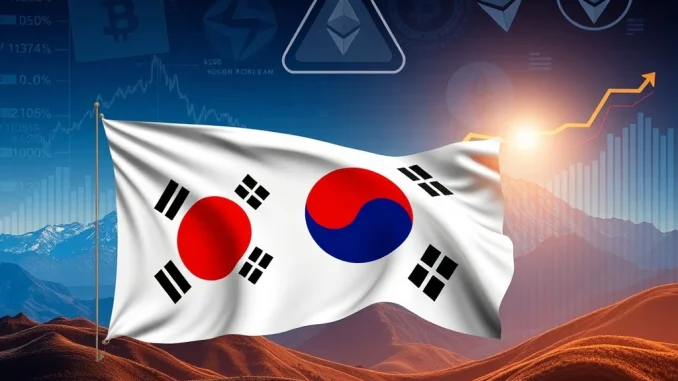
Major South Korean crypto exchanges reportedly collected approximately 90 billion won, or about $66.7 million, in trading fees over the past two years. This significant sum came directly from tokens specifically designated with investment warnings. Digital Asset first reported these findings, drawing attention to a notable trend in the volatile crypto market. Such warnings, ironically, often trigger surges in trading volume. Consequently, they lead to considerable price volatility and intense speculative trading.
Data from South Korea’s Financial Supervisory Service (FSS) provides further context. The office of People Power Party lawmaker Lee Heon-seung obtained this information on October 15. It shows that the country’s five major won-market exchanges — Upbit, Bithumb, Coinone, Korbit, and Gopax — generated a total of 89.47 billion won ($66.3 million) in fees. This revenue stream occurred between January 2023 and June 2025. Therefore, the period covers a substantial timeframe, revealing a consistent pattern of profitability from high-risk assets.
The Double-Edged Sword of Investment Warnings
Investment warnings serve a crucial purpose in financial markets. Regulators issue these advisories to inform investors about potential risks associated with specific assets. For instance, a warning might indicate high volatility, low liquidity, or concerns about a project’s viability. In traditional markets, such warnings typically deter investors. However, the cryptocurrency space often behaves differently. Here, warnings can paradoxically attract speculative traders. These traders seek to capitalize on extreme price swings.
When an exchange issues an investment warning for a token, it often signals an impending delisting or other significant negative event. This can cause a sharp drop in the token’s price. Nevertheless, many traders view these drops as buying opportunities, hoping for a quick rebound. Other traders might engage in short-selling or attempt to exit their positions rapidly. Both scenarios contribute to massive trading volumes. Consequently, exchanges benefit from increased transaction fees. This dynamic highlights the unique challenges in regulating digital asset markets.
Profiting from Heightened Crypto Volatility
The core business model of cryptocurrency exchanges relies heavily on trading volume. They earn revenue through transaction fees, which are typically a percentage of each trade. Therefore, periods of high crypto volatility are often lucrative for these platforms. When tokens receive investment warnings, their prices become highly unpredictable. This unpredictability drives frequent buying and selling activity. Traders, both retail and institutional, attempt to profit from these rapid price movements. This intensified activity directly translates into higher fee generation for exchanges.
Consider the market behavior surrounding a delisting announcement. Many investors rush to sell their holdings, while others might try to ‘catch the falling knife.’ This creates a flurry of orders, each generating a small fee for the exchange. Over hundreds of thousands of such trades, these small fees accumulate into substantial sums. This mechanism explains why exchanges can earn millions even from assets that are considered high-risk. It underscores the financial incentives tied to market turbulence. Ultimately, volatility becomes a key revenue driver.
Regulatory Scrutiny and Exchange Operations: Focus on Upbit Bithumb
The role of regulatory bodies like South Korea’s Financial Supervisory Service (FSS) is paramount in overseeing these markets. The FSS monitors financial institutions and aims to protect investors. The report obtained by lawmaker Lee Heon-seung’s office indicates growing governmental interest in the profitability of exchanges. Specifically, platforms like Upbit Bithumb, Coinone, Korbit, and Gopax are under scrutiny. These are the dominant players in the South Korean won-market. They facilitate the vast majority of crypto trades in the country.
Regulators face a delicate balancing act. They must allow innovation in the digital asset space while also safeguarding consumers from excessive risk. The fact that exchanges profit significantly from warnings raises questions about their responsibilities. Are they doing enough to mitigate risks for their users? Or do the market dynamics inevitably lead to such outcomes? This situation could prompt further regulatory action. Policymakers might consider new rules regarding how exchanges manage and profit from high-risk tokens. Transparency in operations remains a key area of focus.
The Broader Impact on South Korean Investors
The primary concern arising from these findings revolves around investor protection. Retail investors, particularly those new to cryptocurrency, might not fully grasp the implications of investment warnings. They could interpret volatility as an opportunity for quick gains, unaware of the significant downside risks. This often leads to substantial financial losses. Furthermore, the substantial trading fees can erode potential profits or exacerbate losses for these investors. High-frequency trading on volatile assets incurs cumulative costs.
The South Korean crypto market is vibrant, with a high degree of retail participation. Therefore, ensuring fair practices and adequate risk disclosure is critical. Exchanges have a responsibility to educate their users about the dangers of speculative trading. They must also clearly communicate the purpose and implications of investment warnings. Ultimately, this transparency fosters a healthier market environment. It also helps investors make more informed decisions, potentially reducing the allure of excessively risky assets.
Navigating Future Regulations and Market Ethics
The substantial earnings from risky tokens underscore a complex ethical dilemma for cryptocurrency exchanges. While profit is a natural business objective, the source of that profit — investor speculation fueled by warnings — raises questions. This scenario highlights the need for a robust regulatory framework that can adapt to the unique characteristics of digital assets. South Korea has been proactive in crypto regulation. However, these new insights might prompt further refinement of existing rules. This could include stricter guidelines on issuing warnings or even limits on trading fees for extremely volatile assets.
For the future, industry stakeholders and regulators must collaborate. They need to develop standards that balance market efficiency with investor safety. This includes exploring mechanisms to reduce excessive speculation around warned tokens. It also involves enhancing investor education initiatives. Ultimately, fostering a more responsible and sustainable crypto ecosystem benefits everyone. It protects vulnerable investors while still allowing for market growth and innovation.
Frequently Asked Questions (FAQs)
Q1: What are investment warnings in the context of South Korean crypto exchanges?
A1: Investment warnings are advisories issued by cryptocurrency exchanges or regulators. They alert investors to potential risks associated with specific tokens, such as high volatility, low liquidity, or concerns about the project’s viability. They aim to inform users about increased risk.
Q2: Which South Korean crypto exchanges were involved in earning these fees?
A2: The report specifically named South Korea’s five major won-market exchanges: Upbit, Bithumb, Coinone, Korbit, and Gopax. These platforms collectively generated the significant trading fees.
Q3: How do investment warnings lead to increased trading fees for exchanges?
A3: Investment warnings often trigger significant price volatility. This volatility encourages speculative trading, as users rapidly buy and sell tokens to capitalize on price swings or exit positions. Each trade generates a fee for the exchange, leading to higher overall revenue during these periods.
Q4: What is the timeframe over which these fees were collected?
A4: The exchanges collected approximately 89.47 billion won ($66.3 million) in fees from tokens under investment warnings between January 2023 and June 2025.
Q5: What are the potential implications of these findings for investors?
A5: These findings highlight increased risks for investors, especially retail traders, who might engage in speculative trading around warned tokens. They face potential financial losses and the cumulative impact of high trading fees. It underscores the need for greater investor education and protection.
Q6: Will these findings lead to new regulations for South Korean crypto exchanges?
A6: The report obtained by the FSS indicates growing regulatory scrutiny. These findings could potentially prompt new or stricter regulations concerning how exchanges manage high-risk tokens, issue warnings, and structure their trading fees to better protect investors.