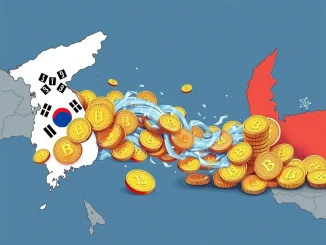
A significant development has emerged from South Korea, impacting the burgeoning world of cryptocurrency investments. Several major South Korean securities firms have abruptly halted trading of a **spot crypto ETF**. This action followed direct intervention from financial regulators. Investors and market watchers are now scrutinizing the implications of this decisive move. It underscores the nation’s cautious stance on digital asset financial products.
South Korean Crypto ETF Trading Halted: A Regulatory Mandate
On November 3, a **crypto ETF trading halt** swept across several prominent South Korean brokerages. These firms, including Toss Securities, Meritz Securities, KB Securities, and Samsung Securities, had briefly permitted trading of the Grayscale CoinDesk Crypto 5 ETF (GDLC). However, authorities quickly ordered them to cease this activity. The intervention highlights a clear regulatory position.
Sources within the financial investment industry confirmed the swift action. Consequently, the brief window for trading the GDLC fund closed. This regulatory order served as a firm reminder of the existing legal framework. South Korean regulations currently impose a strict prohibition. They ban both the issuance and brokerage of **spot crypto ETF** products within the country.
Understanding South Korean Regulations on Spot Crypto ETFs
South Korea maintains a conservative approach towards cryptocurrency financial products. Its financial regulators emphasize investor protection and market stability. Therefore, the current regulatory framework explicitly forbids the offering of **spot crypto ETF**s. This prohibition applies to both domestic issuance and the facilitation of trading for foreign-listed products.
The Financial Services Commission (FSC) and other regulatory bodies oversee these policies. Their stance aims to prevent potential risks associated with volatile digital assets. Moreover, they seek to maintain order in the financial markets. This position differs notably from some other major economies. In fact, many countries are exploring or have already approved similar investment vehicles.
The Grayscale GDLC Fund and its Brief Availability
The **Grayscale GDLC** fund, or Grayscale CoinDesk Crypto 5 ETF, became central to this regulatory episode. This particular ETF aims to track the performance of a basket of five major cryptocurrencies. It offers diversified exposure to the digital asset market. For a short period, some South Korean brokerages allowed their clients to trade this US-listed fund. This access was likely facilitated through international trading platforms or direct access to foreign markets.
However, the window for trading was short-lived. Regulators swiftly identified the activity. They then issued the order for an immediate **crypto ETF trading halt**. This rapid response demonstrates the authorities’ vigilance. It also confirms their commitment to enforcing existing **South Korean regulations** regarding crypto-related financial products.
Broader Implications of the Crypto ETF Trading Halt
This **crypto ETF trading halt** carries significant implications for the South Korean market. Firstly, it limits investment options for local investors. They cannot directly access products that track the spot price of cryptocurrencies. This contrasts with investors in regions like the United States, where Bitcoin spot ETFs recently gained approval.
Secondly, the regulatory action sends a clear signal to the global financial community. It reinforces South Korea’s cautious and stringent approach to crypto assets. This conservative stance may influence foreign firms considering market entry. Furthermore, it could impact the development of crypto-related services within the nation. The incident underscores the ongoing tension between innovation and regulation in the digital finance space.
Global Perspectives on Spot Crypto ETFs
Globally, the landscape for **spot crypto ETF**s is evolving rapidly. The United States recently approved several Bitcoin spot ETFs. This decision marked a watershed moment for institutional adoption. Canada and several European countries have also had various forms of crypto ETFs available for some time. Hong Kong, too, is actively exploring the possibility of introducing spot crypto ETFs. These developments highlight a growing trend towards legitimizing crypto as an asset class through regulated financial products.
Conversely, South Korea’s firm stance positions it among the more cautious nations. Its regulators prioritize financial stability and consumer protection. Therefore, they maintain a strict ban on these products. This difference in approach reflects varying regulatory philosophies worldwide.
The Future of Crypto ETFs in South Korea
The immediate future for **South Korean crypto ETF**s remains uncertain. Current **South Korean regulations** are clear: no issuance or brokerage of spot crypto ETFs. Any change would likely require significant legislative amendments. It would also need a shift in the regulatory bodies’ overarching philosophy.
Investor demand for diversified crypto exposure continues to grow. This demand might eventually pressure policymakers to reconsider their position. However, for now, the regulatory environment is firm. The recent halt of **Grayscale GDLC** trading serves as a powerful reminder of these stringent rules. Stakeholders will closely monitor future discussions between industry players and government officials. These dialogues will shape the long-term trajectory of crypto financial products in South Korea.
Frequently Asked Questions (FAQs)
1. Why did South Korean brokerages halt spot crypto ETF trading?
South Korean brokerages halted trading of a spot crypto ETF due to a direct order from financial regulators. Existing South Korean regulations prohibit both the issuance and brokerage of spot cryptocurrency ETFs within the country.
2. Which specific ETF was affected by the halt?
The specific fund affected by the halt was the Grayscale CoinDesk Crypto 5 ETF (GDLC). Several securities firms had briefly allowed trading of this particular ETF before the regulatory intervention.
3. What is South Korea’s current stance on spot cryptocurrency ETFs?
South Korea maintains a strict prohibition on spot cryptocurrency ETFs. Its financial regulators do not permit the issuance of such products domestically or the brokerage of foreign-listed spot crypto ETFs for local investors.
4. How does South Korea’s approach compare to other major economies?
South Korea’s approach is more conservative compared to several other major economies. For example, the United States recently approved Bitcoin spot ETFs, and countries like Canada and some in Europe have had similar products available for a while. South Korea’s stance prioritizes financial stability and investor protection, leading to a stricter ban.
5. What are the potential future developments for crypto ETFs in South Korea?
Any future approval of spot crypto ETFs in South Korea would likely require significant changes to current regulations and possibly new legislation. While investor demand exists, regulators currently maintain a cautious approach. Future developments will depend on ongoing dialogues between industry and government bodies.