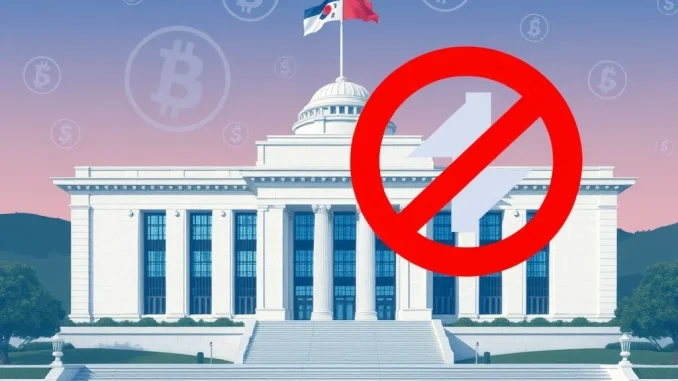
South Korea is poised to implement a crucial stablecoin ban on interest payments, signaling a significant shift in its approach to digital asset regulation. This move, spearheaded by the nation’s top financial regulator, aims to enhance investor protection and mitigate systemic risks within the burgeoning crypto market.
Unpacking South Korea’s Stablecoin Ban Initiative
The chairman of South Korea’s Financial Services Commission (FSC), Lee Eok-won, recently confirmed the agency’s intent. He stated that the FSC will prohibit interest payments on stablecoins in principle. This declaration came during a parliamentary audit by the National Assembly’s Political Affairs Committee. Lawmaker Yoo Young-ha of the People Power Party questioned the practice, asserting that such payments must be blocked. Chairman Lee’s response solidified the government’s stance on this contentious issue. Consequently, the crypto community is closely watching these developments.
The Rationale Behind Prohibiting Stablecoin Interest
Authorities worldwide have scrutinized stablecoins, especially after significant market events. The collapse of TerraUSD (UST) in 2022 highlighted the inherent risks. This event, therefore, amplified calls for robust crypto regulation South Korea. Earning interest on stablecoins often involves lending them out. This process can expose users to counterparty risks and liquidity issues. The FSC’s decision reflects a broader global trend. Regulators are increasingly prioritizing financial stability. They also seek to protect retail investors from potential losses. By banning interest, South Korea aims to prevent speculative activities. It also seeks to reduce the likelihood of another market contagion.
Navigating New FSC Stablecoin Rules
The proposed legislation is expected by the end of the year. It will formalize these new FSC stablecoin rules. This proactive measure targets the core functionality of many decentralized finance (DeFi) platforms. These platforms typically offer attractive yields on stablecoin deposits. Consequently, the ban will significantly alter how stablecoins are utilized within South Korea. Issuers and platforms must adapt their business models. They must comply with the upcoming legal framework. The move emphasizes a regulatory philosophy. It views stablecoins more as a payment instrument than an investment vehicle. Therefore, the associated risks should be minimized.
Broader Digital Asset Legislation in South Korea
This specific ban forms part of a larger legislative effort. South Korea is actively developing comprehensive digital asset legislation. The goal is to establish a clear and robust framework for the entire crypto sector. This includes regulations for exchanges, token listings, and investor safeguards. The government aims to foster innovation responsibly. Simultaneously, it seeks to curb illicit activities. The proposed bill on stablecoin interest is a critical component. It reflects a cautious but determined approach. This approach ensures market integrity. It also protects consumers in the rapidly evolving digital economy.
Implications for the South Korean Crypto Market
The prohibition of stablecoin interest will likely have several key implications:
- Reduced Yield Opportunities: Domestic investors will lose a popular avenue for earning passive income from stablecoins.
- Shift in Stablecoin Utility: Stablecoins may be primarily used for transactions and remittances rather than yield generation.
- Regulatory Clarity: The new rules will provide much-needed certainty for businesses operating in the sector.
- Increased Compliance Burden: Stablecoin issuers and service providers must adjust their offerings.
- Potential for Offshore Migration: Some users might seek platforms outside South Korea to access interest-bearing products.
These changes underscore the government’s commitment to a regulated crypto environment. They also signal a maturation of the market.
South Korea’s impending stablecoin ban on interest payments marks a decisive step. It highlights the nation’s resolve to create a safer digital asset ecosystem. As the legislation progresses, the global crypto community will closely watch its implementation and impact. This move sets a precedent for how major economies approach the complex challenges of regulating decentralized finance. It ultimately aims to balance innovation with crucial investor protection.
Frequently Asked Questions (FAQs)
Q1: What is the main purpose of South Korea’s stablecoin ban on interest payments?
The primary purpose of the South Korea stablecoin ban on interest payments is to enhance investor protection and mitigate systemic risks. Authorities aim to prevent speculative activities and reduce potential losses associated with lending stablecoins for yield.
Q2: Who announced this ban, and when is the related legislation expected?
Chairman Lee Eok-won of South Korea’s Financial Services Commission (FSC) announced the intention to ban interest payments. The related FSC stablecoin rules legislation is expected to be submitted by the end of this year.
Q3: How will this ban impact stablecoin users and issuers in South Korea?
For users, the ban means a loss of opportunities to earn passive income from stablecoin interest. Issuers and platforms must adapt their business models, focusing on stablecoins for transactions rather than yield generation. This may lead to increased compliance burdens.
Q4: Does this regulation align with global trends in crypto regulation?
Yes, this move aligns with a broader global trend towards stricter crypto regulation South Korea. Many jurisdictions are developing comprehensive digital asset legislation to address the risks posed by stablecoins and decentralized finance, prioritizing financial stability and consumer protection.
Q5: What are stablecoins, and why are they subject to such regulations?
Stablecoins are cryptocurrencies designed to maintain a stable value, typically pegged to a fiat currency like the US dollar. They are subject to regulation because their widespread use, especially in yield-generating activities, can introduce financial stability risks, liquidity issues, and counterparty risks, as highlighted by past market events.