The world of cryptocurrency is always buzzing with innovation and strategic moves. One such recent development that has captured significant attention is the Sonic Labs token burn, a bold move by the team behind the newly rebranded Fantom network. This isn’t just a technical maneuver; it’s a statement about commitment, value, and the future direction of a prominent blockchain ecosystem. For anyone interested in the long-term viability and strategic decisions within the crypto space, this event offers valuable insights.
Sonic Labs Token Burn: What Does This Bold Move Mean for the Ecosystem?
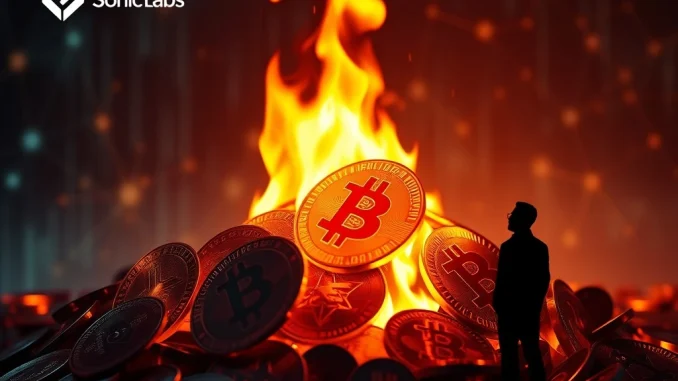
In a significant announcement that reverberated across the crypto community, Andre Cronje, the influential co-founder of Sonic Labs (formerly known as Fantom), revealed on X (formerly Twitter) that the company had executed a complete burn of its entire airdrop allocation. This substantial action involved 1,866,256.59 S tokens, which at the time of the burn, were valued at approximately $754,903. This isn’t merely a symbolic gesture; it’s a concrete step that impacts the token’s circulating supply and signals a clear intent regarding the project’s future.
A token burn permanently removes tokens from circulation, effectively reducing the total supply. In the context of the Sonic Labs token burn, this means fewer S tokens will ever exist. Such a move is often interpreted positively by the market, as it can lead to increased scarcity, potentially driving up the value of the remaining tokens. It also demonstrates a commitment from the development team to the long-term health and value proposition of their ecosystem, rather than simply distributing tokens that could be sold off.
The S Token Airdrop: Why Was It Burned Instead of Distributed?
The decision to burn an entire airdrop allocation, particularly one of this size, is highly unusual and warrants closer examination. Typically, airdrops are used to distribute tokens to a wide audience, fostering community engagement, decentralization, and broader adoption. However, Sonic Labs chose a different path for its S token airdrop.
Burning the airdrop allocation, rather than distributing it to team members, investors, or the broader community, sends a powerful message. Here are a few reasons why a project might opt for such a strategy:
- Preventing Sell-Off Pressure: Large allocations to founders or early investors can sometimes lead to significant sell-offs, creating downward price pressure on the token. By burning these tokens, Sonic Labs effectively removes this potential risk.
- Enhancing Scarcity and Value: A reduced supply, as mentioned, can make the existing tokens more valuable due to increased scarcity. This directly benefits current and future holders of the S token.
- Demonstrating Commitment: This act signals that the team is not looking for quick profits from their token allocation but is deeply invested in the long-term success and sustainability of the Sonic Labs ecosystem.
- Building Trust: In a space often plagued by ‘rug pulls’ and quick exits, a substantial token burn can significantly boost community trust and confidence in the project’s integrity.
This strategic decision regarding the S token airdrop sets a precedent for how Sonic Labs intends to manage its tokenomics and interact with its community.
Andre Cronje’s Strategic Vision: How Does This Impact the Fantom Network?
Andre Cronje is a name synonymous with innovation and, at times, controversy in the decentralized finance (DeFi) space. As the co-founder of Sonic Labs and a key figure behind Fantom, his actions carry significant weight. This token burn is not an isolated event but rather aligns with a broader strategic vision for the Fantom network and its evolution into Sonic Labs.
Fantom has been a prominent layer-1 blockchain, known for its high-performance, scalable, and secure smart contract platform. The rebranding to Sonic Labs signifies a new chapter, focusing on enhanced performance, scalability, and potentially new applications or protocols built on its robust infrastructure. Cronje’s decision to burn the airdrop allocation reflects a commitment to building a sustainable and valuable ecosystem, prioritizing long-term growth over short-term gains.
Cronje’s past initiatives and reputation often revolve around technical excellence and a pragmatic approach to blockchain development. This burn can be seen as an extension of that philosophy – a direct action taken to strengthen the underlying economic model of the network. It suggests a focus on creating intrinsic value for the S token, rather than relying on speculative trading or extensive marketing campaigns alone.
Understanding Cryptocurrency Token Burn: What Are the Broader Implications?
The concept of a cryptocurrency token burn is a fascinating aspect of tokenomics that has become increasingly common across various blockchain projects. At its core, it’s the process of permanently removing a certain number of tokens from circulation, typically by sending them to an unspendable address (a ‘burn address’).
The implications of a token burn extend beyond just reducing supply. Here’s a breakdown of its broader effects:
| Aspect | Description | Potential Impact |
|---|---|---|
| Scarcity & Value | Reduces total circulating supply of tokens. | Can lead to an increase in the token’s price if demand remains constant or grows. |
| Deflationary Mechanism | Counters inflationary pressures by continually reducing supply. | Helps maintain or increase purchasing power of the token over time. |
| Trust & Confidence | Signals commitment from developers and reduces fears of token dumping. | Builds stronger community support and investor confidence. |
| Ecosystem Health | Often tied to protocol fees, buybacks, or specific strategic decisions. | Contributes to the long-term sustainability and economic model of the project. |
| Governance | Sometimes, token burns are decided by community governance. | Reflects decentralized decision-making and community involvement. |
While token burns are generally viewed positively, their effectiveness ultimately depends on the project’s fundamentals, adoption, and overall market conditions. A burn is a tool to manage supply, but it must be complemented by strong development, a robust ecosystem, and real-world utility for the token.
Conclusion: A Bold Step Towards a Stronger Sonic Labs
The Sonic Labs token burn of its entire S token airdrop allocation, orchestrated by Andre Cronje, represents a significant and strategic maneuver within the crypto landscape. This bold decision underscores a deep commitment to the long-term health and value proposition of the Fantom network as it transitions into Sonic Labs. By permanently removing a substantial amount of tokens from circulation, the project aims to foster scarcity, enhance trust, and lay a stronger foundation for future growth.
This event serves as a powerful reminder that strategic tokenomics play a crucial role in the success and sustainability of blockchain projects. As Sonic Labs continues to evolve, this decisive action positions the S token and its underlying ecosystem for what many hope will be a period of stability and appreciation. It’s a move that speaks volumes about the team’s dedication to building a robust and valuable platform for the decentralized future.
Frequently Asked Questions (FAQs)
Q1: What is Sonic Labs, and how is it related to Fantom?
Sonic Labs is the new entity and brand for what was previously the Fantom Foundation. It represents an evolution and rebranding of the Fantom network, aiming to introduce enhanced technology and focus on new developments while building upon Fantom’s existing infrastructure.
Q2: What is the S token, and what is its purpose?
The S token is the native cryptocurrency associated with Sonic Labs. While specific details on its full utility post-rebrand are still emerging, it is expected to play a crucial role in the Sonic Labs ecosystem, potentially for governance, transaction fees, staking, or other protocol-specific functions.
Q3: Why did Sonic Labs burn its S token airdrop allocation?
Sonic Labs burned its S token airdrop allocation to permanently remove these tokens from circulation. This strategic move aims to reduce the total supply of S tokens, increase their scarcity, prevent potential sell-off pressure from airdrop recipients, and demonstrate the team’s long-term commitment to the ecosystem’s health and value.
Q4: Who is Andre Cronje, and what is his role at Sonic Labs?
Andre Cronje is a highly influential developer and co-founder of Sonic Labs, and a prominent figure in the decentralized finance (DeFi) space. He was also instrumental in the development of the Fantom network. His role involves guiding the technical and strategic direction of Sonic Labs and its ecosystem.
Q5: How does a token burn generally benefit a cryptocurrency project?
A token burn can benefit a cryptocurrency project by reducing the total supply of tokens, which can increase scarcity and potentially lead to a higher value per token. It also signals strong commitment from the development team, builds trust with the community, and can act as a deflationary mechanism, helping to maintain or increase the token’s purchasing power over time.
Q6: Is the Fantom network still active after the Sonic Labs rebrand?
Yes, the underlying Fantom network remains active. The rebranding to Sonic Labs signifies an evolution and new strategic direction for the project, but it builds upon and continues to operate the robust infrastructure established by Fantom. Existing Fantom users and assets are expected to transition smoothly or be integrated into the new Sonic Labs ecosystem.