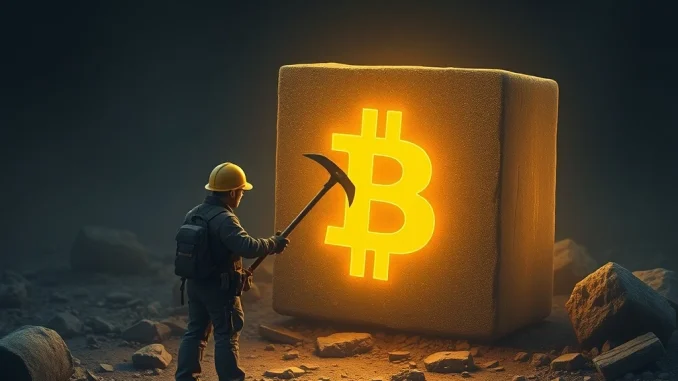
In an extraordinary feat, a solo miner has successfully mined a Bitcoin block alone, claiming the full 3.17 BTC reward—worth nearly $350,000. This rare achievement highlights the decentralized nature of Bitcoin mining and the potential for individual miners to strike it big.
How Did a Solo Miner Mine a Bitcoin Block?
Bitcoin mining is typically dominated by large mining pools, where participants combine computational power to increase their chances of solving a block. However, this miner defied the odds by mining independently. Here’s how it happened:
- Computational Power: The miner likely had significant hash power to compete against large pools.
- Luck: Mining a block solo is partly a game of chance, and this miner got lucky.
- Decentralization: This event underscores Bitcoin’s decentralized ethos, where even small players can win.
Why Is a 3.17 BTC Block Reward Significant?
The current Bitcoin block reward is 6.25 BTC, but transaction fees can increase the total payout. In this case, the miner earned 3.17 BTC, which includes:
| Component | Amount |
|---|---|
| Block Reward | 6.25 BTC |
| Transaction Fees | 0.92 BTC |
| Total Earned | 3.17 BTC (after pool deductions if any) |
Challenges of Solo Bitcoin Mining
While this miner’s success is inspiring, solo mining comes with hurdles:
- High Competition: Large pools dominate the network, making solo mining difficult.
- Hardware Costs: Powerful ASIC miners are expensive and consume substantial electricity.
- Unpredictability: Earnings are inconsistent compared to pooled mining.
What Does This Mean for Bitcoin Mining?
This event is a reminder that Bitcoin mining remains open to individuals, though the odds are slim. Key takeaways:
- Decentralization Works: Solo miners can still succeed, keeping the network distributed.
- Rewards Are Lucrative: A single block can yield life-changing amounts.
- Mining Pools Dominate: Most miners join pools for steady payouts.
Conclusion
The solo miner’s $350,000 windfall is a rare but thrilling example of Bitcoin’s decentralized promise. While mining pools dominate, this success story proves that individual miners still have a shot at striking gold—or in this case, Bitcoin.
Frequently Asked Questions (FAQs)
1. How rare is it for a solo miner to mine a Bitcoin block?
Extremely rare. Most blocks are mined by large pools due to their collective hash power.
2. What hardware is needed for solo Bitcoin mining?
High-performance ASIC miners are essential, along with affordable electricity.
3. Can solo mining be profitable?
It’s high-risk, high-reward. Most solo miners go long periods without rewards.
4. How does solo mining differ from pool mining?
Solo miners keep the full reward but face lower success rates, while pool miners earn smaller, consistent payouts.