A significant event recently captured the attention of the cryptocurrency community. Specifically, a mysterious **Solana whale** executed a massive transfer, sparking considerable discussion across the digital asset landscape. This large movement involved a substantial sum of Solana (SOL) tokens, valued in the tens of millions of dollars. Such an action by a major holder often precedes market shifts, making it a critical point of interest for traders and investors alike. Understanding the implications of this transfer is vital for anyone monitoring the Solana ecosystem.
Understanding the Solana Whale Movement
Approximately three hours ago, an anonymous address, identified as CMJiHu, initiated a considerable **SOL deposit**. This single address transferred a staggering 130,000 SOL tokens. At current valuations, this amounts to an impressive $26.45 million. Data from Lookonchain, a prominent blockchain analytics firm, confirmed this transaction via an X post. This substantial transfer was not directed to a single platform; instead, the funds were distributed across several major **crypto exchanges**.
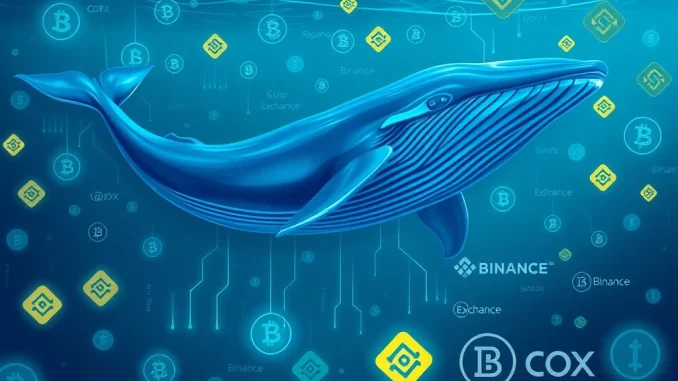
The recipient exchanges included Binance, Bybit, OKX, and Gate.io. Each of these platforms represents a significant hub for cryptocurrency trading. Therefore, distributing such a large sum across multiple venues suggests a strategic move by the whale. Furthermore, this multi-platform approach could aim to minimize slippage or prepare for various trading strategies. Typically, large deposits into exchanges can signal an intent to sell. However, other possibilities exist, including preparing for liquidity provision or engaging in decentralized finance (DeFi) activities.
Analyzing the SOL Deposit Implications
A **large SOL transfer** of this magnitude frequently raises questions about its potential effects on market dynamics. When a significant amount of an asset moves onto exchanges, it generally increases the available supply for trading. This increased supply, if met with insufficient demand, could exert downward pressure on the asset’s price. Conversely, if the deposit is part of an over-the-counter (OTC) deal or for staking purposes, its impact on open market prices might be minimal.
Historically, whale movements have often preceded periods of heightened volatility. Traders closely watch these transfers for clues about future price action. For instance, a whale might be preparing to take profits, especially after a period of price appreciation. Alternatively, they might be consolidating assets or rebalancing their portfolio. The anonymity of the whale adds another layer of speculation, making it challenging to ascertain their precise intentions. Nevertheless, the sheer volume of the transaction demands attention from market participants.
The Role of Crypto Exchanges in Large Transfers
Major **crypto exchanges** serve as critical infrastructure for the digital asset economy. They facilitate the buying and selling of cryptocurrencies, providing liquidity and price discovery. When a **Solana whale** deposits such a large sum, these exchanges act as the gateway for potential market interactions. Their role involves processing these transactions efficiently and securely. The choice of multiple exchanges—Binance, Bybit, OKX, and Gate.io—highlights their global reach and the whale’s likely desire for diverse liquidity pools.
Exchanges also provide tools and services that large holders might leverage. These include advanced trading features, institutional-grade services, and access to a vast user base. The deposit could be a precursor to various activities: spot selling, futures trading, or even participation in earn programs offered by these platforms. Consequently, the presence of such a large amount of SOL on these platforms could influence order books and market depth. This makes monitoring the order books on these specific exchanges crucial for short-term traders.
Assessing the Broader Market Impact of Solana Whale Activity
The **market impact** of a significant **SOL deposit** extends beyond just Solana’s immediate price. It can influence overall market sentiment. Solana has emerged as a prominent blockchain, known for its high throughput and low transaction costs. Therefore, any major activity involving its native token, SOL, can ripple through the broader altcoin market. If the deposit leads to a price correction for SOL, it might trigger similar movements in other correlated assets.
Conversely, if the market absorbs this supply without significant price depreciation, it could signal underlying strength in Solana’s ecosystem. Investors often interpret the ability of the market to absorb large sells as a sign of robust demand. Furthermore, this event underscores the continued importance of on-chain analytics. These tools provide transparency into whale movements, offering valuable insights that are unavailable in traditional financial markets. Observing subsequent transactions from these whale-linked addresses will provide further clarity on their intentions.
In conclusion, the recent **Solana whale** deposit of 130,000 SOL into various **crypto exchanges** represents a notable development. While the exact intentions of the anonymous whale remain unknown, such a **large SOL transfer** invariably creates ripples across the market. Traders and investors will continue to monitor the situation closely, looking for further clues about the **market impact** and the future trajectory of Solana’s price. This event serves as a reminder of the dynamic and often unpredictable nature of the cryptocurrency markets, where significant individual actions can lead to widespread effects.
Frequently Asked Questions (FAQs)
Q1: What is a ‘crypto whale’?
A crypto whale is an individual or entity that holds a very large amount of a particular cryptocurrency. Their transactions, especially large deposits or withdrawals from exchanges, can significantly influence market prices and sentiment due to the sheer volume of assets they control.
Q2: Why do whales deposit large amounts of cryptocurrency into exchanges?
Whales deposit large amounts for various reasons. Common motives include preparing to sell their holdings for profit, rebalancing their portfolio, providing liquidity for trading pairs, participating in staking or lending programs offered by exchanges, or preparing for over-the-counter (OTC) deals that don’t directly impact open market prices.
Q3: What is the significance of this particular SOL deposit?
This SOL deposit is significant because of its size ($26.45 million) and the fact that it was distributed across multiple major exchanges. Such a large movement of funds into exchanges often suggests an increased potential for selling pressure, which could lead to price volatility for Solana (SOL).
Q4: How might this SOL deposit affect Solana’s price?
The deposit of a large amount of SOL into exchanges increases the available supply for trading. If this supply is met with insufficient buying demand, it could potentially lead to a decrease in Solana’s price. However, the actual impact depends on the whale’s intentions and overall market conditions.
Q5: Is a large SOL transfer a common occurrence in the crypto market?
Large transfers by whales are not uncommon in the cryptocurrency market. They occur periodically across various assets. While each specific transfer is unique in its details, the general phenomenon of whales moving large sums to or from exchanges is a regular part of observing on-chain activity.