The crypto world is buzzing with urgent Solana News as Pump.fun, a platform synonymous with the rapid creation of meme tokens, faces an unprecedented crisis. Its native token, PUMP, has suffered a catastrophic 45% plunge from its peak, sending shockwaves through the market. This dramatic sell-off follows two major catalysts: a significant delay in its anticipated airdrop and a colossal $4–5.5 billion class-action lawsuit filed under the RICO Act. For anyone invested in the volatile world of cryptocurrencies, understanding the intricate details of this unfolding situation is crucial.
The PUMP Token Plunge: What Triggered the Sell-Off?
The recent PUMP token collapse has left many investors reeling. The token, which once peaked at $0.0068, now trades below its initial offering price of $0.004, effectively erasing all gains from a highly successful presale that sold 500 million tokens in just 12 minutes. So, what exactly triggered this dramatic decline?
Airdrop Delay: The immediate trigger for market panic was the confirmed delay of the PUMP token airdrop by co-founder Alon Cohen in July 2025. This announcement alone saw PUMP’s price drop 18.7% within hours, contributing to a 42.4% weekly decline by July 22.
Eroding Investor Confidence: The airdrop delay, coupled with growing legal concerns, significantly eroded investor confidence. The token’s inability to hold its initial offering price signaled deeper structural issues.
Bonding-Curve Model Scrutiny: Critics have long pointed to Pump.fun’s bonding-curve model, which heavily rewards early buyers and algorithmic participants. This model is now under intense scrutiny, with allegations that it fosters addictive, gambling-like behavior, offering limited utility beyond speculative gains.
Unpacking the Pump.fun Lawsuit: A $5.5 Billion RICO Claim
At the heart of Pump.fun’s current predicament is a staggering $4–5.5 billion class-action Pump.fun lawsuit. Filed by Burwick Law under the Racketeer Influenced and Corrupt Organizations (RICO) Act, the lawsuit paints a grim picture of the platform’s operations.
The core allegations against Pump.fun include:
Unregistered Securities Exchange: The lawsuit claims Pump.fun operates as an unregistered securities exchange, bypassing crucial regulatory oversight designed to protect investors.
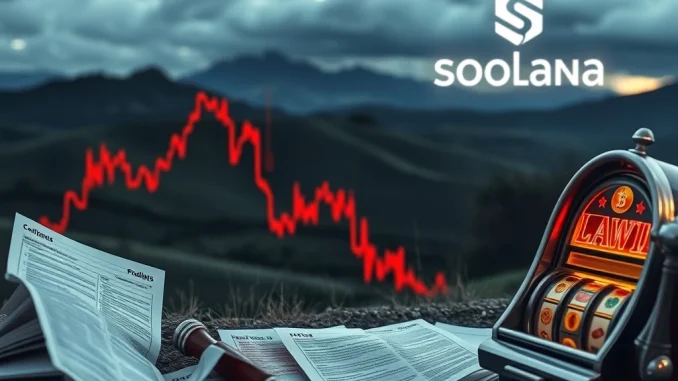
Exploitative Mechanics: Plaintiffs argue that the platform’s mechanics are akin to a “slot machine,” designed to exploit users, particularly inexperienced retail investors, through high-risk, low-reward structures.
Opaque Operations: The lawsuit details how Pump.fun’s operations allegedly exploit users through opaque mechanisms, including unregistered securities and bot-driven manipulation, which disproportionately harms less sophisticated traders.
This legal action is not just confined to Pump.fun. It significantly expands to include major players in the Solana ecosystem: Solana Labs, the Solana Foundation, Jito Labs, and the Jito Foundation. This expansion suggests a broader conspiracy, alleging collusion in manipulative practices.
Is Solana Implicated? Understanding the RICO Lawsuit’s Broader Scope
The inclusion of Solana Labs and the Solana Foundation in the RICO lawsuit crypto case raises serious questions about the broader ecosystem’s responsibility. The plaintiffs allege that Solana and Jito enabled Pump.fun’s questionable practices by monetizing user activity through block fees and Maximal Extractable Value (MEV) tools. This directly challenges their claims of neutrality within the decentralized finance (DeFi) space.
Accusations against Solana and Jito include:
Algorithmic Frontrunning: The lawsuit points to the use of algorithmic frontrunning, where bots exploit transaction order to gain an unfair advantage, often at the expense of retail traders.
MEV Tools: The monetization of MEV tools, which extract value from block production, is cited as a mechanism through which Solana and Jito allegedly profited from Pump.fun’s exploitative model.
Monetization of User Activity: The core argument is that by profiting from the very mechanisms that allegedly harm users, Solana and Jito are complicit in the alleged scheme.
This development adds a new layer of complexity to the legal landscape for blockchain platforms, highlighting the increasing scrutiny on infrastructure providers that host speculative and potentially harmful applications.
Beyond the Crash: What Does This Mean for Meme Coin Ecosystems?
The meme coin crash stemming from the Pump.fun crisis reflects broader systemic risks within ecosystems that prioritize virality over sustainability. The incident underscores several critical challenges facing the meme coin market:
Addictive Behavior: The “slot machine” analogy used in the lawsuit resonates with many critics who argue that platforms like Pump.fun foster addictive, gambling-like behavior, with limited genuine utility for the tokens created.
Regulatory Scrutiny: This isn’t Pump.fun’s first brush with controversy. A January 2025 lawsuit already alleged unregistered securities practices. Furthermore, UK users were banned in December 2024 due to concerns over harmful content, and the platform faced temporary suspensions in November 2024 for live-streaming explicit promotions. These incidents highlight severe governance challenges and moderation failures that attract regulatory attention.
Structural Flaws: The July 2025 $600 million token sale, which valued the project at $6.13 billion, exposed significant structural flaws, including a 40% team/investor allocation with no vesting period. This contributed to an 18% post-launch price drop, indicating a design that may prioritize early insiders over long-term project health.
Market Reactions and Investor Behavior
Market reactions to the Pump.fun crisis have been highly volatile. High-profile investors, such as Jeffrey Huang (Machi Big Brother), have reportedly held long positions despite incurring losses exceeding $5.8 million. Meanwhile, other wallets linked to private sale investors offloaded billions in tokens, selling 1.2 billion PUMP tokens and incurring $1 million in losses as scrutiny intensified over fee-extraction mechanisms that generated $741 million in SOL fees.
Competitor Capitalizes on Chaos
In a classic market response, competitor LetsBonk has quickly capitalized on the chaos engulfing Pump.fun. The platform launched a strategic buyback program designed to attract disillusioned users. LetsBonk, which reportedly generated $1.4 million in fees in 24 hours, is betting on ecosystem growth through high-performing tokens like Useless Coin and ANI, presenting itself as a more stable alternative in a turbulent market.
What’s Next for Pump.fun and the Meme Coin Space?
Pump.fun co-founder Alon Cohen’s pivot to long-term development may offer a strategic shift, but the trajectory of the PUMP token remains inextricably tied to the outcomes of the ongoing legal battles and the pursuit of regulatory clarity. The crisis serves as a stark reminder of the inherent risks in highly speculative crypto assets and the urgent need for greater transparency and accountability in decentralized platforms.
The outcome of the RICO lawsuit against Pump.fun, Solana, and Jito will undoubtedly set precedents for how regulatory bodies view the responsibilities of blockchain platforms and the developers building on them. For investors, this event underscores the importance of thorough due diligence and a cautious approach to meme coins and other high-risk, low-utility assets.
Frequently Asked Questions (FAQs)
Q1: What is the main reason for the PUMP token’s recent price plunge?
The PUMP token’s dramatic 45% plunge is primarily due to two major factors: a confirmed delay in its anticipated airdrop and the filing of a $4–5.5 billion class-action lawsuit under the RICO Act, alleging the platform operated as an unregistered securities exchange.
Q2: Who is being sued in the Pump.fun lawsuit?
The lawsuit, filed by Burwick Law, targets Pump.fun directly, accusing it of running an unregistered securities exchange. Crucially, the lawsuit also expands to include Solana Labs, the Solana Foundation, Jito Labs, and the Jito Foundation, alleging their complicity in manipulative practices.
Q3: What are the main allegations against Pump.fun in the RICO lawsuit?
The lawsuit alleges that Pump.fun operates as an unregistered securities exchange, exploiting users through “slot machine”-like mechanics that prioritize retail investors. It also claims the platform utilizes opaque mechanisms, including unregistered securities and bot-driven manipulation, to the detriment of inexperienced traders.
Q4: How does this situation affect the broader Solana ecosystem?
The inclusion of Solana Labs and the Solana Foundation in the lawsuit raises concerns about their alleged role in enabling Pump.fun’s practices by monetizing user activity through block fees and MEV tools. This could set a precedent for how blockchain infrastructure providers are held accountable for applications built on their platforms.
Q5: What are the broader implications for meme coins?
The Pump.fun crisis highlights significant risks within the meme coin ecosystem, including the promotion of addictive, gambling-like behavior, structural flaws (like high team allocations with no vesting), and the increasing regulatory scrutiny on platforms that prioritize virality over sustainable utility.