The Solana blockchain stands on the brink of a monumental transformation. Recently, its vibrant community voted overwhelmingly to implement a change that will dramatically enhance the network’s efficiency. This upgrade promises to usher in a new era of responsiveness for Solana, making it even more competitive in the fast-paced world of decentralized applications.
Revolutionary Reduction in Solana Block Confirmation
The Solana community has decisively approved governance proposal SIMD-0326, also known as ‘Alpenglow.’ This pivotal decision, reported by Cointelegraph via its official X account, received an impressive 99.6% approval rate. Consequently, this proposal sets the stage for a significant acceleration of the network.
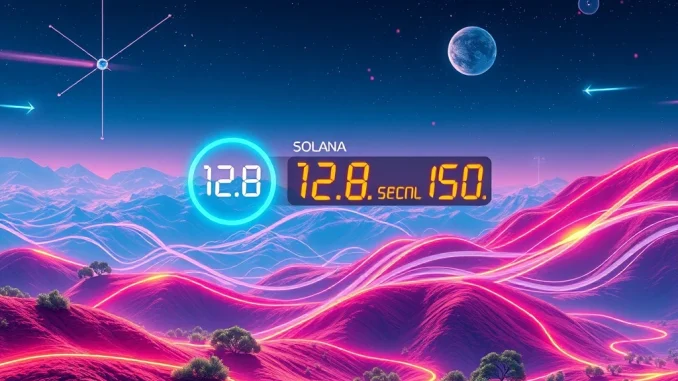
Once implemented, the ‘Alpenglow’ proposal is expected to slash the Solana network’s block confirmation time from its current 12.8 seconds down to an astonishing 150 milliseconds. This represents a reduction of over 98%, a truly revolutionary step for blockchain technology. Such an improvement will have far-reaching implications across the entire Solana ecosystem.
Understanding SIMD-0326: The Alpenglow Proposal
SIMD-0326, or ‘Alpenglow,’ is a crucial governance proposal aimed at optimizing the Solana blockchain’s performance. Its primary objective involves reducing the time it takes for transactions to be finalized on the network. This reduction directly impacts user experience and developer capabilities.
The proposal targets the network’s consensus mechanism. Specifically, it seeks to fine-tune how validators agree on the state of the ledger. By making these processes more efficient, the network can achieve faster finality. This means that once a transaction is submitted, users will experience near-instant confirmation.
Key aspects of the Alpenglow proposal include:
- Enhanced Efficiency: Streamlining the block finalization process.
- Validator Optimization: Adjusting parameters for quicker consensus among validators.
- Improved User Experience: Reducing waiting times for transaction confirmations.
- Developer Benefits: Enabling the creation of more responsive and real-time applications.
The overwhelming community support underscores a collective desire for continuous innovation and improvement within the Solana ecosystem. This high approval rating reflects strong confidence in the technical merits of the proposal.
Boosting Solana Network Speed and Transaction Efficiency
The proposed reduction in Solana block confirmation time to 150 milliseconds will fundamentally alter the user experience. Imagine sending a transaction and seeing it confirmed almost instantly. This level of speed is comparable to traditional financial systems, yet it operates on a decentralized blockchain.
This dramatic increase in Solana network speed will particularly benefit high-frequency applications. Decentralized exchanges (DEXs), for example, will see trades executed and confirmed with unprecedented swiftness. Furthermore, gaming applications and real-time data streaming services will become significantly more responsive. Developers can now build more ambitious projects, knowing the underlying network can support demanding interactions.
Moreover, the enhanced speed directly translates into improved transaction efficiency. Each block will be processed and finalized much faster. This efficiency can potentially lead to better resource utilization across the network. Ultimately, it solidifies Solana’s position as a leading high-performance blockchain platform.
The Impact of Faster Solana Transaction Time
A reduced Solana transaction time has numerous practical benefits. For everyday users, it means less waiting and a smoother experience when interacting with dApps, sending tokens, or participating in DeFi protocols. No longer will users face delays when confirming critical transactions.
Consider the following areas where faster transaction times will make a difference:
- DeFi Applications: Quicker liquidations, faster swaps, and more responsive lending platforms.
- NFT Marketplaces: Instant confirmation for bids, sales, and minting new digital assets.
- Web3 Gaming: Real-time in-game actions and asset transfers without noticeable lag.
- Payments: Solana could become an even more viable option for fast, low-cost global payments.
This improvement also addresses a common challenge faced by many blockchains: scalability versus speed. Solana aims to deliver both without compromise. The ‘Alpenglow proposal’ is a testament to this commitment, pushing the boundaries of what is technically achievable in the blockchain space.
Alpenglow Proposal: A Milestone for Decentralized Governance
The successful passage of the Alpenglow proposal highlights the strength and effectiveness of Solana’s decentralized governance model. The community, through active participation, has directly shaped the future of the network. This democratic process ensures that significant changes align with the collective vision and needs of its users and developers.
Decentralized governance is a cornerstone of blockchain philosophy. It empowers token holders to vote on critical network parameters, upgrades, and resource allocation. In this instance, the high voter turnout and near-unanimous approval demonstrate a mature and engaged community. This active participation fosters trust and collective ownership among stakeholders.
The implementation of SIMD-0326 will not only improve technical performance but also reinforce the principles of decentralization. It sets a precedent for future upgrades, proving that a large, distributed network can efficiently make complex decisions. This collaborative approach is vital for the long-term health and adaptability of any blockchain.
Solana’s Vision for a Scalable Future
This significant upgrade aligns perfectly with Solana’s overarching vision: to create a highly scalable and performant blockchain for global adoption. The network has always prioritized speed and throughput, distinguishing itself from other platforms. This latest development further solidifies that commitment.
By drastically reducing Solana block confirmation times, the network positions itself to handle even greater transaction volumes. This is crucial as the Web3 ecosystem continues to expand, attracting more users and applications. Solana aims to be the foundational layer for this growth, offering an infrastructure that can keep pace with demand.
Furthermore, continuous innovation like the ‘Alpenglow proposal’ helps to attract top-tier developers and projects. They seek platforms that offer both robust security and exceptional performance. Solana’s dedication to pushing technical boundaries makes it an increasingly attractive choice for building the next generation of decentralized applications.
The approval of SIMD-0326 marks a pivotal moment for Solana. The move to a 150-millisecond block confirmation time is not merely a technical adjustment; it represents a leap forward in user experience and developer capability. As the ‘Alpenglow proposal’ takes effect, the Solana network is poised to deliver unparalleled speed and efficiency, reinforcing its position as a leading force in the blockchain industry. This community-driven upgrade promises to unlock new possibilities for decentralized applications and foster further growth within the ecosystem.
Frequently Asked Questions (FAQs)
What is SIMD-0326 Alpenglow?
SIMD-0326, also known as the Alpenglow proposal, is a governance initiative passed by the Solana community. Its main goal is to significantly reduce the network’s block confirmation time, enhancing overall speed and efficiency.
How much will Solana’s block confirmation time be reduced?
The proposal aims to slash the Solana block confirmation time from approximately 12.8 seconds down to a remarkable 150 milliseconds once fully implemented. This is a reduction of over 98%.
What are the benefits of faster Solana network speed?
Faster Solana network speed will lead to near-instant transaction confirmations, improving user experience for DeFi, NFTs, and Web3 gaming. It also enables developers to build more responsive and real-time applications on the network.
When will the Alpenglow proposal be implemented?
While the proposal has passed, the exact implementation timeline will depend on the technical development and deployment phases. The community and core developers will work to integrate these changes into the network as efficiently as possible.
How does this change affect the Solana transaction time for users?
For users, this means a drastically improved experience. Transactions will finalize almost instantly, eliminating long waiting periods and making interactions with Solana-based applications feel much more fluid and immediate.
Is this a permanent change to the Solana blockchain?
Yes, once implemented, this change to the block confirmation time will become a fundamental aspect of the Solana blockchain’s operation. Like all blockchain parameters, it could theoretically be subject to future community governance proposals, but it represents a significant and intended long-term upgrade.