The cryptocurrency market is buzzing with anticipation. Many investors are closely watching Solana (SOL) as a crucial regulatory decision approaches. There is a noticeable trend of both retail and institutional investors engaging in SOL dip-buying. This activity occurs ahead of the U.S. Securities and Exchange Commission’s (SEC) Oct. 10 decision on a potential spot Exchange-Traded Fund (ETF) for the asset. This strategic accumulation highlights growing market confidence and a bullish outlook on Solana’s future.
Understanding the Surge in SOL Dip-Buying
Recent market data clearly indicates a significant increase in buying activity for Solana. Cointelegraph reports that both retail and institutional investors are actively purchasing SOL whenever its Solana price experiences a dip. This trend suggests a strong belief in the asset’s long-term potential. Investors are positioning themselves strategically before the SEC’s upcoming announcement.
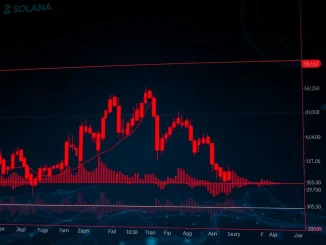
Specifically, Cumulative Volume Delta (CVD) indicators offer valuable insights. These indicators track buying and selling pressure across exchanges. On major platforms like Binance and Coinbase, CVD data reveals that both individual traders and large institutions have been steadily accumulating SOL. They are buying during recent price declines. This consistent accumulation is a bullish signal, suggesting that many perceive current prices as attractive entry points.
The motivation behind this accumulation is clear. A spot SOL ETF approval could unlock significant capital inflows into Solana. Such an approval would make SOL accessible to a broader range of traditional investors. These investors might currently be hesitant to engage directly with cryptocurrencies. Therefore, the prospect of an ETF is a powerful catalyst for increased demand.
Key Market Indicators Point to Strong Accumulation
Market analysts often look at specific metrics to gauge investor sentiment. The CVD indicators are particularly useful here. They show a net buying trend, meaning more SOL is being bought than sold on dips. This pattern confirms that investors are not just reacting to price movements; they are actively acquiring the asset.
- Retail Investors: Individual traders are showing confidence. They are using price pullbacks as opportunities to add to their SOL holdings.
- Institutional Investors: Larger entities, including hedge funds and investment firms, are also increasing their exposure. Their participation often signifies a more mature and stable market outlook.
This dual-front accumulation provides a robust foundation for potential future price appreciation. It indicates a broad consensus among different investor types regarding Solana’s value proposition. Furthermore, this behavior often precedes significant market events, like regulatory decisions.
The Significance of the Crypto ETF Decision for Solana
The upcoming Crypto ETF decision by the SEC is a monumental event for Solana. A spot ETF allows investors to gain exposure to SOL’s price movements without directly owning the cryptocurrency. This simplifies investment, reduces security risks, and makes the asset more appealing to traditional financial markets.
An approval could bring several benefits:
- Increased Liquidity: More capital flowing into SOL would enhance its market liquidity.
- Mainstream Adoption: An ETF would legitimize Solana as an investable asset in traditional finance.
- Price Stability: Greater institutional involvement can often lead to reduced price volatility over time.
- New Investor Base: Pension funds, endowments, and other large institutional players could invest.
Conversely, a delay or rejection could lead to short-term price corrections. However, the current dip-buying suggests that many investors are betting on a positive outcome or at least believe in Solana’s long-term fundamentals regardless of the immediate ETF decision.
Monitoring Futures Trading for Further Upside Potential
To fully gauge the potential for further upside, analysts recommend closely monitoring Solana futures trading. Specifically, activity on the Chicago Mercantile Exchange (CME) is a key indicator. CME futures volume and open interest reflect sophisticated institutional sentiment. These metrics provide insights into how professional traders are positioning themselves.
At its last peak on Sept. 18, CME SOL futures volume reached an impressive $1.57 billion. Open interest stood at $2.12 billion. These figures represented substantial institutional engagement. Currently, these numbers have adjusted. Volume is around $400 million, and open interest is approximately $1.72 billion.
A recovery of these figures to their previous highs would signal renewed institutional confidence. It would also suggest a strong belief in Solana’s immediate future. This recovery could further validate the current Institutional SOL buying trend. It might also precede a significant upward movement in the spot Solana price.
The Impact of Institutional SOL Buying Trends
The involvement of institutional players significantly impacts the cryptocurrency market. Their large capital allocations can move prices substantially. The current trend of Institutional SOL buying is a testament to Solana’s growing appeal within traditional finance. Institutions conduct extensive due diligence before making investment decisions. Their accumulation suggests a positive assessment of Solana’s technology, ecosystem, and future prospects.
This type of buying differs from retail purchases. Institutions often have longer investment horizons and greater capital. Their consistent buying during dips can act as a strong support level for the asset. It helps prevent drastic price collapses and builds a foundation for sustained growth. Therefore, tracking institutional movements provides crucial market intelligence.
The CME data, while showing a dip from its peak, still reflects substantial open interest. This indicates that a significant amount of capital remains committed to Solana futures. A rebound in trading volume could quickly push these figures back to their previous highs. This would signal strong renewed interest and conviction among institutional investors.
What’s Next for Solana Price and Investors?
The period leading up to the SEC’s decision is critical. Investors will closely watch market indicators. Any news or rumors regarding the SOL ETF could trigger rapid price movements. Therefore, staying informed is paramount for anyone involved in the Solana ecosystem.
For those considering investment, understanding the potential scenarios is vital:
- Approval: A positive decision would likely lead to a significant price surge. This could validate the current dip-buying strategy.
- Delay: A delay might cause short-term uncertainty and a temporary price dip. However, it wouldn’t necessarily negate the long-term bullish outlook.
- Rejection: A rejection could lead to a more substantial price correction. Yet, the underlying technology and ecosystem development of Solana would remain.
Regardless of the immediate outcome, Solana’s fundamentals continue to strengthen. Its high transaction throughput, low fees, and robust developer community make it a strong contender in the blockchain space. The current accumulation phase highlights investor confidence in these core strengths.
FAQs on Solana (SOL) and the Upcoming ETF Decision
Q1: What is a spot SOL ETF?
A spot SOL ETF (Exchange-Traded Fund) is an investment product that directly holds Solana (SOL) as its underlying asset. It allows investors to gain exposure to SOL’s price movements through traditional brokerage accounts without needing to buy and store the actual cryptocurrency themselves.
Q2: Why is the SEC’s decision on a SOL ETF so important?
The SEC’s decision is crucial because an approval would legitimize Solana as a mainstream investment asset. It would open the door for traditional financial institutions and a broader range of investors (like pension funds) to invest in SOL, potentially leading to significant capital inflows and increased market liquidity.
Q3: What are CVD indicators and what do they show for SOL?
CVD (Cumulative Volume Delta) indicators measure the difference between buying and selling volume at various price levels. For SOL, these indicators currently show that both retail and institutional investors have been accumulating (buying) during recent price dips, indicating strong underlying demand.
Q4: How do CME SOL futures volume and open interest relate to the Solana price?
CME (Chicago Mercantile Exchange) SOL futures volume and open interest reflect institutional sentiment and positioning. High volume indicates active trading, while high open interest suggests significant capital commitment. A recovery of these metrics to previous highs would signal renewed institutional confidence and could precede further upside for the Solana price.
Q5: What are the potential market reactions to the SEC’s decision?
An approval of the SOL ETF would likely lead to a significant price rally due to increased demand and legitimacy. A delay might cause short-term uncertainty and a minor dip. A rejection could result in a more substantial price correction, though Solana’s underlying technology and ecosystem development would still drive long-term value.
Q6: What is ‘dip-buying’ in the context of SOL?
Dip-buying refers to the strategy of purchasing an asset when its price temporarily declines. In the case of SOL, investors are actively buying the cryptocurrency on price dips, anticipating that its value will increase, especially with the potential catalyst of an ETF approval. This indicates a bullish long-term outlook.