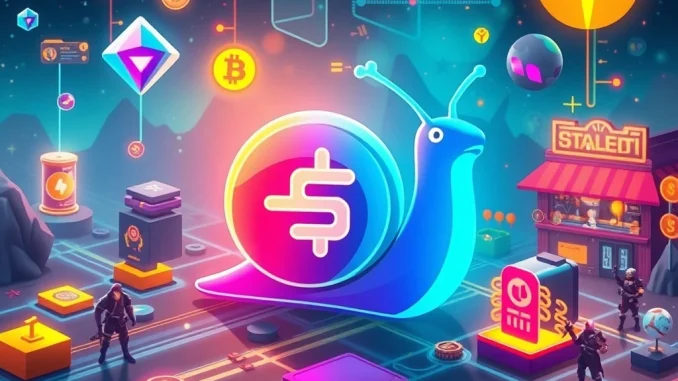
In a move that has sent ripples across both the gaming and cryptocurrency sectors, Snail Games, a prominent Nasdaq-listed video game developer, is reportedly considering the development of its own Snail Games stablecoin. This groundbreaking announcement, initially reported by CoinDesk, immediately sparked investor interest, sending Snail Games’ stock soaring by as much as 20% during intraday trading before settling to an impressive 8% gain by market close. But what exactly does this mean for the intersection of gaming and digital assets, and how could a stablecoin redefine the very fabric of blockchain gaming?
The Rise of Snail Games Stablecoin: A Strategic Shift?
The decision by a publicly traded video game developer like Snail Games to explore a proprietary stablecoin signals a significant shift in the industry’s approach to digital economies. A stablecoin, by its nature, is a cryptocurrency designed to minimize price volatility, typically by being pegged to a stable asset like the US dollar. For a gaming company, this stability is crucial, especially when integrating digital currencies into dynamic, player-driven environments.
Snail Games’ exploration into this territory isn’t just about creating a new digital token; it’s about building a more robust and predictable foundation for their in-game economies. Imagine a world where the value of your hard-earned in-game items or currency doesn’t fluctuate wildly with the broader crypto market. This stability can:
- Enhance Player Confidence: Gamers can invest time and effort knowing their digital assets retain a consistent value.
- Streamline Transactions: Easier and more predictable purchases and sales within the game and on marketplaces.
- Attract Mainstream Adoption: Reduces the perceived risk often associated with volatile cryptocurrencies, making blockchain elements more appealing to a broader audience.
The immediate positive reaction from the stock market underscores the perceived value and strategic foresight of this potential venture. Investors are clearly recognizing the long-term potential of a company taking proactive steps to embrace and integrate blockchain technology at such a fundamental level.
Revolutionizing the Game Economy with Blockchain Integration
At its core, a Snail Games stablecoin could fundamentally transform the in-game game economy. Traditional game economies are often centralized, with developers holding complete control over currency issuance, item rarity, and marketplace operations. Blockchain technology, however, offers the promise of decentralization, transparency, and true digital ownership.
By leveraging a stablecoin, Snail Games could:
- Facilitate True Ownership of Digital Assets: Players could own in-game items (NFTs) that are verifiable on a blockchain, meaning they truly own them, not just license them from the game developer. These assets could potentially be traded, sold, or even used across different games.
- Power Player-Driven Marketplaces: A stablecoin provides a reliable medium of exchange for peer-to-peer trading of in-game items, characters, or even virtual land. This creates vibrant, self-sustaining economies where players have more agency.
- Enable Cross-Game Utility: While ambitious, a stablecoin could theoretically enable the transfer of value or even assets between different games within the Snail Games ecosystem, fostering a more interconnected gaming experience.
This approach moves beyond simple in-game purchases and delves into creating a dynamic, player-centric ecosystem where economic principles of supply and demand truly apply. The stability of a stablecoin ensures that these player-driven markets can thrive without the speculative risks associated with volatile cryptocurrencies.
The Future of Crypto Gaming: What’s Next?
Snail Games’ consideration of a stablecoin places it at the forefront of the evolving crypto gaming landscape. While many blockchain games currently rely on existing cryptocurrencies like Ethereum or Solana for their transactions, a dedicated stablecoin offers unique advantages:
| Feature | Generic Cryptocurrency (e.g., ETH) | Proprietary Stablecoin (e.g., Snail Games Stablecoin) |
|---|---|---|
| Price Volatility | High, subject to market speculation | Low, pegged to a stable asset |
| Transaction Fees | Variable, can be high during network congestion | Potentially lower and more predictable, controlled by issuer |
| Integration Control | Limited control over external asset behavior | Full control over issuance, redemption, and ecosystem rules |
| Target Audience | Often crypto-native users | Broader gaming audience, including non-crypto users |
This strategic move highlights a growing trend among video game developers to embrace blockchain not just as a buzzword, but as a foundational technology for future game development. The goal is to build sustainable, player-owned economies that can provide new revenue streams for developers while offering unprecedented levels of ownership and engagement for players.
Challenges and Opportunities for a Video Game Developer in Crypto
While the prospect of a Snail Games stablecoin is exciting, it’s important to acknowledge the challenges that a video game developer venturing into this space might face:
- Regulatory Scrutiny: Stablecoins are increasingly under the regulatory microscope worldwide. Snail Games would need to navigate complex legal frameworks to ensure compliance.
- Technical Complexity: Developing and maintaining a secure, scalable stablecoin infrastructure is a significant technical undertaking.
- Adoption and Education: Convincing a broad gaming audience, many of whom are new to crypto, to adopt and trust a new digital currency requires clear communication and user-friendly interfaces.
- Competition: The blockchain gaming space is becoming increasingly crowded, with many companies vying for market share.
However, the opportunities far outweigh these challenges. By being an early mover among major Nasdaq-listed companies, Snail Games could:
- Gain a Competitive Edge: Attract players and developers looking for more innovative and player-centric game economies.
- Unlock New Revenue Streams: Beyond traditional game sales, stablecoins can facilitate royalties on secondary market sales of NFTs, transaction fees, and more.
- Foster Community Loyalty: Empowered players with true ownership and economic participation are likely to be more loyal and engaged.
The success of this venture could set a precedent for how other traditional gaming companies approach the integration of blockchain and digital assets, further cementing the role of crypto gaming in the mainstream entertainment industry.
What This Means for the Broader Blockchain Gaming Ecosystem
Snail Games’ potential foray into stablecoins is not an isolated event; it reflects a broader trend of convergence between traditional gaming and decentralized technologies. As more established companies like Snail Games explore these avenues, it lends credibility and paves the way for wider adoption of blockchain principles in interactive entertainment. This could lead to:
- Increased Investment: More capital flowing into blockchain gaming projects.
- Technological Innovation: Greater demand for scalable, secure, and user-friendly blockchain solutions for gaming.
- Mainstream Acceptance: Normalization of concepts like NFTs, digital ownership, and in-game cryptocurrencies for the general public.
The vision of truly player-owned and player-driven digital worlds is becoming a tangible reality, and companies like Snail Games are instrumental in pushing this frontier forward. The Snail Games stablecoin, if realized, could be a cornerstone in this evolution, providing the stable economic backbone needed for complex, dynamic, and truly decentralized game economies to flourish.
Conclusion: A New Era for Gaming and Crypto
Snail Games’ consideration of developing its own stablecoin is a bold and potentially transformative move that could redefine the future of gaming. By addressing the volatility often associated with cryptocurrencies, a Snail Games stablecoin could provide the stability needed to truly unlock the potential of blockchain-based game economies and player-driven marketplaces. This strategic decision not only excited investors, but also signals a deeper commitment from a major video game developer to integrate advanced digital asset strategies into their core business model. As the lines between virtual worlds and real-world economies continue to blur, Snail Games is positioning itself at the forefront of this exciting new era of interactive entertainment and digital finance. The journey of crypto gaming is just beginning, and Snail Games appears ready to lead the charge.
Frequently Asked Questions (FAQs)
Q1: What is a stablecoin and why is Snail Games considering developing one?
A stablecoin is a type of cryptocurrency designed to maintain a stable value, often pegged to a fiat currency like the US dollar. Snail Games is considering developing one to provide stability for its in-game economies, facilitate smoother transactions in player-driven marketplaces, and better integrate blockchain-based features without the volatility typically associated with other cryptocurrencies.
Q2: How could a Snail Games stablecoin benefit players?
For players, a Snail Games stablecoin could offer more predictable value for their in-game assets and currencies, making trading and purchasing less risky. It could also enable true ownership of digital items (NFTs), allowing players to genuinely own, sell, or trade their assets on external marketplaces, fostering a more robust and player-centric game economy.
Q3: What does this mean for Snail Games’ stock price?
Immediately after the announcement, Snail Games’ stock price surged significantly, indicating strong investor confidence in the company’s strategic direction towards blockchain and digital assets. This move is seen as a forward-thinking step that could open new revenue streams and enhance player engagement, positively impacting the company’s valuation.
Q4: Are there challenges for a video game developer entering the stablecoin space?
Yes, significant challenges include navigating complex and evolving regulatory landscapes, the technical complexities of developing and maintaining a secure stablecoin, and the need to educate and onboard a potentially crypto-unfamiliar gaming audience. However, the potential benefits in terms of new revenue models and enhanced player engagement often outweigh these hurdles.
Q5: How does this development fit into the broader trend of crypto gaming?
Snail Games’ initiative is part of a growing trend where traditional video game developers are exploring and integrating blockchain technology. It signifies a move towards more decentralized, player-owned game economies, where digital assets have real-world value and utility. This could accelerate the mainstream adoption of crypto gaming and influence how other major developers approach their future titles.