The stability of global supply chains profoundly impacts the digital economy, including the burgeoning cryptocurrency space. Any disruption, particularly concerning critical components like semiconductors, can send ripples through various sectors. News reports now indicate a significant potential shift in U.S. trade policy regarding these vital chips. This article delves into the reported proposal for semiconductor tariffs and explores its wide-ranging implications.
Trump’s Reported 100% Semiconductor Tariffs Proposal
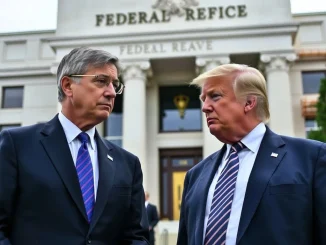
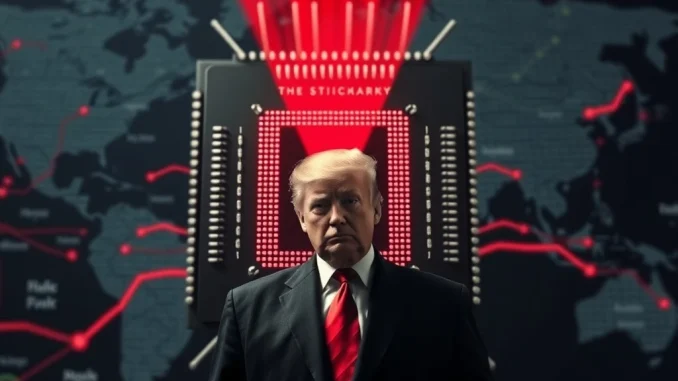
U.S. President Donald Trump has reportedly indicated a plan to impose a staggering 100% tariff on all imported semiconductors and chips entering the United States. Walter Bloomberg, a well-known economic news account on X, first reported this significant development. This aggressive proposal signals a potential escalation in trade protectionism, specifically targeting the highly interconnected semiconductor industry. Such a move could fundamentally reshape global manufacturing and technology landscapes. Therefore, stakeholders across various industries are closely monitoring these developments.
Understanding the Potential Economic Impact
A 100% tariff on semiconductors would dramatically alter the cost structure for businesses relying on these components. First, the immediate consequence would be a sharp increase in the price of imported chips. This price surge would directly affect manufacturers of electronics, automobiles, and a vast array of consumer goods. Consequently, consumers would likely face higher prices for finished products. Furthermore, domestic manufacturers might struggle to source components at competitive rates, potentially hindering innovation and production within the U.S. Such a policy could also fuel inflation, as the cost of essential goods rises across the board. Economists are carefully analyzing the potential ripple effects of this proposed policy, considering its broad implications for the national economy.
The semiconductor industry is globally integrated, with design, manufacturing, and assembly often occurring in different countries. Imposing such high tariffs on US chip imports could disrupt these established supply chains. Companies might seek alternative suppliers, potentially leading to delays and inefficiencies. Alternatively, they might absorb some costs, impacting their profit margins. Moreover, this measure could trigger retaliatory tariffs from other nations, sparking a trade war. Such a scenario would further complicate international commerce and investment. Ultimately, the overall economic impact could extend far beyond the tech sector, affecting employment and economic growth.
Navigating Global Tech Supply Challenges
The global technology supply chain is incredibly complex and interdependent. Semiconductors are fundamental to almost every modern electronic device. Therefore, a 100% tariff would send shockwaves through this intricate network. Companies currently rely on a delicate balance of international production and distribution. Imposing such a tariff would force them to rapidly re-evaluate their sourcing strategies. This re-evaluation could lead to significant delays in product development and delivery. Additionally, it might encourage companies to relocate manufacturing, a costly and time-consuming process. The aim might be to bolster domestic production, but the immediate effect would likely be widespread disruption. Businesses globally are already grappling with supply chain vulnerabilities, making this proposal particularly impactful.
The Broader Implications of Trump Trade Policy
This proposed tariff aligns with a broader trend in Trump trade policy, which often prioritizes domestic production through protectionist measures. Previous administrations have also used tariffs, but a 100% rate is exceptionally high. Such a move aims to incentivize companies to manufacture semiconductors within the U.S. However, building advanced semiconductor fabrication plants (fabs) requires immense capital investment and several years. It also demands a highly skilled workforce. Therefore, the immediate benefits of such a tariff might be outweighed by the short-term economic costs. Experts suggest that while the long-term goal of reshoring production is understandable, the proposed method could prove highly disruptive. This policy could also set a precedent for other critical industries, expanding the scope of trade disputes.
Impact on US Chip Imports and Industries
The United States relies heavily on imported semiconductors for various industries. Tech giants, automotive manufacturers, and even defense contractors depend on a steady supply of these chips. A 100% tariff would drastically increase the cost of these essential components. Consequently, companies might pass these increased costs onto consumers. For example, the price of new cars, smartphones, and computers could see substantial hikes. Furthermore, smaller businesses might struggle to afford the higher input costs, potentially leading to closures or reduced competitiveness. The reliance on US chip imports highlights the vulnerability of domestic industries to such trade policies. Ensuring a robust and resilient supply of semiconductors is crucial for national security and economic stability.
Beyond consumer goods, the ripple effect extends to critical infrastructure. Data centers, which power cloud computing and internet services, require vast quantities of semiconductors. The cryptocurrency industry, with its reliance on mining hardware and blockchain infrastructure, would also feel the impact. Higher chip costs could increase the operational expenses for miners, potentially affecting profitability and network stability. Therefore, the proposed tariffs could inadvertently affect the broader digital economy. Stakeholders across these diverse sectors are evaluating potential strategies to mitigate these risks. Understanding the interconnectedness of these industries is key to assessing the full economic impact.
Global Reactions and Future Outlook
The prospect of such high tariffs would undoubtedly provoke strong reactions from international trading partners. Countries that are major exporters of semiconductors to the U.S., such as South Korea, Taiwan, and China, would likely view this as a hostile trade action. Retaliatory tariffs on American exports could follow, escalating into a full-blown trade war. This scenario would damage global trade relations and potentially lead to economic instability worldwide. The international community emphasizes cooperation in trade, and unilateral actions often invite reciprocal measures. Therefore, the long-term geopolitical implications of such a policy are significant. Businesses with international operations would face increased uncertainty and complexity.
The actual implementation of this Trump trade policy remains uncertain. Political rhetoric often differs from enacted policy. However, the mere threat of such tariffs creates apprehension in global markets. Companies are already assessing their supply chains and contingency plans. The discussion around semiconductor tariffs underscores the ongoing debate about globalization versus protectionism. Future policy decisions will significantly shape the landscape for the semiconductor industry and, by extension, the entire global economy. This situation demands careful consideration from policymakers and industry leaders alike. The coming months will reveal the true direction of U.S. trade policy.
Conclusion
The reported proposal for a 100% tariff on imported semiconductors marks a critical juncture for the global tech industry and broader economy. Such a move could lead to significantly higher costs for consumers, disrupt complex supply chains, and potentially trigger international trade disputes. While aiming to boost domestic manufacturing, the immediate challenges associated with these semiconductor tariffs are substantial. Businesses and consumers alike must prepare for potential shifts in pricing and availability of tech products. The coming months will be crucial in understanding the true scope and impact of this potential policy.
Frequently Asked Questions (FAQs)
Q1: What are semiconductor tariffs?
A1: Semiconductor tariffs are taxes imposed on imported semiconductor chips. These taxes increase the cost of foreign-made chips, making them more expensive for domestic buyers. The reported proposal suggests a 100% tariff, meaning the import cost would double.
Q2: How would 100% semiconductor tariffs impact consumers?
A2: Consumers would likely face higher prices for electronic goods that rely on semiconductors, such as smartphones, computers, cars, and home appliances. Manufacturers would pass on the increased import costs, leading to more expensive final products.
Q3: What industries would be most affected by these tariffs?
A3: Industries heavily reliant on semiconductors, including consumer electronics, automotive, telecommunications, computing, and defense, would be most affected. Data centers and the cryptocurrency mining sector would also experience increased operational costs.
Q4: Could these tariffs lead to a trade war?
A4: Yes, a 100% tariff on semiconductors is a highly aggressive trade measure. It could provoke retaliatory tariffs from countries that export chips to the U.S., potentially escalating into a broader trade war that harms global trade relations and economic stability.
Q5: What is the goal of imposing such high tariffs?
A5: The primary goal of such high tariffs is typically to incentivize domestic manufacturing of semiconductors by making imported chips significantly less competitive. This aims to reduce reliance on foreign supply chains and bolster national production capabilities.
Q6: How might these tariffs affect the global tech supply chain?
A6: These tariffs would severely disrupt the global tech supply chain. Companies would need to re-evaluate their sourcing strategies, potentially leading to delays, increased production costs, and a push for reshoring manufacturing, which is a complex and time-consuming process.