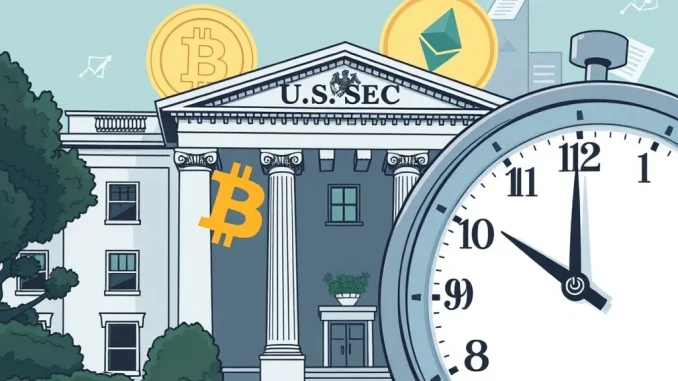
The cryptocurrency world often feels like a fast-paced race, but sometimes, the biggest news comes from a pause. In a move that has captured the attention of investors and market watchers alike, the SEC (U.S. Securities and Exchange Commission) has once again hit the brakes, postponing its decision on a critical aspect of the proposed Bitwise Bitcoin ETF Trust and Bitwise Ethereum ETF: the allowance of in-kind redemptions. This latest delay, first reported by Decrypt based on a July 16 filing, pushes back a decision on a rule change submitted by NYSE Arca back on May 21, leaving many wondering about the implications for the future of crypto investment vehicles.
What Does the SEC’s Delay Signify for Crypto ETFs?
The SEC, as the primary regulator of securities markets in the United States, plays a pivotal role in shaping the landscape for investment products. Its decisions, or lack thereof, send significant signals to the market. This latest postponement regarding the Bitwise ETFs isn’t just a bureaucratic formality; it reflects the commission’s cautious approach to integrating novel asset classes like cryptocurrencies into traditional financial frameworks. For those eagerly awaiting more streamlined access to digital assets through regulated products, every delay feels like a setback.
The commission’s deliberative pace is often attributed to several factors:
- Investor Protection: A core mandate of the SEC is to protect investors. They scrutinize new products for potential risks, market manipulation, and liquidity concerns.
- Market Novelty: Cryptocurrencies are still relatively new and volatile compared to traditional assets, leading to heightened scrutiny.
- Complex Structures: Products like ETFs, especially those dealing with assets like Bitcoin and Ethereum, involve complex operational and regulatory considerations.
This delay underscores the ongoing regulatory tightrope walk as the SEC grapples with balancing innovation with its protective duties.
Unpacking In-Kind Redemptions: Why Bitwise’s Proposal Matters
At the heart of this particular delay is the concept of in-kind redemptions. To understand its significance, let’s break down the two main types of ETF redemption mechanisms:
Cash Redemptions vs. In-Kind Redemptions:
| Feature | Cash Redemption | In-Kind Redemption |
|---|---|---|
| Mechanism | Authorized Participants (APs) receive cash equivalent to the value of the underlying assets when redeeming ETF shares. | APs receive the actual underlying assets (e.g., Bitcoin or Ethereum) when redeeming ETF shares. |
| Tax Efficiency | Can trigger taxable events for the ETF fund, potentially leading to capital gains distributions for investors. | Generally more tax-efficient as the transfer of assets does not typically create a taxable event at the fund level. |
| Operational Complexity | Simpler from a crypto custody perspective for the AP, as they only deal with fiat. | Requires APs to have robust crypto custody and operational capabilities to handle the actual digital assets. |
| Market Impact | Fund might need to sell assets to generate cash, potentially impacting market prices. | Direct transfer of assets can be less disruptive to market prices. |
Bitwise, like many other applicants, is pushing for in-kind redemptions because they are widely considered more tax-efficient for investors. This structure allows the fund to avoid triggering capital gains taxes when shares are redeemed, making the ETF a more attractive long-term investment vehicle. The SEC’s hesitation likely stems from the complexities of handling actual cryptocurrencies in a regulated environment, including custody, valuation, and preventing market manipulation.
The Broader Impact on the Bitcoin ETF Landscape
While the initial spot Bitcoin ETF approvals in January 2024 were a monumental step, the conversation didn’t end there. The approved ETFs currently operate on a cash-creation and redemption model. A shift to in-kind redemptions, if approved for Bitwise, could set a precedent for all other spot Bitcoin ETFs, potentially leading to a more tax-efficient and attractive product for investors.
This delay by the SEC adds another layer of uncertainty to the evolving Bitcoin ETF market. It suggests that while the door for spot Bitcoin ETFs is open, the regulator is still meticulously evaluating every operational detail. For existing Bitcoin ETF providers, an approval for Bitwise could mean pressure to adapt their own structures, leading to a more competitive and potentially more beneficial environment for investors in the long run. Conversely, continued delays or outright rejections for in-kind models could limit the full potential of these investment vehicles.
What’s Next for Ethereum ETF Aspirations?
The fate of spot Ethereum ETF applications is closely intertwined with that of Bitcoin. The SEC’s approval of spot Ethereum ETFs in May 2024, albeit without immediate trading commencement, was a surprising acceleration. However, similar to Bitcoin ETFs, these approvals were for cash-creation and redemption models. The Bitwise proposal for in-kind redemptions applies to both their Bitcoin and Ethereum offerings, meaning this delay impacts the future structure of both asset classes within the ETF framework.
If the SEC eventually approves in-kind redemptions for the Bitwise Ethereum ETF, it would significantly enhance the appeal of these products, mirroring the tax advantages seen in traditional commodity ETFs. The delay indicates that the commission is taking a measured approach, even after the initial approvals. This could mean a longer wait for the most optimized Ethereum ETF products, but it also suggests a thorough review process aimed at ensuring robust and secure offerings.
Challenges and Investor Implications
The ongoing regulatory uncertainty, exemplified by this SEC delay, presents several challenges:
- Market Volatility: News of delays can contribute to short-term market fluctuations as investor sentiment shifts.
- Limited Product Optimization: Without in-kind redemptions, crypto ETFs may not offer the same level of tax efficiency as their traditional counterparts, potentially impacting long-term investor returns.
- Operational Hurdles: For firms like Bitwise, navigating the SEC’s detailed requirements and addressing their concerns adds significant operational burden and cost.
For investors, the key takeaway is to remain informed and patient. While the current spot Bitcoin and Ethereum ETFs offer exposure to these assets, understanding the nuances of their redemption mechanisms and potential future enhancements is crucial for making informed investment decisions. This situation highlights the evolving nature of crypto regulation and the need for adaptability from both market participants and regulators.
Conclusion: A Deliberate Path to Crypto Integration
The SEC‘s decision to postpone its ruling on Bitwise‘s proposed in-kind redemptions for its Bitcoin ETF and Ethereum ETF is a reminder that the path to full cryptocurrency integration into traditional finance is a deliberate and often slow one. While the industry eagerly awaits more efficient and investor-friendly structures, the regulator continues to prioritize a cautious, step-by-step approach. This delay, while frustrating for some, is part of a larger process aimed at establishing robust frameworks for digital asset products. As the crypto market matures, these regulatory milestones, even the delays, are crucial in shaping its future.
Frequently Asked Questions (FAQs)
Q1: What are in-kind redemptions for ETFs?
A1: In-kind redemptions allow authorized participants (APs) to redeem ETF shares by receiving the underlying assets (like Bitcoin or Ethereum) directly, rather than cash. This method is generally more tax-efficient for the ETF fund and its investors.
Q2: Why is the SEC delaying the decision on Bitwise’s in-kind redemptions?
A2: The SEC is likely taking more time to thoroughly evaluate the complexities and potential risks associated with handling actual cryptocurrencies in a regulated environment, including custody, valuation, and market manipulation concerns, to ensure investor protection.
Q3: How does this delay impact existing Bitcoin and Ethereum ETFs?
A3: Existing spot Bitcoin and Ethereum ETFs currently operate on a cash-creation/redemption model. This delay means that the shift to more tax-efficient in-kind redemptions for these products, if eventually approved, will take longer. It also sets a precedent for how the SEC views these operational structures for all crypto ETFs.
Q4: What is the significance of Bitwise’s proposal for the crypto market?
A4: Bitwise’s proposal for in-kind redemptions is significant because if approved, it could set a new standard for tax efficiency and operational structure for all crypto ETFs, making them more attractive to a wider range of investors and potentially increasing their adoption.
Q5: When can we expect a final decision from the SEC on Bitwise’s proposal?
A5: The SEC’s decision timeline is subject to extensions. While a new deadline will be set following this postponement, predicting the exact date of a final ruling is challenging due to the SEC’s deliberative process for complex and novel financial products.