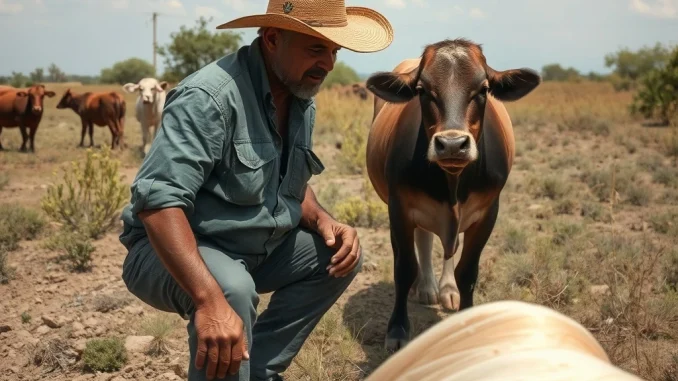
While the world of cryptocurrency often focuses on digital assets and blockchain innovations, it’s crucial to remember that real-world economic shocks and supply chain vulnerabilities can ripple across all markets. The current screwworm crisis unfolding in Texas and Mexico serves as a stark reminder of how unforeseen challenges in traditional sectors, like agriculture, can create widespread instability and highlight systemic fragilities that decentralized technologies might one day help address. This unfolding agricultural emergency is forcing farmers to desperate measures, revealing a critical need for robust, resilient solutions.
The Alarming Resurgence of the Screwworm Crisis
For farmers and ranchers across Texas and southern Mexico, a nightmare has returned: the New World screwworm. This isn’t just any pest; it’s a flesh-eating parasitic fly whose larvae infest open wounds on livestock, causing severe infections and often leading to death within days. What makes this resurgence particularly alarming is that the parasite was nearly eradicated in the region decades ago, thanks to highly effective sterile insect techniques. Now, it’s back with a vengeance, spreading at an alarming rate and forcing agricultural workers into a desperate fight.
The lifecycle of the New World screwworm poses an immediate and devastating threat to cattle, pigs, sheep, and even household pets. Female flies are drawn to even minor wounds, where they lay their eggs. Once hatched, the larvae (maggots) begin to consume living tissue, burrowing deeper into the animal. This rapid tissue destruction leads to:
- Severe pain and distress for the infected animal.
- Rapid deterioration of health.
- High mortality rates if left untreated.
- Significant economic losses for ranchers.
Veterinarians in Chiapas, a Mexican state bordering Guatemala, have reported a sharp increase in cases over the past month. Some ranchers have tragically lost entire herds, a testament to the parasite’s destructive power and the speed of its spread.
Why Are Texas Farmers Turning to Desperate Measures?
The sheer speed and severity of this outbreak have pushed many Texas farmers and their Mexican counterparts to extreme, unorthodox methods. With limited government resources and a critical delay in official interventions, desperate measures have emerged as makeshift solutions to combat the infestation. Reports indicate that farmers are applying harsh substances like gasoline or lime directly to the wounds of infected animals.
While these substances may temporarily kill the larvae, veterinarians warn of severe risks:
- Tissue Damage: Gasoline and lime are highly caustic and can cause severe burns and further tissue necrosis, complicating the animal’s recovery.
- Secondary Infections: The damaged tissue becomes even more vulnerable to bacterial infections, potentially leading to worse outcomes than the screwworm itself.
- Reduced Market Value: Livestock treated with such harsh chemicals may suffer long-term health issues or have their market value significantly diminished due to scarring and damage.
- Environmental Concerns: The widespread application of these chemicals can also pose risks to the environment and other animals.
Alfredo Chávez, a veterinarian treating infected animals in Mexico, highlighted the dire situation: “We’ve faced it alone.” This statement underscores the absence of coordinated support, despite previous successes in controlling the parasite through sterile fly programs. The reliance on these dangerous methods is a clear sign of the urgent and unaddressed need for effective, large-scale intervention.
Understanding the Livestock Parasite Threat and Its History
The New World screwworm (Cochliomyia hominivorax) has a long and infamous history as a devastating livestock parasite. Decades ago, the U.S. and Mexico collaborated on a highly successful eradication program utilizing the Sterile Insect Technique (SIT). This method involves mass-rearing male screwworms, sterilizing them with radiation, and then releasing them into infested areas. When these sterile males mate with wild female flies, no offspring are produced, effectively breaking the reproductive cycle and causing the population to crash.
The SIT program was a monumental achievement, nearly eradicating the screwworm from North and Central America. However, the current outbreak suggests that the continuous vigilance and investment required for such programs may have faltered. The re-emergence highlights how quickly a previously controlled threat can escalate if not managed proactively.
The financial burden on ranchers is immense. The cost of veterinary treatments for infected animals has spiked, pushing many to adopt the risky gasoline and lime methods. Edi Valencia Santos, a caretaker in Chiapas, described the situation as a “big, big problem,” noting that the costs of managing infected animals are eroding livelihoods, particularly for small-scale producers who lack the capital to absorb such losses.
The Costly Impact of Sterilization Delay
A major factor exacerbating the current crisis is the significant sterilization delay. A new facility in Chiapas, specifically designed to produce sterile screwworms for eradication, is not expected to be operational until 2026. This two-year gap leaves ranchers with severely limited options for combating the rapidly spreading infestation.
The economic impact of this delay is mounting:
- Declining Livestock Prices: As the threat spreads, the market value of livestock decreases due to potential infection and trade restrictions.
- Escalating Treatment Costs: Farmers are spending significant amounts on makeshift treatments and veterinary care, often with limited success.
- Disruption to Cross-Border Trade: In response to a 2025 detection of infected cattle in Veracruz, U.S. authorities temporarily suspended Mexican cattle imports. While some herds are for domestic consumption, this suspension still impacts the broader regional economy and supply chains.
- Food Security Concerns: A prolonged crisis could impact regional meat supplies and prices, affecting consumers.
The situation underscores the need for proactive investment in biosecurity and pest control infrastructure. Delays in such critical projects can have catastrophic ripple effects, demonstrating how seemingly localized issues can quickly become regional economic crises.
Navigating an Agricultural Emergency: What’s Next?
U.S. and Mexican officials are reportedly accelerating plans to deploy sterile male flies to curb the infestation. However, the speed of the parasite’s spread has outpaced these efforts, leaving many farmers feeling abandoned. This agricultural emergency highlights broader vulnerabilities in regional agricultural systems, where shared ecosystems and trade dependencies require immediate and coordinated action.
For those interested in the broader implications, this crisis serves as a powerful case study in systemic risk. Just as blockchain and decentralized networks aim to build more resilient and transparent systems in finance and supply chains, traditional sectors like agriculture also face complex challenges that could benefit from innovative approaches:
- Supply Chain Transparency: Imagine a blockchain-based system tracking livestock health and movement, providing real-time data to prevent the spread of disease and restore consumer confidence.
- Decentralized Funding for Crisis Response: Could DAOs or other decentralized mechanisms provide rapid, transparent funding for emergency interventions like sterile fly production or direct aid to affected farmers, bypassing bureaucratic delays?
- Parametric Insurance: Blockchain-enabled parametric insurance could automatically trigger payouts to farmers based on verified disease outbreaks, providing faster relief than traditional insurance models.
While these are futuristic concepts for this particular crisis, they highlight the kind of resilience and efficiency that decentralized systems could bring to traditional industries facing similar large-scale disruptions. Analysts emphasize the need for sustained investment in pest control programs and cross-border collaboration to prevent future outbreaks of this magnitude. For now, however, farmers remain in a desperate race against time to protect their herds from a parasite that has reemerged with devastating force.
Conclusion
The harrowing struggle of farmers in Texas and Mexico against the re-emerged screwworm parasite is a sobering reminder of the interconnectedness of our global systems. The desperate measures, economic fallout, and critical sterilization delay underscore the urgent need for robust, proactive strategies to protect our food supply and agricultural economies. While the immediate focus is on traditional interventions, this crisis also sparks contemplation on how future innovations, perhaps even from the world of decentralized technologies, could offer more resilient and responsive solutions to complex challenges in the face of an ever-changing world.
Frequently Asked Questions (FAQs)
What is the New World Screwworm and why is it a threat?
The New World Screwworm is a parasitic fly whose larvae (maggots) infest open wounds on warm-blooded animals, including livestock and pets. They feed on living tissue, causing severe pain, infection, and often death within days if untreated. It’s a major threat to agricultural economies due to its rapid spread and devastating impact on herds.
Why are farmers using gasoline and lime on their livestock?
Farmers are resorting to these harsh chemicals out of desperation. The New World Screwworm larvae are incredibly destructive, and with limited access to effective, government-backed treatments and a significant delay in sterile fly production, these makeshift methods are being used as a last resort to kill the parasites in the wounds, despite the severe risks of tissue damage and secondary infections.
What caused the current screwworm crisis?
The current crisis is largely attributed to a re-emergence of the parasite and a critical delay in the operational status of a new sterile fly production facility in Chiapas, Mexico, which isn’t expected to be ready until 2026. This delay has created a gap in large-scale eradication efforts, allowing the parasite to spread unchecked.
How does the screwworm crisis impact cross-border trade?
The outbreak has already disrupted cross-border trade. Following detections of infected cattle, U.S. authorities temporarily suspended Mexican cattle imports. This measure, even if regional herds are intended for domestic consumption, impacts the overall market, reduces demand, and adds economic pressure on ranchers on both sides of the border.
What is the Sterile Insect Technique (SIT) and why is it important?
The Sterile Insect Technique (SIT) is a pest control method where male insects are mass-reared, sterilized using radiation, and then released into the wild. When these sterile males mate with wild females, no offspring are produced, effectively reducing and eventually eradicating the pest population. SIT was highly successful in nearly eliminating the screwworm from North and Central America previously, making its delayed re-implementation a critical issue in the current crisis.
How might this agricultural emergency relate to cryptocurrency or blockchain?
While not directly related, this crisis highlights vulnerabilities in traditional supply chains and economic systems. Blockchain and decentralized technologies could conceptually offer solutions for future crises by enabling more transparent supply chain tracking, faster and more efficient distribution of emergency aid through decentralized funding mechanisms, or even automated parametric insurance payouts for agricultural disasters, creating more resilient systems overall.