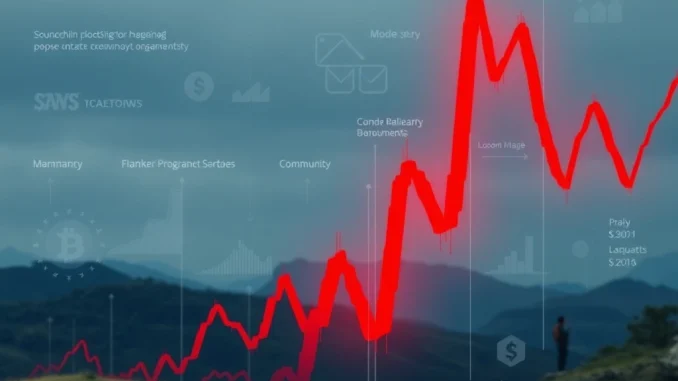
The cryptocurrency market, known for its rapid shifts and unpredictable movements, recently witnessed an astonishing and unprecedented reported decline in the SANTOS price. On July 28, 2025, SANTOS reportedly experienced a colossal drop of 485.22% within 24 hours, reaching a low of $2.504. While such a percentage drop is mathematically anomalous in standard financial markets (as an asset cannot lose more than 100% of its value), this reported figure underscores an extreme level of crypto volatility that has sent ripples through the digital asset community. This sharp short-term movement stands in stark contrast to its recent performance, which saw SANTOS surge by 1250.56% over seven days and an incredible 3465.67% within a month, even after factoring in a 2195.27% drop over the last year.
Understanding the Extreme SANTOS Price Movement
What drives such wild swings in the SANTOS price? The crypto market is inherently sensitive to a confluence of factors, including regulatory news, project developments, community sentiment, and broader macroeconomic trends. The reported 24-hour decline, while numerically unusual, highlights a moment of intense pressure on the SANTOS token. Such sharp corrections often follow periods of rapid gains, as early investors might take profits, or new negative information enters the market.
To put SANTOS’s recent performance into perspective, consider the following:
- 24-Hour Change: Reported -485.22% (to $2.504)
- 7-Day Change: +1250.56%
- 1-Month Change: +3465.67%
- 1-Year Change: -2195.27%
This data paints a picture of a highly speculative asset, where investors have experienced both monumental gains and devastating losses within short periods. The long-term negative trend, despite recent short-term surges, suggests underlying challenges that may be exacerbated by specific events.
Regulatory Scrutiny: A Cloud Over Token Distribution
One significant factor contributing to market apprehension around SANTOS has been increased regulatory scrutiny. Recent reports indicate that SANTOS is facing intensified examination following an internal review by its compliance department. This review brought to light inconsistencies in the project’s token distribution model, particularly concerning early-stage allocations. This is a critical area for any decentralized project, as opaque or unfair token distribution can raise red flags about centralization, market manipulation, and potential legal liabilities.
While SANTOS has yet to issue an official public statement regarding these findings, industry observers are closely watching. The implications of such a review could be far-reaching, potentially influencing future blockchain governance decisions and even the project’s long-term viability if significant reforms are not implemented. Transparency in tokenomics and distribution is paramount for building investor trust in the decentralized space, and any perceived deviation can trigger sharp negative reactions.
Enhancing Blockchain Governance: A Path to Transparency?
In a direct response to growing community concerns and perhaps preempting external pressures, the SANTOS development team has announced a crucial step towards strengthening its blockchain governance framework. They’ve initiated the formation of a new governance working group. This group is designed to be comprehensive, including core developers, token holders, and importantly, external auditors. The mandate for this diverse collective is clear: propose structural reforms to the project’s decision-making processes.
This initiative aims to achieve several vital objectives:
- Increased Transparency: By involving external auditors and a broader representation of token holders, the project signals a commitment to open and verifiable processes.
- Decentralization: Shifting decision-making power to a more distributed group can mitigate risks associated with centralized control.
- Stakeholder Alignment: The goal is to ensure that long-term project goals are aligned with the interests of its entire community, from developers to individual investors.
- Restoring Trust: A robust governance model is key to rebuilding confidence after periods of volatility and regulatory concern.
The success of this working group will be crucial for SANTOS’s future, as analysts suggest concrete proposals from this group could lead to a period of market stabilization.
Expanding the SANTOS Ecosystem: Strategic Integrations
Despite the recent market turbulence, SANTOS continues to focus on developing and expanding its technological foundation. A significant recent development is the integration of a new decentralized oracle network into the SANTOS ecosystem. This integration, confirmed through on-chain activity, is a strategic move designed to enhance the platform’s smart contract capabilities. Decentralized oracles are vital bridges between blockchain networks and real-world data, enabling smart contracts to execute based on external information.
Developers have highlighted that this update will significantly improve:
- Data Verification: Ensuring the accuracy and reliability of external data fed into the SANTOS network.
- Real-Time Analytics: Enabling more dynamic and responsive automated functions within the ecosystem.
- Reliability of Automated Functions: Strengthening the foundation for complex decentralized applications (dApps) built on SANTOS.
Such technical advancements are essential for the long-term growth and utility of any blockchain project, signaling ongoing commitment to innovation even amidst market challenges.
SANTOS Tokenomics: Adjustments for Active Participation
A major overhaul to the SANTOS tokenomics was implemented over the weekend, specifically altering the staking reward structure. This change reflects a strategic shift in how the project incentivizes participation and token distribution. The new model introduces a reduction in the Annual Percentage Yield (APY) for long-term stakers, while simultaneously increasing rewards for shorter lock-up periods.
This adjustment is intended to achieve several key objectives:
- Encourage Active Participation: By rewarding shorter staking periods more generously, the project aims to foster more dynamic engagement in the network’s consensus mechanisms.
- Reduce Token Concentration: Lowering APY for long-term holdings can discourage large, static token accumulations, potentially leading to a more distributed token supply.
- Improve Liquidity: Shorter lock-up periods can increase the overall liquidity of the token in the market.
Changes to tokenomics are always significant and can influence investor behavior, often leading to short-term price adjustments as holders adapt to the new incentives.
Developer Activity and Roadmap: Building for the Future
Behind the scenes, the SANTOS project demonstrates a healthy level of developer activity, a crucial indicator of a project’s long-term viability and commitment. The SANTOS GitHub repository has shown a notable increase in activity over the past month, with 23 new commits and three major pull requests successfully merged. These updates are not just minor tweaks; they include significant improvements to the consensus layer and the introduction of a new validation node architecture, both foundational elements for network stability and performance.
Looking ahead, the project’s roadmap is clear: a major version update is slated for mid-August. This upcoming release will focus on two critical areas:
- Scalability: Enhancing the network’s ability to handle a larger volume of transactions and users.
- Cross-Chain Interoperability: Allowing SANTOS to interact seamlessly with other blockchain networks, expanding its utility and reach within the broader crypto landscape.
Consistent developer progress and a clear roadmap are positive signs that the team is focused on long-term technological advancement, irrespective of immediate market fluctuations.
Analyst Commentary: Navigating the Waters Ahead
Analyst commentary on SANTOS’s situation suggests a cautious but hopeful outlook. While the sharp 24-hour decline underscores the asset’s extreme sensitivity to news cycles and market sentiment, there’s a belief that the recent regulatory and governance developments could pave the way for a period of stabilization in the coming weeks. This hinges significantly on the governance working group producing concrete and actionable proposals that address the community’s concerns and regulatory inconsistencies.
The path forward for SANTOS will likely be characterized by ongoing market vigilance. Investors and traders will be keenly watching for:
- Official statements regarding the internal review and token distribution.
- The progress and recommendations of the new blockchain governance working group.
- The successful implementation of the mid-August major version update.
- The broader market’s reaction to these developments and general crypto trends.
Ultimately, the ability of SANTOS to navigate these turbulent waters will depend on its capacity to foster transparency, adapt to regulatory demands, and consistently deliver on its technological roadmap.
Conclusion: A Critical Juncture for SANTOS
The recent dramatic movements in SANTOS price serve as a stark reminder of the inherent risks and rewards within the cryptocurrency market. The reported -485.22% drop, while an anomalous figure, symbolizes the intense crypto volatility that can impact even established projects. However, beneath the surface of price fluctuations, SANTOS is actively addressing core issues through significant updates in its SANTOS tokenomics, a renewed focus on blockchain governance, and continued expansion of its SANTOS ecosystem. The coming weeks will be crucial as the market assesses the effectiveness of these internal reforms and the project’s ability to regain investor confidence. For those watching SANTOS, vigilance and a deep understanding of its ongoing developments will be key to navigating its future trajectory.
Frequently Asked Questions (FAQs)
Q1: What caused the reported -485.22% drop in SANTOS price?
A1: While a percentage drop beyond 100% is mathematically impossible for an asset’s value, the reported figure of -485.22% indicates an extremely severe and anomalous price event within 24 hours. This sharp decline likely stems from a combination of factors, including profit-taking after significant recent gains, increased regulatory scrutiny over token distribution, and general market sensitivity to news and sentiment. It underscores the extreme crypto volatility SANTOS is experiencing.
Q2: How is SANTOS addressing the regulatory scrutiny over its token distribution?
A2: SANTOS is addressing regulatory concerns by forming a new blockchain governance working group. This group includes core developers, token holders, and external auditors, tasked with proposing structural reforms to the project’s decision-making processes. The goal is to increase transparency, improve decentralization, and align the project’s long-term goals with stakeholder interests, particularly concerning token distribution inconsistencies.
Q3: What are the recent changes to SANTOS tokenomics?
A3: A major tokenomics update was recently implemented, altering the staking reward structure. The new model reduces the Annual Percentage Yield (APY) for long-term stakers while increasing rewards for shorter lock-up periods. This shift aims to encourage more active participation in the network’s consensus mechanisms and reduce the concentration of tokens in long-term holdings.
Q4: How is SANTOS expanding its ecosystem?
A4: SANTOS continues to expand its ecosystem through strategic integrations, most notably with a new decentralized oracle network. This integration enhances the platform’s smart contract capabilities, improving data verification and real-time analytics. Developers emphasize that this update will boost the reliability of automated functions across the network, strengthening the overall SANTOS ecosystem.
Q5: What does the increased developer activity on SANTOS GitHub signify?
A5: The notable increase in developer activity on the SANTOS GitHub repository, with new commits and merged pull requests, signifies ongoing commitment to the project’s technological advancement. Key updates include improvements to the consensus layer and a new validation node architecture. This active development is crucial for enhancing scalability and cross-chain interoperability, indicating a focus on long-term growth and stability for the SANTOS project.