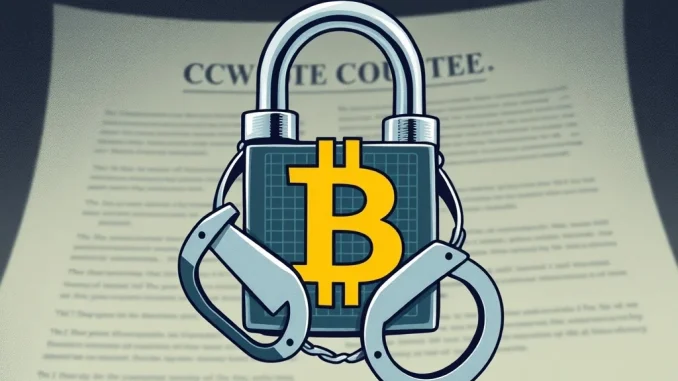
The cryptocurrency community watches closely as legal consequences unfold for figures in the digital asset space. Recently, a significant development occurred that sends a strong message regarding compliance and illicit activities. Specifically, a developer for the notorious Samurai Wallet, a Bitcoin mixing service, has received a substantial prison sentence. This outcome highlights the increasing scrutiny from authorities on tools perceived to facilitate illicit financial flows.
The Verdict: Keonne Rodriguez Sentencing Details Emerge
Keonne Rodriguez, a key developer behind the Samurai Wallet, has been sentenced to five years in prison. The Southern District of New York delivered this judgment, as reported by CoinDesk. This sentence represents the maximum statutory penalty for charges of unlicensed money transmission. Prosecutors asserted that Samurai Wallet played a crucial role in laundering a staggering $237 million in illicit funds. The severity of this sentence underscores the government’s firm stance against non-compliant crypto operations. Consequently, it sets a significant precedent for similar cases in the future.
Understanding Bitcoin Mixing Services and Their Purpose
Bitcoin mixing services, often called ‘tumblers,’ aim to enhance transaction privacy. They achieve this by pooling various users’ funds and then redistributing them in a randomized manner. This process makes it difficult to trace the origin and destination of specific coins. For legitimate users, mixers offer a layer of anonymity, protecting their financial privacy. However, these services also present a significant challenge to law enforcement. Criminals frequently exploit them to obscure the source of illegally obtained funds. This dual-use nature places mixers in a precarious position under current regulatory frameworks.
The Scope of Crypto Money Laundering
Authorities accused Samurai Wallet of facilitating extensive crypto money laundering operations. Prosecutors presented evidence showing that the service handled $237 million in illicit funds. These funds reportedly originated from various criminal enterprises. Such activities include darknet markets, ransomware attacks, and other forms of cybercrime. The sheer volume of laundered money underscores the critical challenge regulators face. Therefore, governments worldwide are intensifying efforts to combat the misuse of cryptocurrencies. They aim to prevent digital assets from becoming safe havens for criminals.
Regulatory Crackdown and Evolving Crypto Regulation
The sentencing of Rodriguez is a clear indicator of a broader trend towards stricter crypto regulation. Governments are increasingly focusing on the intersection of cryptocurrency and financial crime. They aim to close loopholes that enable illicit activities. Regulators worldwide are implementing new rules. These rules often require virtual asset service providers (VASPs) to adhere to Anti-Money Laundering (AML) and Know Your Customer (KYC) protocols. The goal is to bring digital asset transactions under the same scrutiny as traditional financial systems. This proactive approach seeks to protect consumers and maintain financial integrity.
Broader Implications for Privacy Tools in Crypto
This case carries significant implications for other privacy-enhancing tools within the cryptocurrency ecosystem. Many legitimate users value privacy features. They believe these features are essential for financial freedom and security. However, the legal actions against Samurai Wallet suggest that authorities may view such tools with suspicion. Especially if they lack robust compliance measures. The challenge lies in distinguishing between legitimate privacy tools and those intentionally designed to evade law. Therefore, developers of privacy-focused crypto projects must carefully consider their legal obligations. They need to ensure compliance with existing and emerging regulations.
The Road Ahead: William Lonergan Hill and Beyond
The legal proceedings are not yet complete. Another developer associated with Samurai Wallet, William Lonergan Hill, is scheduled for sentencing soon. His case will likely follow a similar trajectory, reinforcing the legal precedent established by Rodriguez’s sentencing. These cases collectively send a powerful message. Developers and operators of cryptocurrency services must understand and adhere to financial regulations. Failure to do so can result in severe legal consequences. The crypto industry must adapt to this evolving regulatory landscape. It needs to prioritize compliance and transparency to foster trust and sustainable growth.
In conclusion, the sentencing of Keonne Rodriguez marks a pivotal moment. It highlights the growing enforcement against non-compliant cryptocurrency services. This event underscores the urgent need for developers and users to understand the legal boundaries. It also reinforces the global push for more robust crypto regulation. As the digital asset space matures, compliance will become an even more critical aspect of its operation. This will ensure a safer and more legitimate environment for all participants.
Frequently Asked Questions (FAQs)
What is Samurai Wallet?
Samurai Wallet was a Bitcoin mixing service. It aimed to enhance transaction privacy by obscuring the origin and destination of Bitcoin funds. It operated by pooling users’ Bitcoins and then redistributing them in a randomized manner to break the chain of traceability.
Why was Keonne Rodriguez sentenced to prison?
Keonne Rodriguez, a developer for Samurai Wallet, was sentenced for unlicensed money transmission. Prosecutors alleged that the service was used to launder approximately $237 million in illicit funds, originating from various criminal activities.
What are Bitcoin mixing services, and are they legal?
Bitcoin mixing services (tumblers) are tools designed to improve transaction anonymity. Their legality often depends on jurisdiction and specific use. While privacy itself is not illegal, operating an unlicensed money transmission business or facilitating money laundering through such services is illegal in many regions, including the United States.
What does this sentencing mean for crypto regulation?
This sentencing reinforces the increasing global trend towards stricter crypto regulation. It signals that authorities are actively pursuing legal action against individuals and services that facilitate illicit financial activities in the crypto space. It emphasizes the need for all crypto projects to comply with AML/KYC laws.
How much money did Samurai Wallet allegedly launder?
Prosecutors stated that Samurai Wallet was used to launder approximately $237 million in illicit funds. These funds were reportedly linked to darknet markets, ransomware, and other cybercrimes.
Who is William Lonergan Hill, and what is his situation?
William Lonergan Hill is another developer associated with Samurai Wallet. He is also facing charges related to the service’s operation and is scheduled to be sentenced soon. His case is expected to further solidify the legal precedent set by Rodriguez’s sentencing.