A prominent voice in the cryptocurrency space has issued a stark warning. Samson Mow, CEO of the Bitcoin technology firm Jan3, contends that the recent Ethereum rally is largely unsustainable. He specifically points to heavy buying pressure from Korean retail investors as the primary driver. This situation, Mow suggests, could lead to unfavorable outcomes for those involved. His insights prompt a critical look at market dynamics and investor behavior in the volatile crypto landscape.
Samson Mow’s Urgent Warning: The Ethereum Rally Under Scrutiny
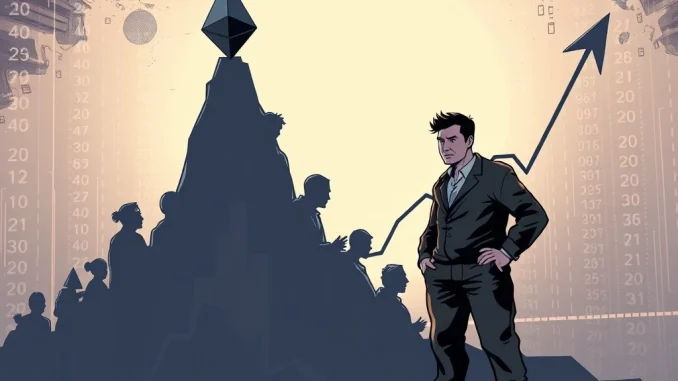
Samson Mow, a well-known figure and an early Bitcoin developer, recently voiced significant concerns. He argues that the current upward movement in Ethereum’s (ETH) price lacks broad fundamental support. Instead, Mow believes it relies heavily on speculative activity from South Korean retail participants. According to Mow, an estimated $6 billion in South Korean retail capital supports companies purchasing ETH. This substantial investment, he asserts, is the sole factor sustaining ETH’s current valuation. Mow’s perspective, therefore, urges caution for investors considering Ethereum.
Furthermore, Mow claims that various ETH-related influencers are actively traveling to South Korea. They specifically target these retail investors, promoting Ethereum as a strategic investment. Mow’s critique suggests these marketing efforts contribute to a skewed market perception. He warns that many of these investors may not fully understand the broader market context. Consequently, they might overlook crucial indicators, such as the ETH/BTC chart. This situation, Mow emphatically states, “will not end well.” His strong words underscore a perceived disconnect between investor sentiment and underlying market realities.
Korean Retail Investors: A Powerful Market Force
South Korea has long been a vibrant and influential hub for cryptocurrency trading. Retail investors in the country exhibit a strong appetite for digital assets. This demographic often shows a willingness to engage with speculative opportunities. Mow’s analysis highlights this particular group’s significant impact on the ETH price. Their collective buying power, he suggests, can artificially inflate asset values. However, such rallies often lack the stability of institutional or fundamental investment.
The intense marketing efforts by crypto influencers in South Korea amplify this trend. These campaigns aim to capitalize on the enthusiasm of Korean retail investors. Influencers present Ethereum as a groundbreaking opportunity, often simplifying complex market dynamics. Therefore, many new investors may enter the market without a comprehensive understanding of potential risks. This creates a market environment susceptible to rapid shifts. When sentiment changes, or external factors intervene, prices can plummet quickly. Understanding these market forces is crucial for all participants.
Understanding the ETH Price Dynamics and Risk Factors
The ETH price is influenced by numerous factors, including adoption, technological developments, and market sentiment. However, Samson Mow emphasizes the importance of the ETH/BTC chart. This chart measures Ethereum’s performance relative to Bitcoin. It provides a crucial indicator of an altcoin’s strength compared to the market leader. A rally driven primarily by retail speculation, without strong performance against Bitcoin, suggests potential instability. Mow believes many Korean investors are unaware of this critical metric. Consequently, they may misinterpret Ethereum’s current growth as a sustainable trend.
Several risk factors emerge from such a retail-driven rally. These risks can significantly impact investors:
- High Volatility: Prices can surge quickly but also drop dramatically without warning.
- Liquidity Issues: A sudden sell-off by a large group of investors can create liquidity crises.
- Lack of Fundamental Support: Rallies not backed by genuine adoption or technological breakthroughs are often unsustainable.
- Emotional Trading: Retail investors are often more susceptible to fear of missing out (FOMO) and fear, uncertainty, and doubt (FUD), leading to irrational decisions.
Therefore, understanding these dynamics is essential for making informed investment choices. Mow’s warning serves as a reminder to look beyond superficial price movements.
A Bitcoin Maximalist’s Perspective: Why Mow is Wary
Samson Mow is famously a Bitcoin maximalist. This philosophy asserts that Bitcoin is the only truly decentralized and secure cryptocurrency. Maximalists often view other cryptocurrencies, or altcoins, with skepticism. They believe altcoins lack Bitcoin’s fundamental properties, such as scarcity, decentralization, and a robust, battle-tested network. Mow’s background as an early Bitcoin developer further solidifies his maximalist stance. He has witnessed numerous altcoin cycles and their eventual outcomes. Consequently, his warnings carry the weight of extensive industry experience.
From a maximalist viewpoint, any significant altcoin rally, especially one driven by retail speculation, is inherently risky. They argue that such rallies often divert capital and attention from Bitcoin, which they consider the only sound long-term investment. Mow’s concern for Korean retail investors stems from this conviction. He believes these investors are being misled into a speculative venture. Therefore, his warning is consistent with his long-held belief in Bitcoin’s superiority and the potential pitfalls of altcoin investing.
Broader Implications for the Cryptocurrency Market
Should Samson Mow’s prediction materialize, the consequences could extend beyond individual investors. A significant correction in Ethereum’s price, particularly one triggered by a mass exodus of retail capital, could send ripples across the entire crypto market. This scenario might lead to a broader market downturn. Furthermore, it could erode investor confidence, especially among newer entrants. Such events underscore the interconnected nature of digital asset markets. They also highlight the importance of diverse, fundamental-driven investment rather than concentrated, speculative bets.
The situation also emphasizes the need for greater financial literacy within the crypto space. Investors must conduct thorough due diligence. They should also understand the underlying technology and market mechanics. Mow’s warning serves as a critical reminder. While the allure of rapid gains is strong, the risks in speculative markets remain substantial. Responsible investing practices are paramount for long-term success in the evolving cryptocurrency ecosystem.
In conclusion, Samson Mow’s recent warning regarding the Ethereum rally, driven by Korean retail investors, warrants serious attention. His perspective, rooted in his experience as a Bitcoin maximalist, highlights the potential for a difficult outcome. Investors should consider the factors influencing ETH price, including market sentiment and the significance of the ETH/BTC chart. Informed decision-making and a cautious approach remain essential in the dynamic world of cryptocurrencies.
Frequently Asked Questions (FAQs)
1. Who is Samson Mow?
Samson Mow is the CEO of Jan3, a Bitcoin technology firm. He is also a well-known figure in the cryptocurrency industry and an early Bitcoin developer. Mow is recognized for his strong advocacy of Bitcoin and his stance as a Bitcoin maximalist.
2. What is a Bitcoin maximalist?
A Bitcoin maximalist is someone who believes that Bitcoin is the only truly decentralized, secure, and viable cryptocurrency for the long term. They often view other cryptocurrencies (altcoins) with skepticism, arguing that they lack Bitcoin’s fundamental strengths and long-term potential.
3. Why is the ETH/BTC chart important, according to Samson Mow?
The ETH/BTC chart shows Ethereum’s price performance relative to Bitcoin. Mow considers it crucial because it indicates whether an altcoin’s rally is fundamentally strong or merely speculative. If ETH rises against fiat but falls against BTC, it suggests a weaker underlying trend.
4. What are the main risks of a retail-driven Ethereum rally?
Mow highlights several risks, including high volatility, potential liquidity issues during a sell-off, and a lack of fundamental support for the price surge. Retail-driven rallies are often based on speculation and emotion rather than intrinsic value, making them unsustainable and prone to sharp corrections.
5. How can investors protect themselves from speculative rallies?
Investors can protect themselves by conducting thorough research, understanding market fundamentals, and diversifying their portfolios. They should also be aware of the ETH/BTC chart and avoid making decisions based solely on social media hype or fear of missing out (FOMO). Always consider the long-term viability of an asset.