Global events often send ripples through financial markets, including the volatile cryptocurrency space. Investors monitor international developments closely. Therefore, the latest news from Eastern Europe carries significant weight. Russia has definitively rejected a proposal from former President Donald Trump aimed at ending the protracted Russia Ukraine war. This refusal signals a continued hardening of Moscow’s position, consequently impacting future diplomatic efforts and overall market sentiment. This development further complicates the path toward peace, maintaining uncertainty in global geopolitical stability.
Russia’s Firm Stance on the Donbas Region
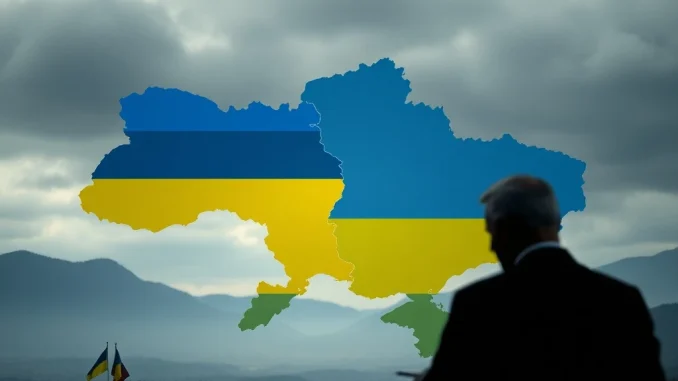
Russia has reiterated its non-negotiable demand for complete control over the entire Donbas region as a condition for any peace agreement in Ukraine. This firm position came through an informal notice sent to the U.S. last weekend. Reuters reported this, citing two U.S. government officials familiar with the communication. The demand encompasses the Luhansk and Donetsk oblasts, which Russia unilaterally annexed in September 2022. Historically, parts of these regions have been under Russian-backed separatist control since 2014. However, Ukraine maintains sovereignty over its internationally recognized borders.
Furthermore, Moscow views the Donbas as historically and strategically vital. Control of this industrial heartland remains a key war aim. This stance effectively shuts down any peace initiative that does not acknowledge Russia’s territorial claims. Therefore, the prospect of a ceasefire along current front lines, as suggested by Trump, appears increasingly distant. This uncompromising demand underscores the deep chasm between the warring parties. It also complicates any external mediation efforts.
Analyzing the Trump Peace Proposal
Former President Donald Trump had proposed a peace plan focusing on ending the conflict along the current front lines. This initiative aimed to halt the fighting immediately. Reportedly, his proposal sought to freeze the conflict in its existing territorial configuration. Such a plan would likely involve a ceasefire and potentially a demilitarized zone. However, it would leave significant Ukrainian territories under Russian occupation. Proponents of this approach suggest it could prevent further bloodshed. Conversely, critics argue it would reward Russian aggression. They also believe it would set a dangerous precedent for future international relations.
Trump’s idea emerged amid growing concerns about the war’s economic and human cost. His approach contrasted sharply with the Biden administration’s policy. The current U.S. administration emphasizes supporting Ukraine’s territorial integrity. Moreover, many European allies also support Ukraine’s full sovereignty. Therefore, the Trump peace proposal faced skepticism from various international actors even before Russia’s formal rejection. The proposal’s viability always depended on acceptance from both Kyiv and Moscow. Russia’s response confirms its unlikelihood.
Implications for the Russia Ukraine War
The rejection of Trump’s proposal carries significant implications for the ongoing Russia Ukraine war. It clearly indicates that Russia is not prepared to negotiate away its gains. Specifically, Moscow views its control over parts of the Donbas as non-negotiable. This firm stance suggests a prolonged conflict. Peace talks, consequently, seem further away than ever. Ukraine, for its part, has consistently vowed to reclaim all its occupied territories. President Volodymyr Zelenskyy has repeatedly stated that any peace must involve the full restoration of Ukraine’s internationally recognized borders. This includes Crimea and the entire Donbas. Therefore, the positions of both sides remain fundamentally incompatible.
The immediate consequence is a likely intensification of military operations. Neither side appears willing to compromise on core territorial demands. This stalemate could lead to more protracted fighting. Furthermore, international efforts to broker a peace deal will face increased difficulty. Any future negotiations must first address this fundamental disagreement over territory. Without a shift in either side’s maximalist demands, a lasting peace remains elusive.
Geopolitical Stability at Risk
The ongoing conflict and Russia’s latest demands significantly impact global geopolitical stability. The rejection of a potential peace pathway prolongs a major European land war. This situation creates continued uncertainty for international markets and supply chains. Energy prices, food security, and inflation rates are all affected by the conflict. Furthermore, the standoff has deepened divisions between major global powers. Western nations largely condemn Russia’s actions and support Ukraine. Russia, however, seeks to challenge the existing world order. This divergence of views fuels ongoing tensions.
The crisis also tests the resolve of international alliances. NATO members have strengthened their collective defense. They have also provided substantial aid to Ukraine. This solidarity aims to deter further aggression. Nevertheless, the prolonged conflict risks global security. It highlights the fragility of post-Cold War international agreements. Ultimately, achieving sustainable geopolitical stability requires a resolution to this conflict. Russia’s rejection of a peace proposal complicates this immensely.
International Relations and Diplomatic Deadlock
The latest development underscores a profound diplomatic deadlock in international relations. Russia’s insistence on full Donbas control leaves little room for negotiation. This position directly contradicts international law and Ukraine’s sovereignty. Western powers have condemned Russia’s annexations. They continue to impose sanctions. However, these measures have not altered Moscow’s core objectives. The United Nations and other international bodies have struggled to find a resolution. Many nations advocate for a diplomatic solution. Yet, the fundamental disagreements persist.
Moreover, the conflict has reshaped global alliances. Russia has strengthened ties with countries like China and Iran. These relationships challenge the traditional Western-led order. Meanwhile, the transatlantic alliance has solidified its opposition to Russian aggression. The absence of common ground for peace talks creates a dangerous precedent. It suggests that territorial disputes may increasingly be resolved through force. This situation poses a long-term threat to global peace and cooperation. Thus, diplomatic channels remain open but largely ineffective in bridging the divide.
In conclusion, Russia’s unequivocal rejection of Donald Trump’s peace proposal marks a critical juncture in the Russia Ukraine war. Moscow’s unwavering demand for complete control over the Donbas region highlights the immense challenges facing any diplomatic resolution. This development further jeopardizes geopolitical stability and entrenches the current diplomatic stalemate. The prospects for a swift end to the conflict appear dim. Therefore, the international community must prepare for a prolonged period of uncertainty. This ongoing crisis will continue to test the limits of international relations and global security frameworks.
Frequently Asked Questions (FAQs)
What was Donald Trump’s peace proposal for Ukraine?
Donald Trump’s proposal suggested ending the war along the existing front lines. It aimed to freeze the conflict in its current territorial configuration. This would involve a ceasefire, potentially creating a demilitarized zone. The goal was to halt further fighting and casualties.
Why did Russia reject the peace proposal?
Russia rejected the proposal because it did not meet their primary condition. Moscow demands complete control over the entire Donbas region. Trump’s plan to freeze the conflict along current lines would leave parts of the Donbas still under Ukrainian control. This is unacceptable to Russia.
What is the significance of the Donbas region in this conflict?
The Donbas region, comprising Luhansk and Donetsk, is strategically and historically important. It is an industrial heartland. Russia views it as vital for its security and influence in the region. Control over Donbas has been a core war aim for Russia since 2014.
How does this rejection impact future peace talks?
This rejection significantly complicates future peace talks. It underscores the fundamental disagreement over territory. Russia’s insistence on full Donbas control leaves little room for negotiation. This makes any immediate diplomatic resolution highly unlikely. Both sides maintain maximalist positions.
What are the broader implications for geopolitical stability?
The prolonged conflict and Russia’s firm stance threaten global geopolitical stability. It creates uncertainty in international markets and supply chains. It also deepens divisions between major global powers. The situation tests international alliances and challenges the existing world order. It may also encourage similar territorial disputes globally.
What is Ukraine’s stance on peace negotiations?
Ukraine consistently maintains that any peace agreement must involve the full restoration of its internationally recognized borders. This includes reclaiming all occupied territories, such as Crimea and the entire Donbas region. President Zelenskyy has repeatedly affirmed this position. Kyiv will not cede territory for peace.