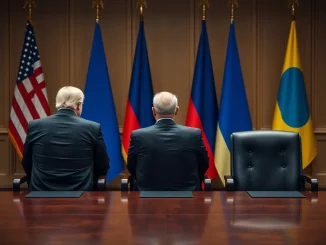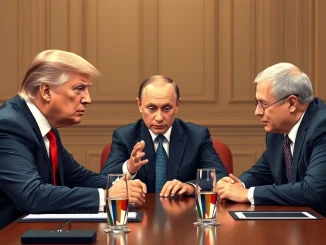
In the unpredictable world of global affairs, even a whisper of diplomatic progress can send ripples across various sectors, including the often-volatile cryptocurrency markets. As investors constantly monitor geopolitical shifts, news of potential new Russia Ukraine talks in Turkey has captured significant attention. While not directly tied to digital assets, the prospect of reduced global tension invariably influences investor sentiment and broader economic stability, which in turn affects all asset classes.
The Latest on Russia Ukraine Talks: A Glimmer of Hope?
The ongoing conflict between Russia and Ukraine has had profound global consequences, from energy price spikes to humanitarian crises. Amidst this backdrop, any sign of dialogue offers a glimmer of hope. Russian state-owned news agency TASS recently reported that the precise dates for a new round of Russia Ukraine talks are still being finalized, with an announcement expected in due time. However, Turkish media has been more specific, speculating that these crucial discussions may take place on July 23-24.
This speculation, though unconfirmed by official sources, highlights the continuous efforts behind the scenes to find a diplomatic resolution. The very possibility of these talks underscores the international community’s desire for de-escalation and peace.
Why is Turkey’s Mediation Crucial for Peace?
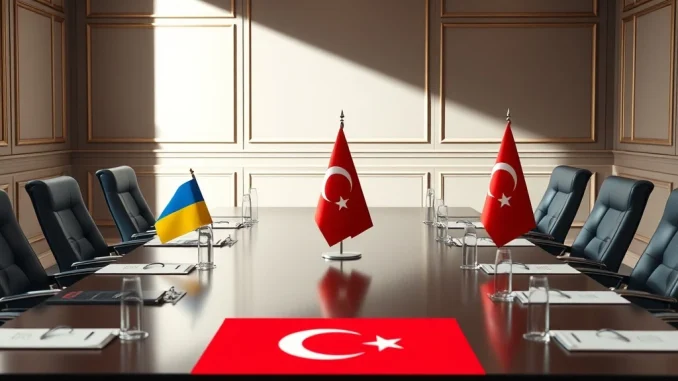
Turkey has consistently positioned itself as a neutral mediator in the conflict, leveraging its unique geopolitical standing. Its role in facilitating dialogue between Moscow and Kyiv has been significant, notably in past humanitarian corridors and prisoner exchanges. The potential for renewed Turkey mediation is not new; the country has hosted previous rounds of talks and has maintained communication channels with both sides.
What makes Turkey an appealing mediator?
- Geographic Proximity: Its location at the crossroads of Europe and Asia provides a convenient and neutral meeting ground.
- Balanced Diplomacy: Turkey has managed to maintain working relationships with both Russia and Ukraine, allowing it to act as a credible facilitator.
- Economic Ties: Both nations have significant economic relationships with Turkey, providing an incentive for engagement.
The choice of Turkey as a potential venue for these discussions underscores its persistent diplomatic efforts and its recognized capacity to bring the warring parties to the table. Successful Turkey mediation could be a significant step towards de-escalation.
Navigating the Path to Peace Negotiations: What’s at Stake?
The road to lasting peace negotiations is fraught with challenges. Previous rounds of talks have yielded limited results, often stalling due to fundamental disagreements on territorial integrity, sovereignty, and security guarantees. For any new round of discussions to be fruitful, both sides would need to approach the table with a genuine commitment to compromise and a clear understanding of the immense human and economic costs of continued conflict.
Key issues that would likely dominate any peace negotiations include:
- Ceasefire Agreements: Establishing a durable cessation of hostilities.
- Humanitarian Corridors: Ensuring safe passage for civilians and aid delivery.
- Prisoner Exchanges: Facilitating the return of captured individuals.
- Territorial Status: The most contentious issue, involving disputed regions.
While the immediate focus might be on a ceasefire, the ultimate goal of any sustained dialogue would be a comprehensive political settlement. The stakes are incredibly high, not just for the immediate parties but for the entire global order.
The Far-Reaching Impact on Geopolitical Stability
The conflict has fundamentally altered the landscape of geopolitical stability. It has triggered a realignment of international alliances, prompted significant shifts in defense policies across Europe, and exacerbated existing global crises. The war has highlighted the interconnectedness of nations, demonstrating how a conflict in one region can have a cascading effect worldwide.
A breakthrough in peace negotiations could lead to:
- Reduced Regional Tensions: Easing pressure on neighboring countries and reducing the risk of wider escalation.
- Revitalization of International Diplomacy: Reaffirming the importance of dialogue in resolving complex disputes.
- Improved Humanitarian Situation: Allowing for greater aid access and potentially fewer civilian casualties.
Conversely, a failure to make progress would only deepen the sense of uncertainty and prolong the period of instability that has characterized the past year.
How Potential Talks Could Influence Global Markets
The prospect of renewed Russia Ukraine talks has immediate implications for global markets. Uncertainty is a primary driver of market volatility, and any news suggesting a potential de-escalation tends to be met with a positive response. Conversely, setbacks in diplomatic efforts often lead to market downturns.
Here’s how these talks could influence various market segments:
- Energy Prices: Reduced tensions could lead to a decrease in oil and gas prices, benefiting consumers and industries worldwide.
- Commodities: Prices of agricultural products like wheat and corn, heavily impacted by the conflict, could stabilize or fall.
- Stock Markets: Investor confidence might improve, leading to rallies in equity markets as risk aversion decreases.
- Cryptocurrency Markets: While not directly linked, crypto often mirrors broader market sentiment. Increased geopolitical stability could lead to a more risk-on environment, potentially benefiting digital assets. Bitcoin, in particular, often reacts to macro events, and a more stable global outlook could support its price.
Investors across all asset classes, including those in the crypto space, are keenly watching these developments, understanding that geopolitical stability is a cornerstone for economic growth and predictable market behavior.
Conclusion
The potential for a new round of Russia Ukraine talks in Turkey on July 23-24, while still speculative, represents a critical moment in the ongoing conflict. Turkey’s consistent efforts in Turkey mediation offer a viable path for dialogue. While the challenges facing peace negotiations are immense, the global community remains hopeful that these discussions could pave the way for a de-escalation of tensions and contribute to greater geopolitical stability. The ripple effects of any progress would undoubtedly be felt across all global markets, offering a much-needed sense of relief and potentially influencing investor behavior, even in the dynamic world of cryptocurrencies. The world watches, hoping for a significant step towards peace.
Frequently Asked Questions (FAQs)
Q1: Are the dates for the Russia-Ukraine talks confirmed?
A1: No, the dates for the new round of Russia-Ukraine talks are not yet officially confirmed. Russian state-owned news agency TASS reported that the dates are still being finalized and will be announced in due time. Turkish media has speculated July 23-24, but this remains unconfirmed.
Q2: Why is Turkey often proposed as a mediator for Russia-Ukraine talks?
A2: Turkey has positioned itself as a neutral mediator due to its strategic geographic location and its ability to maintain working relationships with both Russia and Ukraine. It has previously hosted talks and facilitated humanitarian efforts, making it a credible and experienced facilitator for peace negotiations.
Q3: What are the main challenges for successful peace negotiations?
A3: The main challenges include fundamental disagreements over territorial integrity, sovereignty, and security guarantees. Both sides have differing demands and expectations, making it difficult to find common ground for a comprehensive political settlement.
Q4: How do geopolitical events like these talks impact global markets?
A4: Geopolitical events introduce uncertainty, which often leads to market volatility. Positive news, such as the prospect of peace talks, can reduce risk aversion, potentially leading to increased investor confidence and positive movements in energy, commodity, stock, and even cryptocurrency markets. Conversely, negative developments can trigger downturns.
Q5: What is at stake for geopolitical stability if these talks succeed or fail?
A5: If the talks succeed, it could lead to reduced regional tensions, improved humanitarian situations, and a revitalization of international diplomacy. If they fail, it could prolong global instability, exacerbate existing crises (like energy and food shortages), and further strain international relations.