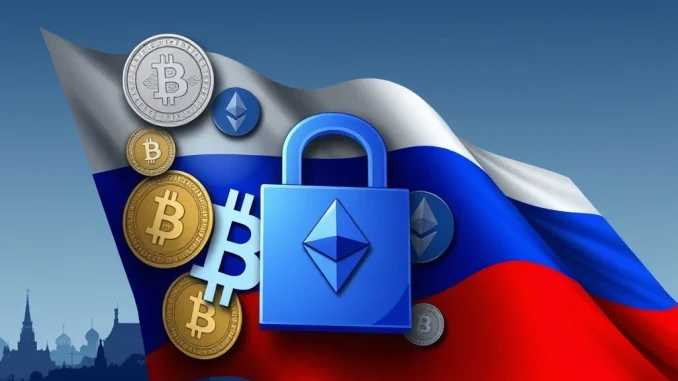
The cryptocurrency landscape in Russia is undergoing a seismic shift, sending ripples of concern through the digital asset community. If you’re involved in the crypto space, particularly with peer-to-peer (P2P) transactions or any form of Russian cryptocurrency, recent legislative changes demand your urgent attention. The Russian government is rapidly escalating its control over digital assets, implementing new laws that grant banks unprecedented power to freeze accounts and label transactions as ‘high-risk.’ This aggressive stance isn’t just about curbing illicit activities; it’s a strategic move to pave the way for Russia’s own state-backed Digital Ruble, set to launch by 2026.
Understanding the Escalating Russia Crypto Regulations
In a significant move, Russia is tightening its grip on the crypto market through revised legislation. The updated “National Payment System” law now empowers banks with broad authority to freeze accounts suspected of involvement in crypto transactions. This is a game-changer, especially for those engaging in P2P trading or using various crypto exchanges. Financial institutions can now partially or fully block accounts based on a range of indicators, including risk signals, third-party complaints, or even automated fraud detection systems [1].
The Central Bank of Russia (CBR) is at the forefront of this push, emphasizing stricter monitoring of crypto transfers. This includes new monthly transaction limits and an outright prohibition on cash deposits linked to digital assets [2]. Essentially, the regulatory net is cast wider, making it increasingly difficult for ordinary users to conduct crypto-related activities through traditional banking channels.
The Impending Digital Ruble: Russia’s Alternative Vision
Amidst the crackdown on decentralized cryptocurrencies, Russia is aggressively pushing its own state-backed central bank digital currency (CBDC), the Digital Ruble. This ambitious project is slated for a full launch in September 2026. The CBR has made its position clear: it explicitly opposes the use of private cryptocurrencies like Bitcoin for retail payments, a ban that has been in effect since 2021 [4].
The Digital Ruble is envisioned as a cornerstone of Russia’s future financial infrastructure. A universal QR code for state-sanctioned payments is also under development, further cementing the government’s control over domestic commerce and marginalizing private crypto. This strategy highlights a broader global trend where nations seek to harness the benefits of digital currencies while retaining central control, offering a stark contrast to the decentralized ethos of traditional cryptocurrencies.
Navigating the Risks: P2P Crypto Freezes and Legal Perils
One of the most immediate and alarming impacts of these new regulations is the direct targeting of P2P crypto trading. The “money laundering law” now allows banks to label crypto transactions as “high-risk” and freeze accounts involved in P2P trades or exchange activities. Initially, this measure was aimed at “droppers” — individuals who lend their bank details to criminals. However, it is now being applied to ordinary crypto users, sparking widespread concern about potential overreach and unintended consequences [3].
The risks extend beyond just account suspensions. Legal analysts are warning that recent amendments to the Criminal Code could expose traders to criminal prosecution. Even unintentionally receiving illicit funds from fraud or money laundering schemes could lead to severe penalties. This places a heavy burden on users to exercise extreme caution and due diligence in all their crypto dealings, especially in the P2P space where transaction origins can be opaque.
| Aspect | Impact on Individual Crypto Users | Impact on Institutional Crypto Players |
|---|---|---|
| Account Freezes & Monitoring | High risk of partial/full account freezes, monthly limits, cash deposit bans. Increased surveillance on P2P and exchange activities. | Generally less impacted by individual transaction freezes. Focus on compliance with new regulatory frameworks. |
| Digital Ruble Policy | Phased out use of private crypto for retail payments. Encouraged adoption of state-backed Digital Ruble. | Potential for new business models and integration with state-sanctioned digital currency infrastructure. |
| Legal Liabilities | Increased risk of criminal prosecution for unintentional receipt of illicit funds. | Operating within approved legal frameworks, potentially benefiting from clear, albeit strict, guidelines. |
| Market Access | Restricted access to traditional banking services for crypto. Reduced options for decentralized trading. | Approved mutual funds for crypto investments. Surge in licensed mining firms. |
Russian Cryptocurrency: A Dual Path for Institutions and Individuals
The regulatory offensive in Russia presents a paradox: while individual traders face heightened risks and surveillance, the government is simultaneously fostering institutional participation in certain segments of the digital asset market. The CBR has approved mutual funds offering crypto investments, signaling a cautious, controlled step toward formalizing the sector [1].
This dual approach aims to balance the crackdown on illicit uses with the controlled integration of digital assets into the financial system. The surge in licensed crypto mining firms serves as a prime example. From just 91 in early 2024, the number of licensed mining operations has skyrocketed to over 1,000. This growth highlights the industry’s resilience and the government’s willingness to support specific, regulated aspects of the Russian cryptocurrency ecosystem, particularly those that can be centrally monitored and taxed [1].
Beyond Borders: Crypto Sanctions Evasion and Geopolitical Stakes
The geopolitical landscape significantly amplifies the stakes for Russian cryptocurrency. While domestic individual crypto use is heavily restricted, exceptions exist for a limited “experimental legal regime” allowing crypto use in foreign trade. This carve-out is explicitly aimed at circumventing Western sanctions [4]. Experts have speculated about the potential use of hypothetical cryptocurrencies, like A7A5, to bypass sanctions, though the CBR has not publicly addressed such specific scenarios [5].
Adding another layer of complexity is the European Union’s 18th sanctions package, which specifically targets third-party evasion of restrictions. This makes international operations for Russian crypto entities incredibly challenging, requiring careful navigation of a complex web of global regulations and geopolitical pressures. The interplay between domestic controls and international sanctions defines a unique and evolving environment for crypto in Russia.
Conclusion
Russia’s tightening grip on cryptocurrencies marks a pivotal moment for its digital economy. The government’s strategy is clear: restrict decentralized private crypto for individual use while promoting its own Digital Ruble and carefully integrating institutional players. This creates a challenging environment for individual traders, who now face increased risks of account freezes and even criminal prosecution, particularly in the P2P space. Simultaneously, the growth of licensed mining operations and approved crypto investment funds suggests a strategic embrace of digital assets under strict state control.
The success of Russia’s ambitious Digital Ruble project and its broader crypto policies will hinge on the CBR’s ability to reconcile stringent enforcement with fostering innovation. This challenge is further compounded by the ongoing need to navigate complex global sanctions and domestic economic pressures. For anyone involved in the Russian crypto market, staying informed and adapting to these rapidly evolving regulations is paramount.
Frequently Asked Questions (FAQs)
1. Why is Russia tightening its crypto controls?
Russia is tightening crypto controls primarily to curb illicit activities like money laundering, gain greater control over financial flows, and pave the way for its state-backed Digital Ruble. This strategy aims to integrate digital assets into a centralized financial system while limiting the influence of decentralized cryptocurrencies.
2. How do the new regulations affect P2P crypto trading in Russia?
The new regulations significantly impact P2P crypto trading by allowing banks to label transactions as “high-risk” and freeze accounts. This measure, originally for criminals, is now applied to ordinary users, increasing the risk of account suspensions and potential criminal prosecution for receiving illicit funds, even unintentionally.
3. What is the Digital Ruble, and when will it launch?
The Digital Ruble is Russia’s central bank digital currency (CBDC), a state-backed digital version of its national currency. It is designed to be a primary payment method, with a full launch expected in September 2026. The CBR explicitly opposes the use of private cryptocurrencies for retail payments in favor of the Digital Ruble.
4. Are there any exceptions for cryptocurrency use in Russia?
Yes, while individual domestic crypto use is heavily restricted, an “experimental legal regime” allows for the use of cryptocurrencies in foreign trade. This exception is primarily aimed at circumventing Western sanctions, demonstrating a strategic, albeit limited, embrace of crypto for specific economic objectives.
5. How does Russia’s approach to crypto differ for individuals versus institutions?
Russia employs a dual approach. Individual crypto users face increasing restrictions, account freezes, and legal risks. In contrast, the government is fostering institutional participation, evidenced by the approval of mutual funds offering crypto investments and a significant increase in licensed crypto mining firms. This allows for controlled integration and potential economic benefits while maintaining state oversight.