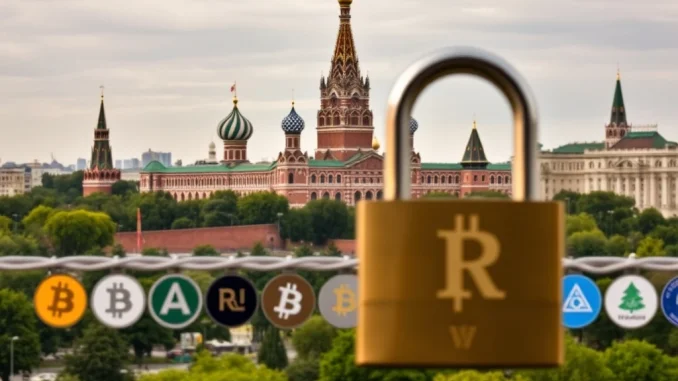
Get ready for a seismic shift in the global cryptocurrency landscape! Russia is set to unveil a comprehensive and ambitious regulatory overhaul targeting its digital finance sector in 2025. This isn’t just a minor tweak; it’s a fundamental reshaping of how cryptocurrencies will operate within the nation’s borders, driven by geopolitical pressures and a strategic push to counter international sanctions. The new **Russia crypto regulations** promise a tightly controlled environment, significantly impacting everything from mining operations to individual investor participation, while simultaneously introducing a state-backed digital currency. What does this mean for the future of digital assets in one of the world’s largest economies?
Understanding Russia’s Sweeping Crypto Regulations
Russia’s upcoming regulatory framework, spearheaded by the Central Bank of Russia and the Ministry of Finance, marks a decisive move towards formalizing and controlling the nation’s digital asset space. Set to take effect in 2025, these measures aim to bring the largely informal crypto economy under strict governmental oversight. The primary goals are clear: to curb illicit financial activities, enhance tax compliance, and align the digital finance sector with Russia’s broader economic and geopolitical objectives.
Key components of this sweeping overhaul include:
- Mandatory Registration for Mining Firms: All crypto mining operations will be required to register with the authorities. This isn’t just a formality; it’s a step towards greater transparency and accountability.
- Operational Data Disclosure: Registered mining enterprises must disclose detailed operational data, including wallet addresses and production volumes, to the Federal Tax Service (FTS). This expanded access to asset data will enable more rigorous enforcement, signaling a formalization of an industry that has long operated in legal ambiguity.
- Prohibition of Domestic Crypto Payments: The new laws explicitly prohibit the use of cryptocurrencies for payments within Russia. This measure aims to solidify the ruble’s status as the sole legal tender and prevent crypto from undermining monetary policy.
- Enhanced Tax Compliance: By integrating crypto activities into the existing tax framework, the government expects a significant reduction in the sector’s ‘shadow economy,’ a challenge highlighted by earlier regulations like the 2020 Digital Financial Assets Act.
This initiative represents a significant evolution from previous attempts to regulate digital assets, indicating a more mature and determined approach to integrating crypto into the state’s financial architecture, albeit under strict control. It’s a clear signal that the era of unfettered crypto activity in Russia is drawing to a close.
The **Digital Ruble**: Russia’s New Financial Frontier
Perhaps one of the most anticipated elements of Russia’s digital finance vision is the introduction of the **digital ruble**, slated for a full launch in 2026. This central bank digital currency (CBDC) is envisioned as a cornerstone of the nation’s financial future, offering a state-backed alternative to traditional banking systems and potentially even private cryptocurrencies.
What makes the digital ruble a game-changer?
- Enhanced Cross-Border Transaction Efficiency: The digital ruble is expected to streamline international payments, potentially reducing reliance on traditional global financial messaging systems like SWIFT, which have been a point of vulnerability under sanctions.
- Reduced Reliance on Traditional Banking: While not a replacement for commercial banks, the digital ruble could offer a direct, state-controlled payment rail, increasing financial autonomy and resilience.
- Leveraging Blockchain Technology: The technological infrastructure for the digital ruble is expected to leverage advancements in blockchain applications, building on precedents set by earlier digital financial asset legislation.
- A Tool for State Control: As a CBDC, the digital ruble offers the Central Bank unprecedented oversight and control over financial flows, enhancing monetary policy implementation and combating illicit finance.
The success of the digital ruble will, however, hinge on widespread adoption and seamless integration with existing financial frameworks. Analysts suggest it could significantly alter Russia’s economic landscape, but its practical implications for everyday citizens and businesses remain to be fully seen.
Navigating **Crypto Sanctions**: Russia’s Strategic Maneuvers
A significant driver behind Russia’s aggressive push for digital financial control is the ongoing international pressure and the need to circumvent Western **crypto sanctions**. The nation is actively exploring innovative ways to maintain economic stability and facilitate international trade despite restrictions. One notable example is the introduction of A7A5, a cryptocurrency registered in Kyrgyzstan, designed specifically as a tool to bypass these financial barriers.
This strategic move comes on the heels of the EU’s 18th sanctions package, which tightened restrictions on Russian energy exports and crypto-related services, even extending to those involving Chinese providers. By leveraging cryptocurrencies like A7A5, Russia aims to:
- Create Sanction-Resistant Financial Channels: Jurisdictional flexibility and the decentralized nature of some cryptocurrencies offer a potential pathway to conduct transactions outside the purview of traditional, sanctionable financial systems.
- Diversify Payment Methods: Reducing reliance on the U.S. dollar and other fiat currencies tied to Western financial infrastructure is a long-term goal for Russia. Cryptocurrencies provide an alternative.
- Assert Economic Sovereignty: Developing and utilizing its own digital financial instruments is part of a broader strategy to insulate the Russian economy from external pressures and assert greater control over its financial destiny.
While A7A5 offers a glimpse into Russia’s innovative approach to counter-sanctions, its widespread adoption and compliance with domestic regulations, especially concerning capital controls, will be critical factors in its long-term effectiveness.
Impact on the **Russian Crypto Market** and **Retail Crypto Access**
The forthcoming regulations will profoundly reshape the entire **Russian crypto market**, creating both challenges and new, albeit limited, opportunities. One of the most significant changes is the explicit exclusion of ordinary retail investors from participating in the broader crypto market.
Elvira Nabiullina, Governor of the Central Bank of Russia, has emphasized that crypto investments will be permitted only for “individual market participants,” effectively restricting access to qualified investors and high-net-worth individuals. This dual-track approach reflects a deliberate strategy:
- Curbing Speculative Activity: By limiting **retail crypto access**, the government aims to reduce market volatility, protect less sophisticated investors from speculative risks, and maintain financial stability.
- Allowing Institutional Engagement: While retail is restricted, the Central Bank is reportedly exploring regulated pathways for elite investors, indicating a desire to harness the benefits of digital assets for specific economic objectives without widespread public exposure.
The implications for various market participants are significant:
For Mining Firms: Mandatory registration requirements and increased data disclosure to the FTS will formalize the industry. This might increase compliance costs but also offers a clearer legal framework. Interestingly, the mining industry is reportedly pivoting towards artificial intelligence (AI) integration, backed by a significant $63 million investment, underscoring a strategic push to enhance operational efficiency amidst tightening regulations.
For Crypto Exchanges: Reduced liquidity is a major concern as retail participation declines. Exchanges will need to adapt their business models to cater primarily to qualified investors or risk becoming obsolete within Russia.
For the Central Bank: The Central Bank’s enhanced authority, including the power to freeze crypto-linked accounts, further centralizes oversight and control, potentially deterring smaller players and consolidating power within a regulated few.
What’s Next for Russia’s Digital Frontier?
The regulatory shift in Russia underscores the nation’s intent to assert comprehensive control over its digital financial landscape while simultaneously developing tools to counter international pressures. The introduction of A7A5 and the ambitious digital ruble project clearly illustrate a dual focus: insulating the economy from external sanctions and asserting regulatory dominance over emerging financial technologies.
However, the exclusion of ordinary citizens from the crypto markets carries inherent risks. It could stifle organic innovation, limit the broader adoption of blockchain technologies, and potentially create a two-tiered financial system. The challenge for the Central Bank and the State Duma, who are working closely to finalize legislation, will be to strike a delicate balance between rigorous regulatory control and fostering a sustainable environment for digital asset innovation.
While the immediate impact will likely include reduced market liquidity and heightened compliance costs for existing players, the long-term goal appears to be a structured, state-monitored digital finance sector. The success of this ambitious overhaul will ultimately hinge on its ability to achieve its strategic objectives without unduly stifling the very innovation it seeks to control.
Frequently Asked Questions (FAQs)
1. What is the primary goal of Russia’s 2025 crypto overhaul?
The main goal of Russia’s 2025 crypto overhaul is to establish stringent controls over domestic cryptocurrency activities, curb informal economic activity, enhance tax compliance, and align the digital finance sector with geopolitical pressures, particularly countering international sanctions. It also aims to introduce a state-backed digital ruble to gain greater financial autonomy.
2. How will the digital ruble impact Russia’s economy and financial system?
The digital ruble, slated for 2026, is expected to enhance cross-border transaction efficiency, reduce reliance on traditional banking systems, and provide the Central Bank with greater oversight and control over financial flows. It aims to offer a state-controlled payment rail, bolstering Russia’s financial sovereignty, especially in the face of sanctions.
3. Why are retail investors being restricted from crypto access in Russia?
Retail investors are explicitly excluded from the new framework primarily to limit speculative activity, stabilize the market, and protect less sophisticated investors from potential risks. The Central Bank intends to permit crypto investments only for “individual market participants,” effectively restricting access to qualified investors and institutions.
4. How is Russia using cryptocurrency to counter international sanctions?
Russia is exploring various strategies, including the introduction of new cryptocurrencies like A7A5 (registered in Kyrgyzstan), to circumvent Western sanctions. These digital assets offer a potential means to create sanction-resistant financial channels and diversify payment methods, reducing reliance on traditional financial systems vulnerable to external pressures.
5. What are the implications of the new regulations for crypto miners in Russia?
Crypto miners in Russia will face significant changes, including mandatory registration requirements and the obligation to disclose operational data, such as wallet addresses and production volumes, to the Federal Tax Service. While this formalizes the industry and aims to reduce the shadow economy, it also increases compliance costs and requires greater transparency from mining operations.
6. What is the expected long-term outcome of these new Russian crypto regulations?
The long-term goal of these new Russian crypto regulations appears to be the establishment of a structured, state-monitored digital finance sector. While it may lead to reduced market liquidity and heightened compliance costs in the short term, the aim is to create a controlled environment that serves Russia’s strategic economic and geopolitical objectives, balancing regulatory rigor with the potential for controlled crypto innovation.