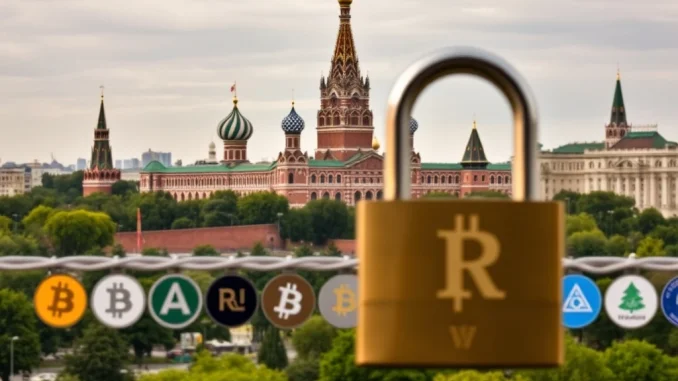
The cryptocurrency world is buzzing with significant news from Eastern Europe. New Russia crypto regulations, set to take effect in 2025, are poised to dramatically reshape the digital asset landscape within the nation’s borders. These comprehensive reforms signal a strategic pivot by Moscow, aiming to curb widespread retail crypto transactions while simultaneously accelerating the adoption of its own state-backed Digital Ruble. What does this mean for the future of digital finance in Russia and for global crypto enthusiasts?
Understanding the New Russia Crypto Regulations for 2025
Russia’s latest legislative push, spearheaded by the Central Bank of Russia and the Ministry of Finance, represents a decisive move towards greater control over digital assets. Effective from January 1, 2025, these regulations introduce several critical changes:
Retail Transaction Prohibition:
Perhaps the most impactful measure is the explicit ban on using cryptocurrencies for everyday retail transactions. This effectively shuts down the avenue for average citizens to use Bitcoin, Ethereum, or other digital assets for payments within Russia.
Limited Investment Access:
While a full crypto ban Russia for all participants isn’t in place, access to crypto investments will be severely restricted. The new framework reserves participation primarily for “qualified institutional investors,” significantly reducing liquidity on public exchanges.
Account Freezing Powers:
Financial institutions will gain authorization to freeze accounts suspected of being linked to non-compliant crypto activities, enhancing the government’s ability to enforce the new rules.
Heightened Mining Scrutiny:
The burgeoning crypto mining industry in Russia will also face increased oversight, with potential penalties for operations that do not adhere to the new regulatory guidelines.
The Digital Ruble’s Ascent: A New Era for Russian Finance?
Central to Russia’s digital finance strategy is the expedited development and launch of the Digital Ruble. This state-backed central bank digital currency (CBDC) is envisioned as a cornerstone of the nation’s financial future, aiming to reduce reliance on decentralized cryptocurrencies and bolster financial sovereignty. The timeline for its full integration into the formal economy is set for 2026.
The Digital Ruble promises several potential benefits for the Russian economy:
- Enhanced Efficiency: Faster, cheaper, and more transparent transactions within the national payment system.
- Reduced Costs: Lower operational costs for financial institutions compared to traditional payment methods.
- Improved Monetary Policy: Greater control and precision for the Central Bank of Russia in implementing monetary policy.
- Financial Inclusion: Potential to bring more citizens into the formal financial system, especially in remote areas.
This strategic shift is not just about control; it’s about leveraging technological advancements to modernize the financial infrastructure under state supervision.
Is This a Complete Crypto Ban in Russia? Unpacking the Nuances
While headlines might suggest a blanket crypto ban Russia, the reality is more nuanced. The regulations specifically target the use of cryptocurrencies for retail payments and limit investment to a select group of institutional players. This is not a total prohibition on owning crypto, but rather a significant restriction on its utility and accessibility for the general public.
For individual users, the implications are clear:
- You cannot use crypto to buy goods or services.
- Access to traditional crypto exchanges for investment will be severely curtailed.
- Participating in crypto activities outside the regulated framework carries significant penalties.
This approach aims to funnel digital financial activity into the state-controlled Russian digital currency ecosystem, effectively walling off the decentralized crypto market from everyday economic life.
Paving the Way for a Russian Digital Currency: Historical Context and Future Vision
Russia’s journey towards a controlled digital finance landscape isn’t new. The 2019 Digital Financial Assets Act (DFA) was an earlier attempt to regulate crypto, but it faced challenges in enforcement and left many loopholes regarding transaction controls. The 2025 reforms are designed to close these gaps, providing the necessary legal teeth to monitor and curb informal economic activities facilitated by cryptocurrencies.
This comprehensive overhaul reflects a broader global trend where nations are exploring CBDCs to maintain financial stability and sovereignty in an increasingly digital world. For Russia, the vision is clear: to integrate a state-backed digital currency seamlessly into its economic fabric by 2026, positioning itself as a key player in the evolution of digital finance, albeit one with a strong emphasis on centralized control.
The Central Bank of Russia’s Stance: Balancing Innovation and Stability
Elvira Nabiullina, Governor of the Central Bank of Russia, has consistently articulated the bank’s cautious approach to cryptocurrencies, emphasizing risk management and financial stability. Her statements, like “The Bank of Russia is ready to allow investments in cryptocurrencies within the Russian Federation, but only for individual market participants,” underscore a strategy that seeks to harness potential blockchain innovation within a tightly controlled environment.
The reforms signal a cautious transition from decentralized systems to a regulated digital currency model. While the Digital Ruble project remains central, the phased approach aims to ensure that high-risk crypto activities remain within a controlled framework, aligning with Russia’s long-term strategic goals for its financial system.
Impact and Future Outlook
The immediate impact of these Russia crypto regulations will undoubtedly be a significant reduction in retail crypto activity within Russia. Investment patterns are expected to shift dramatically, with legal entities adapting to stricter compliance requirements. While the decentralized crypto market may face headwinds, the focus will undoubtedly shift towards state-supervised blockchain applications and the accelerated development of the Digital Ruble’s infrastructure. This could foster a unique form of “permissioned blockchain” innovation under the watchful eye of the state.
Conclusion
Russia’s impending 2025 crypto regulations mark a pivotal moment in the nation’s digital financial journey. By severely limiting retail crypto use and fast-tracking the Russian digital currency, the government is asserting unprecedented control over its financial ecosystem. This strategic move, driven by concerns over financial stability and sovereignty, sets Russia on a distinct path in the global digital asset landscape. As 2025 approaches, the world will be watching closely to see how this ambitious regulatory overhaul reshapes not only Russia’s economy but also its role in the evolving future of digital finance.
Frequently Asked Questions (FAQs)
1. What are the key changes in Russia’s 2025 crypto regulations?
The key changes include a ban on using cryptocurrencies for retail payments, restricting crypto investments primarily to qualified institutional investors, empowering financial institutions to freeze accounts linked to non-compliant crypto activities, and increasing scrutiny on the crypto mining industry.
2. What is the Digital Ruble, and when is it expected to launch?
The Digital Ruble is Russia’s state-backed central bank digital currency (CBDC). It is expected to be fully integrated into the formal economy by 2026, aiming to modernize the financial system and reduce reliance on traditional cryptocurrencies.
3. Does the new law mean a complete crypto ban for all Russians?
No, it’s not a complete crypto ban Russia for all participants. The regulations specifically prohibit the use of cryptocurrencies for everyday retail transactions and limit investment access for individuals, but they do not outlaw owning crypto entirely. The focus is on controlling its utility and accessibility.
4. How will these regulations impact cryptocurrency mining in Russia?
The crypto mining industry in Russia will face heightened scrutiny under the new regulations. Non-compliant operations could face potential penalties, indicating a move towards more regulated and possibly licensed mining activities.
5. Why is Russia enacting these strict cryptocurrency regulations?
The Central Bank of Russia and the Ministry of Finance are spearheading these reforms primarily for risk management, ensuring financial stability, curbing informal economic activities, and accelerating the adoption of the state-backed Russian digital currency to enhance financial sovereignty.
6. What is the Central Bank of Russia’s stance on crypto innovation?
The Central Bank of Russia aims to balance innovation with financial stability. While it is restricting high-risk retail crypto activities, it is open to allowing investments for specific market participants and is actively developing the Digital Ruble to leverage blockchain technology within a controlled framework.