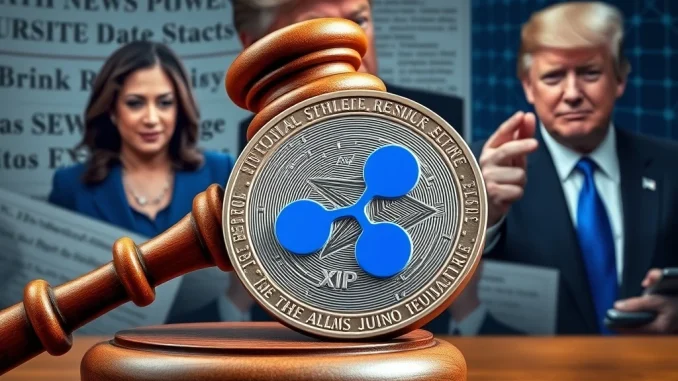
For anyone following the dynamic world of digital assets, the latest XRP news today brings a fresh wave of debate. The ongoing legal saga between Ripple and the U.S. Securities and Exchange Commission (SEC) continues to captivate the crypto community, but recent revelations about Ripple’s political engagements have added a complex new layer to the narrative. Is Ripple’s strategy truly aligned with the interests of XRP holders, or are corporate political maneuvers taking center stage?
Unpacking Ripple’s Political Donations
The spotlight has recently turned to Ripple political donations, particularly significant contributions made by its leadership to political campaigns. Concerns among the crypto community have resurfaced following disclosures about these donations, especially to Kamala Harris’ 2024 presidential campaign.
- Kamala Harris’s Campaign: Former Ripple co-founder Chris Larsen emerged as a top crypto donor, contributing a substantial $11 million to Harris’s campaign. This significant contribution has drawn considerable attention within the industry.
- CEO Brad Garlinghouse’s Stance: Ripple CEO Brad Garlinghouse publicly stated the company is “closing the chapter” on the SEC lawsuit under the Trump administration, fueling speculation about political influence on the case’s resolution.
- The Contradiction Debate: Critics argue that this support for Harris contradicts Ripple’s public image as a pro-crypto entity, especially when considering Donald Trump’s perceived more favorable stance towards the crypto sector. This has led to frustration among some XRP holders who feel a misalignment between Ripple’s actions and their collective interests.
Understanding the True SEC Lawsuit Origins
Amidst the political speculation, a crucial clarification regarding the SEC lawsuit origins has emerged from former SEC attorney Marc Fagel. His insights aim to dispel claims that the case was a partisan effort initiated under the Biden administration or specifically by Gary Gensler.
- Trump Administration Initiative: Fagel clarified that the enforcement action against Ripple was, in fact, initiated under the Trump administration. This key detail is often overlooked in current discussions.
- Jay Clayton’s Tenure: The lawsuit began during Jay Clayton’s tenure as SEC Chair, predating Gary Gensler’s appointment. This historical context is vital for understanding the Ripple SEC lawsuit.
- Avoiding Delays: The investigation concluded to avoid delays during leadership transitions, indicating a procedural rather than political motive at its inception. This distinction is vital for understanding the lawsuit as it challenges narratives portraying it as a recent political attack.
What Does This Mean for XRP Holders?
The intricate dance between Ripple’s corporate strategy, political engagement, and the ongoing Ripple SEC lawsuit has significant implications for XRP holders. Many investors are questioning whether Ripple’s actions truly serve their long-term interests.
- Investor Frustration: Some XRP holders have openly expressed frustration, with one user suggesting a pivot from XRP to Bitcoin if certain price targets are met, reflecting a broader discontent over perceived strategic misalignments.
- Balancing Act: Ripple’s dual support for figures like Harris and subsequent engagement with Trump-aligned initiatives has led to accusations of inconsistency. The core question remains: Is Ripple prioritizing regulatory favor and corporate interests over community cohesion and investor trust?
- Market Confidence: The situation underscores the delicate balance crypto companies must maintain between navigating regulatory uncertainty and ensuring robust community confidence. The outcome of the SEC’s case, combined with these political dynamics, could profoundly impact market sentiment around XRP.
Navigating the Future of XRP News Today
As the Ripple SEC lawsuit awaits its final resolution, the ongoing debate surrounding Ripple’s political strategies will undoubtedly continue to shape the narrative around XRP news today. The transparency of corporate political engagement and its alignment with investor interests is becoming a critical talking point in the broader crypto ecosystem.
- Regulatory Clarity: The resolution of the lawsuit could set a precedent for how other digital assets are classified and regulated, impacting the entire industry.
- Corporate Accountability: This situation highlights the growing demand for accountability from crypto companies regarding their political actions and how these actions may affect their community.
- Investor Due Diligence: For XRP holders, staying informed about both legal proceedings and corporate political strategies becomes paramount in making informed investment decisions.
The unfolding narrative around Ripple’s political donations and the origins of the SEC lawsuit offers a compelling case study in the complex intersection of cryptocurrency, law, and politics. While Ripple aims to navigate a path toward regulatory clarity, the debate over its alignment with XRP holders underscores the inherent challenges in this nascent industry. As the crypto landscape matures, the delicate balance between corporate strategy, political engagement, and maintaining investor trust will remain a central theme, shaping the future not just for XRP, but for the entire digital asset space.
Frequently Asked Questions (FAQs)
1. What are the recent concerns regarding Ripple’s political donations?
Recent concerns center on significant political donations made by Ripple’s leadership, particularly former co-founder Chris Larsen’s $11 million contribution to Kamala Harris’s 2024 presidential campaign. Critics argue this support contradicts Ripple’s public stance as a pro-crypto entity, especially given Donald Trump’s perceived more favorable position toward cryptocurrencies, leading to frustration among some XRP holders.
2. Who initiated the SEC lawsuit against Ripple, and when?
Former SEC attorney Marc Fagel clarified that the enforcement action against Ripple was initiated under the Trump administration during Jay Clayton’s tenure as SEC Chair. It predates Gary Gensler’s appointment as SEC Chair, dispelling claims that the case was politicized under the Biden administration.
3. How do Ripple’s political donations impact XRP holders?
XRP holders have expressed frustration and concern over Ripple’s political donations, perceiving a potential misalignment between the company’s corporate strategies and their interests. Some worry that these actions could influence regulatory outcomes in ways that don’t directly benefit the broader XRP community, leading to questions about investor trust and community cohesion.
4. What is Marc Fagel’s role in clarifying the lawsuit’s origins?
Marc Fagel, a former SEC attorney, provided critical clarification on the lawsuit’s origins. His statements aimed to correct narratives suggesting the case was a partisan effort under the current administration, emphasizing that the investigation began under the previous SEC leadership to avoid delays during transitions.
5. What are the broader implications of this situation for the crypto industry?
This situation highlights the growing tension between corporate political strategy and investor trust in the crypto sector. It underscores the challenges crypto companies face in navigating regulatory uncertainty while maintaining community confidence. The outcome could set precedents for how political engagement, corporate actions, and legal battles intersect in the evolving digital asset landscape.