For crypto enthusiasts, the echoes of this speculative fervor are all too familiar. Just as decentralized communities can drive significant movements in digital assets, a similar, powerful force is once again reshaping traditional stock markets. This week, retail traders have reignited a potent strategy from the 2021 playbook: the short squeeze, sending shares of heavily shorted companies like GoPro and Krispy Kreme soaring. This phenomenon, reminiscent of the GameStop saga, underscores the growing influence of individual investors and the unpredictable nature of modern financial markets.
The Resurgence of the Short Squeeze Strategy
The financial world is buzzing with the news that retail traders are back in full force, employing the very same short-squeeze tactics that captivated global attention in 2021. This week, two prominent names caught the eye of these coordinated online communities: GoPro (GPRO) and Krispy Kreme (DNUT). GoPro, the action camera giant, saw its stock surge by an astonishing 50% at the market’s open, while the beloved donut chain, Krispy Kreme, climbed 12%. These dramatic gains were not driven by groundbreaking earnings reports or new product launches, but by the collective might of retail investors aiming to exploit vulnerabilities in short interest positions.
The mechanics are simple yet effective: when a stock is heavily shorted, it means a large number of investors have borrowed and sold shares, betting that the price will fall. If the price instead begins to rise, these short sellers face increasing losses and are forced to buy back shares to cover their positions. This buying pressure, known as a short squeeze, can accelerate the stock’s ascent, creating a feedback loop that pushes prices to seemingly unsustainable levels.
WallStreetBets: The Modern Market Catalyst
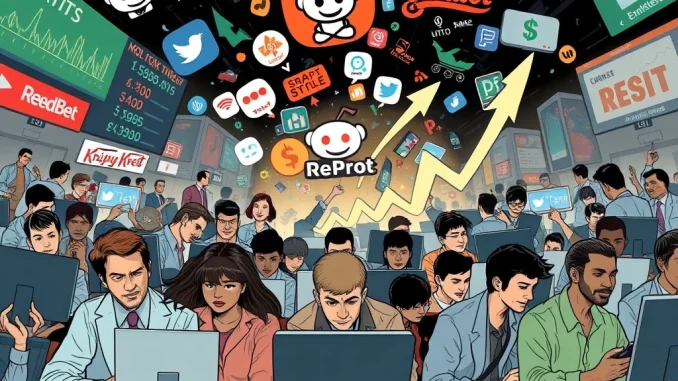
At the heart of this renewed activity lies WallStreetBets (WSB), the infamous Reddit forum that became synonymous with the 2021 GameStop frenzy. This online community serves as a powerful hub for discussion, strategy sharing, and, crucially, coordinated buying efforts. Users on WallStreetBets actively identify companies with elevated short interest and limited institutional oversight, making them prime targets for a short squeeze.
Interestingly, the current wave of speculation shows a strategic shift. While AMC and GME were the poster children of the last boom, WSB users are now rotating into lesser-known names. CNBC’s criteria for potential meme trades—companies with market values between $50 million and $2 billion and share prices under $20—appear to be guiding these selections. This approach is designed to minimize liquidity risks while maximizing leverage against short sellers, allowing smaller collective efforts to make a significant impact.
The emotionally charged nature of these trades is evident in phrases like “60k DNUT YOLO,” a WallStreetBets shorthand that encapsulates the high-conviction, all-in mentality of these investors. It’s a testament to the power of social media to not only disseminate information but also to galvanize collective action in financial markets.
Lessons from the GameStop Phenomenon
The current market movements are an undeniable echo of the GameStop saga of 2021, a watershed moment that forever changed how the financial world viewed retail traders. Back then, a similar surge of coordinated buying by individual investors targeted hedge funds that had heavily shorted GME, forcing massive cover-ups and driving the stock to astronomical heights. This event exposed the vulnerabilities of institutional short positions and showcased the collective power of a decentralized retail army.
While the core objective remains the same—to exploit short sellers—there are nuances in the current environment. For instance, the regulatory landscape has evolved since 2021, when platforms like Robinhood faced intense scrutiny for their handling of meme stock trading. Today’s participants operate in a more structured, albeit still volatile, environment. However, the fundamental drive for short-covering profits, rather than traditional financial fundamentals, continues to be the primary motivator.
Key Similarities and Differences:
- Similarities: Coordinated buying via social media, targeting heavily shorted stocks, forcing short sellers to cover positions, high volatility, focus on momentum over fundamentals.
- Differences: Shift to smaller market cap companies, potentially more sophisticated understanding of market mechanics by retail traders, increased retail capital inflows into equities.
The Broader Market Context: A Surge in Retail Capital
This renewed speculative fervor is not an isolated incident; it’s part of a larger trend of individual investors pouring significant capital into U.S. equities. Data from VandaTrack reveals a staggering $155 billion in inflows into stocks and ETFs during the first half of 2025 alone. To put this in perspective, this surpasses the $110 billion seen during the entire 2021 meme stock boom. This surge in retail capital reflects a broader market risk appetite, coinciding with the S&P 500 hitting its 11th all-time high in 2025.
While institutional participation undoubtedly contributes to the overall market uptrend, speculative retail activity remains a dominant force, often prioritizing momentum over traditional financial metrics. This creates a duality in market dynamics: institutional investors often bet on macroeconomic resilience and corporate earnings, while retail traders deploy aggressive, high-risk tactics in pursuit of quick gains. This speculative element, fueled by social media, can create significant distortions in market fundamentals, as seen with GoPro and Krispy Kreme.
Retail Inflow Comparison:
| Period | Retail Inflows (Stocks & ETFs) | Key Market Events |
|---|---|---|
| Full Year 2021 | $110 Billion | Original GameStop & AMC Meme Stock Boom |
| H1 2025 | $155 Billion | GoPro & Krispy Kreme Surges, S&P 500 All-Time Highs |
What are the Risks and Sustainability of Meme Stocks?
The reemergence of meme stocks raises critical questions about the sustainability of these rallies. While the short squeeze mechanism is a well-documented market phenomenon, the lack of intrinsic value supporting the inflated prices of these stocks raises concerns about potential downside risks. For example, despite lingering short interest, GameStop closed at $24.20, down 0.23% from the prior day, indicating the cyclical and often fleeting nature of these movements. Similarly, AMC and Robinhood have seen modest declines, reflecting that these surges are often temporary and highly volatile.
Analysts remain divided. Some view these rallies as a testament to the democratization of finance, empowering individual investors. Others warn of the speculative bubble, arguing that these trades are driven purely by sentiment and social media hype, rather than fundamental corporate performance. If broader market conditions shift, or if the collective buying power wanes, these highly speculative positions could amplify downside risks, leading to significant losses for those who buy at the peak.
The S&P 500’s record highs suggest broader market confidence, yet the speculative fervor in meme stocks highlights a distinct, high-risk segment of the market. The GameStop playbook continues to shape retail strategies, proving that while unpredictable, retail traders remain a potent and disruptive force in modern financial markets.
Conclusion: The Enduring Power of the Retail Investor
The recent surges in GoPro and Krispy Kreme stock are a clear signal: the era of the empowered retail investor is far from over. Driven by coordinated efforts on platforms like WallStreetBets and fueled by significant capital inflows, retail traders are once again demonstrating their capacity to challenge institutional norms and trigger dramatic market movements. While the thrill of a short squeeze can be exhilarating, it’s crucial for participants to understand the inherent volatility and risks associated with these meme stocks. As markets continue to evolve, the interplay between traditional fundamentals and social media-driven sentiment will undoubtedly remain a fascinating, and often turbulent, aspect of the financial landscape.
Frequently Asked Questions (FAQs)
Q1: What exactly is a short squeeze?
A short squeeze occurs when a stock’s price suddenly rises, forcing investors who bet against the stock (short sellers) to buy it back to limit their losses. This rush to buy creates increased demand, which further drives up the price, trapping more short sellers and exacerbating the upward movement.
Q2: How do retail traders coordinate these stock movements?
Retail traders primarily coordinate through online forums and social media platforms like Reddit’s WallStreetBets, Twitter, and Discord. They identify heavily shorted stocks, share research (or hype), and collectively decide to buy shares, often at the same time, to create buying pressure and initiate a short squeeze.
Q3: What are “meme stocks” and why are they targeted?
Meme stocks are shares of companies that gain significant popularity among retail investors through social media, often despite their underlying financial fundamentals. They are typically targeted because they have high short interest, making them susceptible to short squeezes, and their low share prices or smaller market caps can allow retail investors to have a more noticeable impact.
Q4: How does the current short squeeze phenomenon compare to the 2021 GameStop event?
Both events involve coordinated retail buying to trigger short squeezes. The key difference in 2025 is a reported shift towards smaller market cap stocks (between $50 million and $2 billion) with share prices under $20, potentially to minimize liquidity risks. Additionally, retail capital inflows into equities have significantly increased since 2021.
Q5: What are the risks involved for retail traders participating in a short squeeze?
The primary risks include extreme volatility, rapid price drops, and the potential for significant losses. These rallies are often not based on fundamental value, meaning prices can collapse quickly once buying pressure subsides or institutional investors decide to offload their positions. Traders who buy at the peak can face substantial losses.
Q6: Could the retail trading phenomenon in traditional stocks influence the cryptocurrency market?
While distinct markets, there are parallels. The same community-driven, speculative fervor seen in meme stocks can spill over into the crypto market, particularly with altcoins. The increased risk appetite among retail investors, combined with social media coordination, could fuel similar pump-and-dump or community-driven rallies in less established digital assets, leading to increased volatility.