The world of decentralized finance (DeFi) is constantly buzzing with innovation, and every so often, a project makes a move that sends ripples through the market. Such was the case with the RESOLV token, which recently experienced an impressive short-term surge exceeding 11%, propelling its market capitalization to a notable $47 million. This wasn’t just random market volatility; it was a direct response to a strategic, governance-driven decision: the activation of its protocol fee switch. For anyone tracking the pulse of crypto, this event underscores the power of well-executed tokenomics and community alignment in driving tangible value.
What Triggered the Explosive RESOLV Token Surge?
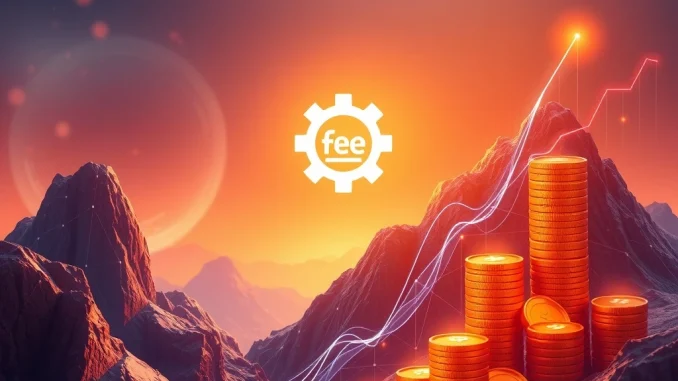
On July 25, 2025, the RESOLV ecosystem witnessed a significant turning point. The RESOLV token, the native asset of the protocol, saw its value jump by over 11% within a single reporting period. This rapid appreciation was directly linked to the project’s official announcement regarding the activation of its protocol fee switch. Before this pivotal moment, RESOLV’s market cap hovered around $42 million, but the immediate market reaction pushed it to an impressive $47 million. This surge wasn’t fueled by external macroeconomic factors or broad market trends; instead, it was an internal, governance-led initiative that resonated strongly with investors.
The core of this positive market reaction lies in the fundamental change introduced by the fee switch:
- Direct Value Redistribution: A portion of the transaction fees generated within the RESOLV protocol will now be directly redistributed to RESOLV stakers.
- Enhanced Incentives: This mechanism significantly enhances the incentive for users to stake their RESOLV tokens, encouraging long-term participation and commitment to the ecosystem.
- Alignment of Interests: By sharing protocol revenue, the project directly aligns the interests of tokenholders with the operational success and growth of the protocol.
Such direct utility and revenue-sharing mechanisms are becoming increasingly crucial in the competitive DeFi landscape, proving that projects capable of rewarding their core user base can foster robust and self-sustaining ecosystems.
Unpacking the Protocol Fee Switch: A Game Changer for Tokenomics
The activation of a protocol fee switch is a sophisticated move in the realm of decentralized finance, often signaling a maturation of a project’s economic model. In RESOLV’s case, this mechanism is designed to capture value directly from the protocol’s operations and channel it back to its tokenholders. But what exactly does it mean?
Think of it like this: every time a transaction occurs on the RESOLV protocol, a small fee is collected. Before the fee switch, these fees might have been burned, used for operational costs, or held in a treasury. With the switch activated, a predetermined percentage of these fees is now systematically directed towards those who have staked their RESOLV tokens. This creates a powerful feedback loop:
- Deflationary Pressure: While not explicitly a burn mechanism, by making staking more attractive, it can reduce the circulating supply available on exchanges, indirectly reducing selling pressure.
- Sustainable Revenue: It establishes a clear and transparent revenue stream for tokenholders, making the RESOLV token a productive asset rather than just a speculative one.
- Governance in Action: The ability to activate such a switch often lies in the hands of tokenholders themselves, showcasing the true power of decentralized governance. This transparency and community control build immense trust.
This strategic shift highlights RESOLV’s commitment to creating a sustainable economic model that benefits its most dedicated participants. It’s a testament to how innovative tokenomics can fundamentally alter a project’s valuation and appeal.
Impact on RESOLV’s Crypto Market Cap and Investor Confidence
The immediate surge in RESOLV’s crypto market cap from approximately $42 million to $47 million serves as a clear indicator of investor confidence. This significant jump, occurring within a single day, underscores the market’s positive interpretation of the fee switch activation. Investors are increasingly looking beyond mere speculation, seeking projects that demonstrate tangible utility and a clear path to value accrual for tokenholders.
Several factors contribute to this boosted confidence:
- Predictable Returns: Stakers now have a more predictable mechanism for earning returns directly from the protocol’s activity, similar to earning dividends from a company.
- Long-Term Alignment: The fee-sharing structure encourages a long-term holding strategy, reducing short-term selling pressure and fostering a more stable ecosystem.
- Transparency and Accountability: The fact that such a critical economic decision was made via governance and publicly announced reinforces the project’s commitment to transparency, a highly valued trait in the DeFi space.
Analysts often observe that governance-driven initiatives, while sometimes causing short-term volatility as the market adjusts, frequently lead to sustained positive momentum when they enhance the fundamental value proposition of a token. RESOLV’s case perfectly illustrates how direct utility and revenue-sharing mechanisms are prioritized to retain user bases and market share in the dynamic crypto world.
RESOLV’s Strategy in the Broader DeFi Growth Landscape
RESOLV’s recent move is not an isolated incident; it aligns perfectly with broader trends shaping the landscape of DeFi growth. As the decentralized finance sector matures, protocols are increasingly focusing on sustainable economic models that go beyond simple liquidity mining or speculative trading. The emphasis is shifting towards creating self-sustaining ecosystems where tokenholders are genuinely rewarded for their participation and contribution to network security and governance.
Key trends RESOLV is tapping into include:
- Real Yield: The concept of ‘real yield’ – earnings derived from actual protocol revenue rather than inflationary token emissions – is gaining significant traction. RESOLV’s fee switch directly contributes to this.
- Staking as a Core Utility: Staking is evolving from just securing a network to becoming a primary mechanism for value distribution and governance participation.
- Community-Centric Development: Projects that empower their communities through robust governance models tend to build more resilient and engaged user bases.
Unlike traditional assets influenced by rankings or indices, RESOLV’s growth appears to stem from direct utility, emphasizing a self-sustaining ecosystem. This development highlights broader trends in decentralized finance (DeFi), where token utility and revenue-sharing mechanisms are prioritized to retain user bases and market share.
The Future of Tokenomics: A RESOLV Case Study
The RESOLV update serves as a compelling case study in the evolving field of tokenomics, particularly concerning stakeholder incentives. By redistributing fees, the project seeks to create a virtuous cycle of participation and value creation. This model, if successful, could very well serve as a blueprint for other DeFi protocols grappling with the challenge of balancing scalability with long-term sustainability.
What can we learn from RESOLV’s approach to tokenomics?
- Prioritize Holder Benefits: Directly linking protocol success to holder benefits fosters loyalty and reduces mercenary capital.
- Transparency is Key: Clear communication about economic model changes builds trust and allows the market to react positively.
- Governance Matters: A strong, active governance framework allows for agile and impactful changes that can respond to market needs and community desires.
The absence of external macroeconomic or sector-specific factors in the news suggests the surge is attributable to internal protocol adjustments, underscoring the role of governance transparency in DeFi projects. RESOLV’s move could inspire a new wave of protocols to rethink their economic structures, focusing on creating more robust, equitable, and sustainable ecosystems for the benefit of all participants.
Conclusion: A Bold Step Towards Sustainable Growth
The recent surge of the RESOLV token, directly attributable to the activation of its protocol fee switch, marks a significant moment for the project and a valuable lesson for the broader DeFi ecosystem. It demonstrates the profound impact that well-thought-out tokenomics and effective governance can have on a project’s valuation and community engagement. By aligning the financial interests of its stakers with the operational success of the protocol, RESOLV has not only boosted its market capitalization but also laid down a foundation for more sustainable, long-term growth. As the DeFi space continues to evolve, projects like RESOLV that prioritize genuine utility and value accrual for their tokenholders are likely to lead the charge into a more mature and resilient decentralized future.
Frequently Asked Questions (FAQs)
Q1: What is the RESOLV token, and why did it surge?
The RESOLV token is the native cryptocurrency of the RESOLV protocol. It surged over 11% because the project activated a ‘protocol fee switch,’ a mechanism designed to redistribute a portion of transaction fees directly to RESOLV stakers. This move enhances the token’s utility and incentivizes long-term participation, boosting investor confidence.
Q2: What is a protocol fee switch?
A protocol fee switch is a feature within a decentralized protocol’s smart contracts that allows a portion of the fees generated from protocol activity (e.g., transactions, swaps, lending) to be directed to specific beneficiaries, typically token stakers or holders. It’s a way to distribute protocol revenue to its participants, making the token a productive asset.
Q3: How does the fee switch impact RESOLV’s market capitalization?
The activation of the fee switch directly impacted RESOLV’s market capitalization by increasing it from approximately $42 million to $47 million. This increase reflects heightened investor confidence due to the new revenue-sharing model, which makes the token more attractive for staking and long-term holding, reducing selling pressure and increasing demand.
Q4: What are the benefits of this fee-sharing model for RESOLV stakers?
For RESOLV stakers, the fee-sharing model offers direct financial incentives by providing a share of the protocol’s transaction fees. This creates a more predictable and sustainable source of yield, encourages long-term commitment to the project, and aligns stakers’ interests with the overall success and growth of the RESOLV ecosystem.
Q5: How does RESOLV’s move relate to broader DeFi trends?
RESOLV’s activation of the fee switch aligns with the growing trend in DeFi towards ‘real yield’ and sustainable tokenomics. Projects are increasingly moving away from purely inflationary rewards to models where tokenholders earn from actual protocol revenue, fostering more robust and self-sustaining ecosystems. It highlights the importance of token utility and governance in driving value.