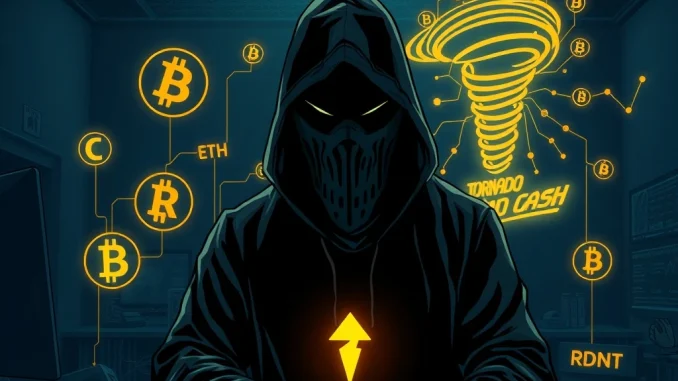
The crypto world watches closely. A hacker linked to the Radiant Capital exploit continues their audacious activities. Recent reports indicate further Ethereum purchases. This comes after a massive $61.4 million laundering operation. The incident raises significant questions about DeFi security and regulatory challenges.
Unpacking the Radiant Capital Exploit
The Radiant Capital exploit shook the decentralized finance (DeFi) sector. It occurred in January 2024. The attacker exploited a reentrancy bug in Radiant Capital’s lending protocol. This vulnerability allowed the hacker to withdraw funds multiple times. Specifically, the attacker drained a substantial amount of assets. This included 1,900 Ether (ETH) and 1,000 Wrapped Bitcoin (wBTC). The total value of the stolen funds reached approximately $4.5 million at the time. This event highlighted critical security flaws. It also prompted immediate responses from the Radiant Capital team. They paused the protocol to prevent further losses. Incident response teams worked to analyze the breach. They aimed to understand the attack vector fully. The DeFi space frequently faces such threats. Therefore, robust auditing and continuous monitoring are essential. This incident served as a stark reminder of these needs.
The Sophistication of Crypto Laundering via Tornado Cash
Following the initial theft, the hacker executed a sophisticated crypto laundering scheme. They moved a staggering 13,650 ETH. This amount was worth $61.4 million at the time of transfer. The attacker routed these funds through Tornado Cash mixer. This is a well-known privacy tool. It combines various crypto transactions. This process makes tracing the origin of funds extremely difficult. Tornado Cash essentially breaks the link between sender and receiver. It achieves this by pooling transactions together. Many illicit actors have historically used such mixers. This includes state-sponsored hacking groups. The U.S. Treasury Department sanctioned Tornado Cash in 2022. They cited its role in facilitating money laundering. Despite these sanctions, the tool remains active. It continues to be a go-to for criminals. This particular laundering event underscores ongoing challenges. Law enforcement faces significant hurdles in tracking stolen digital assets.
Ethereum Hacker’s Bold Next Moves
Remarkably, the Ethereum hacker did not cease activity after the large-scale laundering. Instead, the individual continued to engage in further transactions. AmberCN reported these developments. Over a four-hour period, the hacker purchased an additional 1,327 ETH. This acquisition involved 6 million DAI. DAI is a stablecoin pegged to the U.S. dollar. This move suggests a strategic intent. The hacker might be consolidating assets. They could also be preparing for future illicit activities. The associated wallet address shows significant holdings. It currently holds 27.4 million DAI. Furthermore, it possesses 3,288 ETH. This ETH is valued at $14.78 million. These figures highlight the scale of the hacker’s gains. They also demonstrate their continued presence in the market. Such brazen actions present a complex challenge. Authorities must find ways to combat persistent cybercrime. The crypto community remains vigilant. They monitor these movements closely.
Implications for DeFi Security and Ecosystem Trust
The ongoing activities of the Radiant Capital exploit hacker have profound implications. They directly impact DeFi security and broader ecosystem trust. Each successful exploit erodes confidence. Investors become more hesitant to participate. They question the safety of decentralized protocols. DeFi protocols manage billions of dollars in assets. Therefore, robust security measures are paramount. The reentrancy bug exploited in Radiant Capital is not new. Developers have known about it for years. This raises concerns about auditing practices. It also questions the diligence of smart contract development. The incident emphasizes the need for continuous security audits. It also calls for bug bounty programs. These initiatives incentivize ethical hackers. They identify vulnerabilities before malicious actors exploit them. Building and maintaining trust is crucial. It supports the long-term growth of decentralized finance.
The Enduring Challenge of Tornado Cash and Regulation
The repeated use of Tornado Cash mixer by illicit actors presents a persistent regulatory challenge. Despite sanctions, the platform remains a conduit for crypto laundering. Regulators globally grapple with how to control such tools. They aim to balance financial privacy with anti-money laundering (AML) efforts. The decentralized nature of these mixers complicates enforcement. There is no central entity to shut down. This makes direct intervention difficult. Lawmakers continue to debate the future of privacy-enhancing technologies. Some argue they are essential for user privacy. Others contend they are dangerous havens for criminals. The Radiant Capital incident reignites these discussions. It pushes for more effective strategies. These strategies must address illicit financial flows. They must also protect legitimate users. This delicate balance requires innovative solutions. It also demands international cooperation among regulatory bodies.
Protecting Against Future Crypto Exploits
Protecting the DeFi space from future crypto exploits requires a multi-faceted approach. Protocols must prioritize security from conception. This includes rigorous smart contract auditing. It also involves formal verification methods. These techniques mathematically prove code correctness. Furthermore, real-time monitoring systems are vital. They detect suspicious transactions quickly. Community vigilance also plays a role. Users must educate themselves about common attack vectors. They should report unusual activity. Developers also benefit from open-source collaboration. Sharing knowledge about vulnerabilities strengthens collective defenses. Finally, platforms like Radiant Capital often offer bug bounties. These programs reward security researchers. They find and report flaws responsibly. Such proactive measures are indispensable. They safeguard user funds and maintain ecosystem integrity.
The Radiant Capital exploit and the hacker’s subsequent actions serve as a powerful reminder. The digital asset landscape faces persistent threats. The continued crypto laundering through Tornado Cash mixer highlights significant challenges. It underscores the ongoing battle between anonymity and accountability. The DeFi sector, while innovative, must continually strengthen its defenses. Enhanced security measures are critical. Robust regulatory frameworks are also essential. Only through collective effort can the industry build a more secure future. This will protect investors and foster sustainable growth. The crypto community remains on high alert. They watch for further developments in this unfolding saga.
Frequently Asked Questions (FAQs)
Q1: What was the Radiant Capital exploit?
A1: The Radiant Capital exploit involved a reentrancy bug in its lending protocol. This allowed a hacker to withdraw funds multiple times, totaling approximately $4.5 million in ETH and wBTC.
Q2: How did the hacker launder the stolen funds?
A2: The hacker laundered 13,650 ETH, worth $61.4 million, through Tornado Cash. This is a cryptocurrency mixer designed to obscure the origin and destination of transactions.
Q3: What is Tornado Cash and why is it controversial?
A3: Tornado Cash is a decentralized privacy tool that mixes various crypto transactions to make them untraceable. It is controversial because illicit actors, including the Radiant Capital hacker, frequently use it for money laundering. This led to sanctions by the U.S. Treasury.
Q4: What actions did the Radiant Capital hacker take after laundering the funds?
A4: After laundering the initial sum, the hacker continued to purchase more ETH. They acquired an additional 1,327 ETH with 6 million DAI. This indicates ongoing activity and asset consolidation.
Q5: What are the broader implications of this exploit for DeFi security?
A5: This exploit highlights persistent vulnerabilities in DeFi protocols. It emphasizes the need for rigorous security audits, bug bounty programs, and real-time monitoring. These measures are crucial to rebuild and maintain investor trust in the decentralized finance ecosystem.
Q6: How can the crypto community protect itself from similar exploits?
A6: Protection involves continuous security audits, formal verification of smart contracts, and real-time monitoring. User education, open-source collaboration among developers, and active participation in bug bounty programs are also vital.