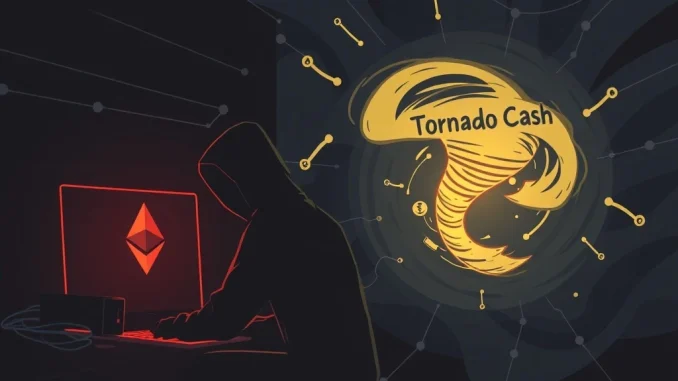
A significant development has emerged in the aftermath of the **Radiant Capital** DeFi exploit. The hacker responsible for the October 2023 breach recently moved a substantial amount of stolen funds. Specifically, 2,834.6 **ETH**, valued at approximately $10.8 million, has been transferred to the crypto mixing protocol **Tornado Cash**. This **ETH transfer** raises new questions about fund traceability and the challenges facing blockchain security.
The Latest Development in the Radiant Capital Exploit
Blockchain security firm CertiK confirmed the recent movement of funds. The **Radiant Capital** protocol suffered a major security incident last October. This incident resulted in a $53 million loss. Now, a portion of these stolen assets has reappeared. The transfer of $10.8 million in ETH to **Tornado Cash** represents a critical step for the perpetrator. This action aims to obscure the origin of the funds.
Consequently, tracking these funds becomes significantly more difficult. This event underscores ongoing vulnerabilities within the decentralized finance (DeFi) ecosystem. It also highlights the persistent efforts of attackers to evade detection. The community watches closely as this situation unfolds.
Understanding Tornado Cash and Crypto Mixing
**Tornado Cash** is a decentralized, non-custodial privacy solution. It aims to improve transaction anonymity on the Ethereum blockchain. Users deposit cryptocurrencies into a pool. Later, they can withdraw the same amount to a new address. This process mixes funds from many users. Thus, it breaks the on-chain link between the sender and receiver.
However, this mixing capability has a controversial side. Criminals and hackers frequently use **Tornado Cash** to launder illicit funds. This includes proceeds from various **DeFi exploit** incidents. Regulators and law enforcement agencies have expressed concerns about its use. The U.S. Treasury Department sanctioned Tornado Cash in August 2022. They cited its role in facilitating money laundering for various groups. This action has led to ongoing debates about privacy versus illicit activity in the crypto space.
The Anatomy of a DeFi Exploit
A **DeFi exploit** typically targets vulnerabilities in smart contracts. These vulnerabilities can stem from coding errors or design flaws. The initial **Radiant Capital** hack in October involved a flash loan attack. This specific attack manipulated a price oracle. The attacker then drained liquidity from the protocol. Such exploits highlight the complex risks inherent in DeFi platforms.
For instance, auditing smart contracts is crucial. Yet, even audited protocols can fall victim. The speed and scale of DeFi transactions mean exploits can unfold rapidly. Consequently, significant funds can be lost in minutes. The aftermath often involves attempts to trace funds and recover assets. This is a difficult task, especially when a **crypto hacker** uses mixers.
Tracing the Crypto Hacker’s Digital Footprint
Identifying a **crypto hacker** and tracing stolen funds is a complex endeavor. Blockchain analytics firms like CertiK play a vital role. They monitor on-chain movements. They use sophisticated tools to follow transaction trails. However, the use of mixers like Tornado Cash complicates this process immensely. Once funds enter a mixer, their origin becomes obscured. This makes direct tracing extremely challenging.
Law enforcement agencies often collaborate with these firms. They aim to track illicit activities. Despite these efforts, many hackers remain anonymous. The decentralized nature of cryptocurrencies, coupled with privacy tools, provides a degree of protection for perpetrators. This particular **ETH transfer** to Tornado Cash underscores the ongoing cat-and-mouse game between hackers and security experts.
Impact of the ETH Transfer on DeFi Security
This latest **ETH transfer** serves as a stark reminder of persistent security challenges in DeFi. It highlights the ease with which stolen funds can be laundered. The incident could further erode trust in the sector. Users and investors often worry about the safety of their assets. Furthermore, it might intensify regulatory scrutiny on privacy protocols.
The **Radiant Capital** incident and subsequent fund movement emphasize the need for robust security measures. This includes continuous smart contract audits. It also involves enhanced monitoring systems. Moreover, improved incident response plans are essential. The DeFi community must prioritize security. This will help protect users and maintain the integrity of decentralized finance. The fight against crypto crime remains a top priority for the entire industry.
The movement of $10.8 million in ETH to Tornado Cash by the **Radiant Capital** hacker marks a significant event. It illustrates the ongoing battle against illicit activities in the crypto space. While the immediate impact is on Radiant Capital, the broader implications affect all DeFi protocols. This situation underscores the critical need for advanced security measures and persistent vigilance across the blockchain ecosystem. The crypto community must continue to innovate in security to combat such threats effectively.
Frequently Asked Questions (FAQs)
Q1: What is Radiant Capital, and why was it hacked?
Radiant Capital is a decentralized lending and borrowing protocol operating on various blockchain networks. It suffered a **DeFi exploit** in October 2023, primarily due to a vulnerability in its smart contracts related to a flash loan attack, which allowed the hacker to manipulate prices and drain funds.
Q2: How much ETH was transferred to Tornado Cash?
The hacker behind the Radiant Capital exploit transferred 2,834.6 **ETH**, which was valued at approximately $10.8 million at the time of the transfer, to the crypto mixing service **Tornado Cash**.
Q3: What is Tornado Cash, and why do hackers use it?
**Tornado Cash** is a privacy-enhancing protocol that mixes cryptocurrency from various users to obscure the transaction history. Hackers use it to break the on-chain link between stolen funds and their original source, making it extremely difficult for authorities and blockchain analytics firms to trace the illicit assets.
Q4: Can the stolen funds be recovered after being sent to Tornado Cash?
Recovering funds after they have been processed through **Tornado Cash** is exceptionally challenging due to its privacy-preserving nature. While blockchain security firms can sometimes identify the addresses interacting with mixers, directly linking withdrawn funds to a specific original exploit becomes very difficult, significantly reducing the chances of recovery.
Q5: What are the broader implications of this **ETH transfer** for DeFi security?
This **ETH transfer** highlights persistent vulnerabilities in DeFi protocols and the effectiveness of mixers in obscuring illicit fund movements. It reinforces the need for continuous security audits, robust monitoring systems, and enhanced collaboration between security firms and law enforcement to combat crypto crime and protect user assets across the DeFi ecosystem.