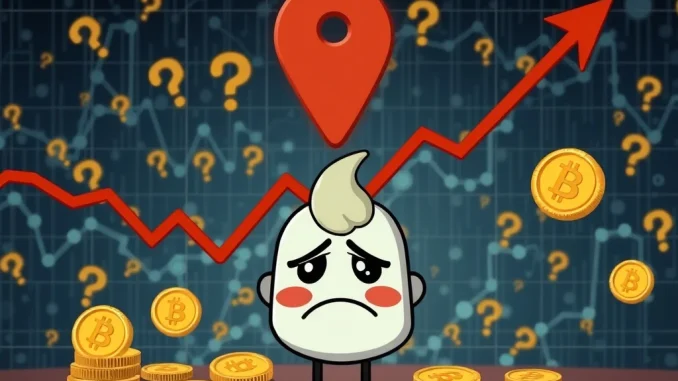
The world of meme coins is notoriously volatile, and the latest dramatic turn comes from Pump.Fun. The Pump.Fun token, known by its ticker PUMP, has recently experienced a significant and alarming 27% crash. This sharp decline is directly linked to renewed and growing crypto uncertainty surrounding its highly anticipated airdrop, leaving investors on edge and questioning the project’s transparency. If you’re invested in meme coins or simply follow the fast-paced crypto market, this development is crucial to understand.
What Triggered the PUMP Airdrop Uncertainty?
The recent downturn in the Pump.Fun token‘s value wasn’t an isolated incident; it followed a pivotal interview with Pump.Fun co-founder Alan Cohen on July 24th. His remarks, while confirming the eventual arrival of the long-awaited airdrop, conspicuously lacked concrete details regarding its timeline or eligibility criteria. This vagueness immediately fueled frustration among holders who had been heavily speculating on the airdrop’s release, hoping for a quick profit.
- Vague Commitments: Cohen reiterated that the airdrop would happen but provided no specific dates.
- Eligibility Secrecy: He emphasized that fewer than five people globally know the actual eligibility criteria, dismissing most rumors as false.
- ‘Sell the News’ Defense: Cohen defended the delay as a strategic move to prevent a rapid ‘sell the news’ crash, where token holders might immediately liquidate their assets post-airdrop.
While Cohen’s intention might have been to safeguard the token’s value, the outcome has been quite the opposite. The lack of clear communication has inadvertently led to a significant meme coin crash, eroding investor confidence and prompting a wave of critical sentiment across social media.
The Impact of the Pump.Fun Token Crash
The immediate aftermath of Cohen’s interview saw the PUMP token’s value plummet from $0.004 to $0.0029 within days. This represents a staggering 57% drop from its all-time high of $0.0068, which was reached shortly after its mid-July ICO launch. This dramatic depreciation highlights the fragile nature of speculative assets heavily reliant on future promises.
The market reaction was swift and unforgiving. Critics were quick to voice their skepticism, with one prominent Twitter user stating, “Conclusion: every pre-sale is a scam,” underscoring the deep distrust now brewing within parts of the community. This sentiment reflects a broader concern about the viability and integrity of projects that prioritize hype over clear, consistent communication.
Whale Activity and Market Dynamics
Adding fuel to the fire, the Pump.Fun token‘s collapse coincided with significant whale activity. Data from Mob Screener revealed two large sell-offs, each totaling $45,000, shortly after the interview. These substantial liquidations by major holders signaled a potential exodus, further pressuring the token’s price and indicating a loss of confidence among influential players.
Despite these challenges, Pump.Fun remarkably maintained its dominance in decentralized trading of meme coins. On July 24th, the platform recorded an impressive $25 million in daily DEX volume, surpassing its rival, Useless Coin (USELESS). This dichotomy — a crashing token price amidst high trading volume — paints a complex picture. It suggests that while investor sentiment around the token itself is negative, the platform’s underlying utility and market presence for meme coin creation and trading remain strong. However, sustaining this without a strong token value proposition will be a significant challenge.
Lessons from the Meme Coin Crash: What Does It Mean for Crypto Uncertainty?
The situation with Pump.Fun serves as a stark reminder of common pitfalls in speculative crypto projects, especially within the meme coin sector. Here are some key takeaways:
- Hype vs. Substance: Often, initial hype outpaces the actual substance and clear roadmap of a project.
- Transparency Deficits: Lack of clear communication regarding key events like airdrops can severely erode trust and lead to market instability.
- Investor Patience: The crypto community, particularly in the fast-moving meme coin space, has limited patience for vague promises and indefinite delays.
- Impact of Whales: Large holders can significantly influence market movements, and their sell-offs can trigger cascading effects.
The community’s growing impatience is palpable. While Cohen reiterated the team’s commitment to “keeping their word” about the airdrop, the absence of tangible updates has left many investors in limbo. Some speculate that the delay could reflect internal doubts about demand, or even a strategic maneuver to allow larger players to accumulate tokens at a discount before the airdrop.
Meanwhile, competitors like LetsBonk are gaining traction, drawing attention and liquidity away from Pump.Fun as momentum shifts. This highlights the competitive nature of the meme coin ecosystem, where projects must constantly deliver value and maintain community trust to stay relevant.
Can Pump.Fun Rebuild Trust and Overcome the Crypto Uncertainty?
The path forward for Pump.Fun is fraught with challenges. The project’s reliance on a future airdrop to sustain its value proposition has, for now, backfired, with transparency deficits severely eroding confidence. If the airdrop eventually delivers tangible value and is executed with clarity, the Pump.Fun token might recover some of its lost ground. However, current trends suggest that traders are losing patience, and the market is moving on.
The next few weeks will be critical. They will test whether the Pump.Fun team can effectively rebuild trust through concrete actions and transparent communication, or if rival projects will further erode its market share. For investors, this serves as a powerful reminder to conduct thorough due diligence and approach highly speculative assets with caution, understanding that promises, no matter how grand, are only as good as their execution.
The PUMP token’s journey is a microcosm of the broader risks inherent in the meme coin landscape, where market sentiment and perceived utility often outweigh fundamental value. Only time will tell if Pump.Fun can navigate this storm and emerge stronger, or if this meme coin crash marks a turning point towards irrelevance.
Frequently Asked Questions (FAQs)
Q1: What caused the recent Pump.Fun token crash?
The recent Pump.Fun token crash was primarily caused by renewed crypto uncertainty surrounding its long-awaited airdrop. Vague statements from co-founder Alan Cohen regarding the airdrop’s timeline and eligibility criteria fueled investor frustration and triggered significant sell-offs, including large whale activity.
Q2: How much did the PUMP token’s value drop?
The PUMP token plummeted by 27% shortly after the interview with Alan Cohen. This brought its value from $0.004 to $0.0029, marking a total drop of 57% from its all-time high of $0.0068 since its mid-July ICO launch.
Q3: Why is Pump.Fun delaying its airdrop?
Pump.Fun co-founder Alan Cohen stated that the delay is a strategy to avoid a ‘sell the news’ crash, where token holders might immediately liquidate their assets after claiming airdropped tokens. He also emphasized that the eligibility criteria are known by very few people to prevent speculation.
Q4: Does Pump.Fun still have high trading volume despite the crash?
Yes, despite the meme coin crash and token price decline, Pump.Fun maintained its dominance in decentralized trading of meme coins, recording $25 million in daily DEX volume on July 24th, surpassing rivals like Useless Coin.
Q5: What are the broader implications of this event for meme coins?
The Pump.Fun situation underscores the inherent risks in speculative crypto projects, particularly meme coins, where hype often outpaces substance. It highlights the critical importance of transparency, clear communication, and timely delivery of promised features to maintain investor trust and project viability.