In the volatile world of cryptocurrency, fortunes can change in an instant. A recent revelation from Onchain Lens has sent ripples through the crypto community: an anonymous whale experienced a staggering PENGU short liquidation, losing a monumental $13.16 million. This isn’t just a number; it’s a stark reminder of the immense risks and potential pitfalls in leveraged trading.
PENGU Short: The Unfolding Drama
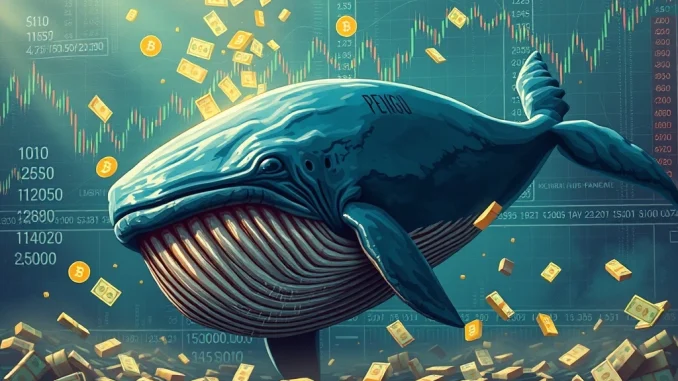
The crypto sphere was abuzz with news reported by Onchain Lens via X (formerly Twitter) about a significant event involving an anonymous whale. This high-stakes player had taken a 3x short position on PENGU, a move that ultimately backfired spectacularly. The initial liquidation resulted in an astonishing $13.16 million loss. For context, a short position profits when the asset’s price falls, but with leverage, losses can multiply just as quickly as gains.
What makes this situation particularly intriguing, and perhaps concerning, is the whale’s immediate subsequent action. Despite the colossal financial setback, the whale opted to reopen a new, albeit smaller, 2x short position on PENGU. This move, while showing a persistent belief in PENGU’s future decline, brought the whale’s total realized loss to $10.6 million after accounting for the new position’s initial status. It raises questions about risk management, conviction, and the psychological aspects of high-leverage trading.
Understanding Crypto Whale Liquidation: What Went Wrong?
To grasp the magnitude of this event, it’s crucial to understand what a crypto whale liquidation entails. In simple terms, liquidation occurs when a trader’s leveraged position is forcibly closed by the exchange or protocol due to insufficient margin to cover potential losses. When the market moves against a leveraged position, the collateral provided by the trader becomes insufficient to maintain the position, triggering an automatic closure to prevent further losses for the exchange.
Here’s a simplified breakdown of what likely happened:
- Initial Short Position: The whale borrowed PENGU tokens and sold them, expecting the price to drop. With 3x leverage, their exposure was three times their initial collateral.
- Price Movement: Instead of falling, PENGU’s price likely surged, moving against the whale’s prediction.
- Margin Call & Liquidation: As PENGU’s price rose, the whale’s collateral began to deplete. Once it hit a certain threshold (the liquidation price), the protocol automatically sold off the whale’s collateral to cover the borrowed tokens, resulting in the $13.16 million loss.
- Reopening the Bet: The decision to re-enter with a 2x short suggests the whale still believes PENGU is overvalued or due for a correction, despite the painful lesson.
The Ripple Effect of Onchain Trading Loss
An onchain trading loss of this magnitude doesn’t just affect the individual whale; it can send signals, both positive and negative, across the market. While a single liquidation of this size might not crash the entire market, it highlights the inherent volatility and the significant capital at play in decentralized finance (DeFi) and broader crypto trading.
Consider these implications:
- Market Sentiment: Such a large loss can spook smaller traders, making them wary of similar positions or even the asset itself (PENGU).
- Liquidity Impact: Liquidations, especially large ones, can temporarily increase selling pressure on the underlying asset as collateral is sold off.
- Protocol Health: For the protocol facilitating the short, a successful liquidation demonstrates its robustness in managing risk and ensuring solvency, even under extreme conditions.
It also underscores the transparency of onchain data. The fact that Onchain Lens could report this activity highlights how every transaction, every liquidation, leaves an indelible mark on the blockchain, making such events publicly verifiable, albeit with anonymous participants.
What is PENGU Token and Why the Short Interest?
While the article focuses on the whale’s trading activity, it’s worth briefly touching upon the PENGU token itself. PENGU is likely a relatively new or niche altcoin, possibly a meme coin or a token associated with a specific DeFi project. Whales often target such tokens for shorting opportunities if they believe the token is overvalued, lacks strong fundamentals, or is experiencing a speculative bubble that is due to burst.
The decision to short PENGU, especially with significant leverage, indicates a strong bearish conviction by the whale. This conviction might be based on:
- Technical Analysis: Identifying bearish patterns on PENGU’s price charts.
- Fundamental Weakness: A belief that PENGU’s underlying project or utility is weak, unsustainable, or facing challenges.
- Market Overextension: Speculating that PENGU’s recent price pumps are unsustainable and ripe for a correction.
However, as this incident vividly demonstrates, even the most confident bearish bets can go spectacularly wrong in the unpredictable crypto market.
Lessons from a Short Position Cryptocurrency Gone Wrong
This dramatic short position cryptocurrency event offers several critical takeaways for both seasoned traders and newcomers:
- Leverage is a Double-Edged Sword: While it can amplify gains, it equally amplifies losses. Higher leverage means a smaller price movement against your position can lead to liquidation.
- Risk Management is Paramount: Even whales, with their vast capital, are susceptible to poor risk management. Setting stop-losses, managing position sizes, and never risking more than you can afford to lose are fundamental.
- Market Volatility: Crypto markets are notoriously volatile. What seems like a sure bet one moment can reverse course dramatically the next.
- Psychological Resilience: The whale’s decision to reopen a position highlights the psychological battle in trading. While it could be a calculated double-down, it could also be a sign of emotional trading, trying to recoup losses.
For average investors, this serves as a cautionary tale. While the allure of quick riches through leveraged trading is strong, the reality of potential losses, as evidenced by this whale’s experience, is far more sobering. It reinforces the importance of thorough research, understanding the underlying asset, and employing conservative strategies, especially when dealing with high-risk assets like altcoins.
The recent PENGU short liquidation of an anonymous whale, resulting in a staggering multi-million dollar loss, serves as a powerful reminder of the inherent risks in the highly volatile cryptocurrency market, particularly with leveraged positions. While the whale’s decision to reopen a smaller short position speaks to a strong conviction, it also underscores the psychological battles and the immense capital at stake in high-frequency, high-leverage trading. This event is a clear demonstration that even the biggest players are not immune to significant setbacks. For all market participants, it’s a stark lesson in the critical importance of robust risk management, understanding market dynamics, and approaching leveraged trading with extreme caution.
Frequently Asked Questions (FAQs)
- What is a crypto whale?
- A crypto whale is an individual or entity that holds a very large amount of cryptocurrency, enough to potentially influence market prices with their trades.
- What does it mean to “short” a cryptocurrency?
- Shorting a cryptocurrency involves borrowing and selling an asset, expecting its price to fall. If the price drops, the trader buys it back at a lower price, returns the borrowed asset, and profits from the difference.
- How does leverage increase risk in crypto trading?
- Leverage allows traders to open positions larger than their actual capital. While it amplifies potential profits, it also significantly amplifies losses, meaning a small adverse price movement can lead to a quick liquidation of the entire position.
- What is “liquidation” in crypto trading?
- Liquidation is the automatic closure of a leveraged trading position by an exchange or protocol when a trader’s margin balance falls below a required level. This occurs when the market moves against their position, and their collateral is no longer sufficient to cover potential losses.
- Why would a whale reopen a short position after a massive loss?
- Reopening a position after a significant loss can stem from several reasons: a strong conviction that the asset’s price will still fall, a belief that the initial liquidation was a temporary anomaly, or an attempt to recoup losses. However, it also carries substantial risk.