The cryptocurrency world is abuzz following a monumental event: a significant OKX USDT transfer totaling $500 million to an undisclosed wallet. This massive movement of Tether’s USD-pegged stablecoin, initially reported by blockchain tracking service Whale Alert, has ignited intense crypto market speculation among traders, analysts, and enthusiasts alike. What does such a colossal transaction signify, and what ripple effects might it have on the digital asset landscape? Let’s dive into the details behind this intriguing mystery.
What Exactly Happened with the OKX USDT Transfer?
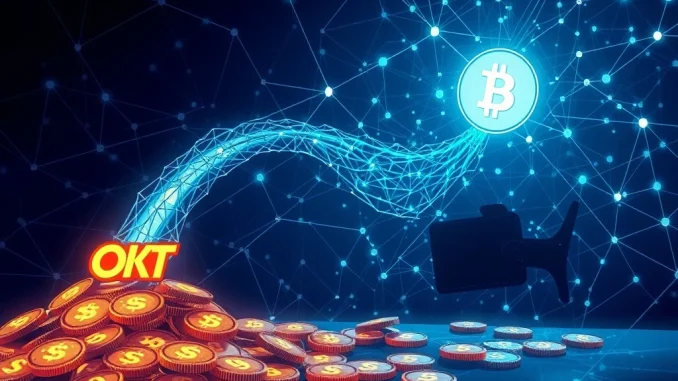
On Friday, July 25, 2025, the digital asset community witnessed a transaction that immediately captured attention: $500 million in USDT moving from a major global exchange, OKX, to an anonymous destination. This isn’t just a casual transfer; it’s a testament to the immense scale of capital flows within the crypto market. While the exact purpose remains shrouded in secrecy, such large-scale movements are rarely random. They typically indicate strategic financial maneuvers by sophisticated entities.
Key details of the transaction:
- Amount: 500,000,000 USDT
- Origin: OKX exchange
- Destination: Unknown wallet address
- Reported by: Whale Alert, a widely recognized blockchain tracking service
The sheer volume underscores Tether’s stablecoin dominance as a primary conduit for large capital movements, bridging traditional finance and the volatile crypto ecosystem. OKX, as a prominent exchange, routinely handles substantial volumes, yet a transfer of this magnitude always warrants closer examination.
Why the Anonymity? Decoding Crypto Market Speculation
The undisclosed nature of the receiving wallet is what truly fuels the widespread crypto market speculation. Without a clear recipient, the community is left to piece together potential motives. Analysts often point to several common explanations for such large, anonymous transfers:
- Exchange Rebalancing: Major exchanges like OKX frequently move funds between their ‘hot’ (online, readily accessible) and ‘cold’ (offline, highly secure) wallets for security and operational efficiency. This is a routine part of managing vast reserves.
- Over-the-Counter (OTC) Deals: Large institutional investors or high-net-worth individuals often execute trades off-exchange to minimize market impact. These OTC deals involve direct transfers between parties, and a stablecoin like USDT is ideal for such transactions.
- Institutional Allocation: The transfer could signal a large institution reallocating significant capital. This might involve deploying funds into decentralized finance (DeFi) protocols for yield generation, investing in other digital assets, or preparing for a major acquisition.
- Liquidity Management: A large entity might be moving funds to consolidate liquidity, prepare for a new product launch, or manage its treasury more effectively across different platforms or protocols.
The fact that it’s a stablecoin, specifically USDT, means it’s less about speculative trading on price volatility and more about capital deployment or strategic positioning. USDT’s peg to the US dollar makes it a reliable medium for transferring significant value without exposure to market fluctuations during the transfer process.
Impact and Implications on the Crypto Market
While a USDT transfer typically has minimal direct impact on the price of volatile assets like Bitcoin or Ethereum, its psychological effects on sentiment and liquidity dynamics are profound. Large, unexplained movements can trigger a ripple of anticipation and, sometimes, volatility, as traders try to predict the next move of the entity behind the transaction.
For OKX, this event reaffirms its standing as a critical liquidity hub, capable of facilitating substantial financial flows. It also highlights the inherent duality of blockchain technology: offering unparalleled transparency in transaction records while simultaneously allowing for a high degree of anonymity in ownership. This balance between privacy and market oversight is a constant point of discussion, especially as institutional participation in crypto continues to expand.
The frequency of such ‘whale-sized’ transfers reflects a maturing infrastructure within the crypto space. These sophisticated capital flows are increasingly akin to those seen in traditional financial systems, signaling a growing integration of digital assets into the broader global economy.
Actionable Insights for Investors Amidst Whale Alerts
For retail investors, a significant Whale Alert like the OKX $500M USDT transfer serves as an important reminder of best practices in a dynamic market. While large transfers don’t inherently signal immediate risks or guaranteed price movements, informed decision-making is paramount.
Consider these actionable insights:
- Diversify Holdings: Never put all your eggs in one basket. Spreading investments across different assets and platforms can mitigate risks associated with sudden market shifts.
- Secure Your Wallets: Ensure your digital assets are stored in secure wallets, preferably hardware wallets for long-term holdings, minimizing exposure to exchange-related risks.
- Avoid Impulsive Trades: Resist the urge to make rash decisions based on market rumors or single large transactions. Emotional trading often leads to losses.
- Contextualize Whale Activity: While intriguing, whale activity should be viewed within the context of broader market fundamentals, macroeconomic trends, and project developments, rather than as a direct indicator of immediate price trends.
- Stay Informed: Continuously educate yourself on market dynamics, blockchain technology, and the specific assets you invest in. Knowledge is your best defense against market FUD (Fear, Uncertainty, Doubt).
The psychological influence of such transfers on traders and liquidity providers remains significant, even if the direct price impact is minimal. As stablecoin adoption continues its upward trajectory, transactions of this scale will likely become even more commonplace, further blurring the lines between fiat and crypto ecosystems.
Conclusion: The Ever-Evolving Crypto Landscape
The $500 million USDT transfer from OKX to an unknown wallet is more than just a large transaction; it’s a window into the complex, rapidly evolving world of digital finance. It highlights the immense capital flowing through the system, the strategic maneuvers of major players, and the fascinating interplay between blockchain transparency and user anonymity. While the immediate implications for the broader market remain a subject of ongoing crypto market speculation, this event underscores the growing maturity of the crypto infrastructure and the indispensable role of stablecoins like USDT. As the digital economy continues to expand, staying informed and adopting a measured approach to market signals, including those from a Whale Alert, will be crucial for navigating its exciting, yet unpredictable, currents.
Frequently Asked Questions (FAQs)
1. What is USDT and why is it used for large transfers?
USDT (Tether) is a stablecoin pegged to the US dollar, meaning its value is intended to remain stable at $1. It’s widely used for large transfers because it minimizes price volatility risk during transactions, making it ideal for moving significant capital without exposure to market fluctuations. It acts as a bridge between fiat and crypto markets.
2. What does ‘unknown wallet’ mean in a blockchain transaction?
An ‘unknown wallet’ refers to a cryptocurrency address whose owner or associated entity has not been publicly identified or disclosed. While the transaction itself is transparently recorded on the blockchain, the identity of the sender or receiver remains anonymous, leading to speculation about their motives.
3. Do large USDT transfers directly impact cryptocurrency prices?
Typically, large USDT transfers have minimal direct impact on the prices of volatile cryptocurrencies like Bitcoin or Ethereum. USDT is a stablecoin, designed to maintain its peg. However, such transfers can indirectly affect market sentiment and liquidity dynamics, potentially influencing trading behavior and leading to secondary effects on asset prices.
4. What are common reasons for a major exchange like OKX to make such a large transfer?
Common reasons include exchange rebalancing (moving funds between hot and cold wallets for security), facilitating large over-the-counter (OTC) deals for institutional clients, managing internal liquidity, or deploying capital into other ventures like DeFi protocols or strategic investments.
5. How can retail investors interpret ‘Whale Alert’ notifications?
Retail investors should interpret ‘Whale Alert’ notifications with caution. While they indicate significant capital movement, they are not direct buy or sell signals. It’s crucial to contextualize them within broader market trends, fundamental analysis, and macroeconomic factors. Avoid impulsive decisions based solely on whale activity; instead, focus on diversification, security, and informed research.
6. Is this OKX USDT transfer a cause for concern for OKX users?
Generally, a large transfer from an exchange like OKX is part of routine operations and liquidity management. Major exchanges have robust compliance and security protocols for such transactions. Unless accompanied by other suspicious activities or official announcements, a single large transfer is not typically a direct cause for concern for individual users’ funds, but it highlights the importance of using secure practices like self-custody for long-term holdings.