In the often-volatile landscape of global affairs, pronouncements from world leaders can send immediate ripples through financial markets, including the cryptocurrency sector. Recent statements from Russian President Vladimir Putin regarding potential **nuclear tests** serve as a prime example. Such declarations introduce significant geopolitical uncertainty. This uncertainty frequently leads investors to seek safe havens or re-evaluate risk exposures. Consequently, understanding these developments is crucial for anyone monitoring global economic trends and their impact on digital assets.
Putin’s Warning on Nuclear Tests
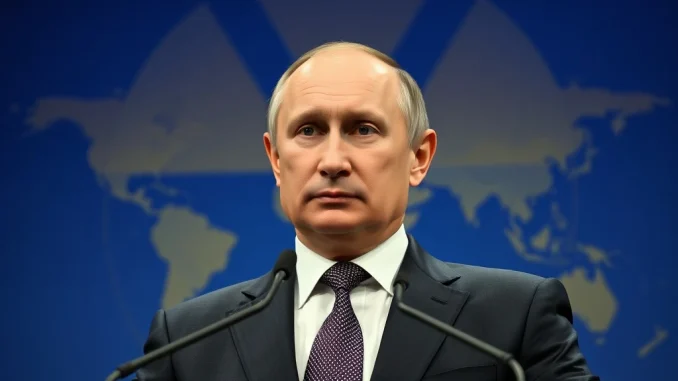
Russian President Vladimir Putin recently made a significant declaration. He stated that Russia might conduct **nuclear tests** if other nations proceed with similar actions. This pronouncement came during a televised address. Putin specifically mentioned that some countries are preparing for such tests. He emphasized Russia’s readiness to respond in kind. This statement immediately heightened concerns about international security. It also sparked discussions among global policymakers.
The Russian leader did not specify which nations he believes are preparing for nuclear tests. However, his words carry considerable weight. They reflect a tense geopolitical environment. Furthermore, they signal a potential shift in global arms control dynamics. The implications for worldwide peace and stability are profound. This situation warrants close attention from all international observers.
Understanding Russia’s Nuclear Policy
To fully grasp the gravity of Putin’s recent statement, it is essential to examine **Russia Nuclear Policy**. Russia maintains one of the world’s largest nuclear arsenals. Its nuclear doctrine outlines conditions for using nuclear weapons. These conditions typically include responses to aggression threatening national existence. Historically, Russia has adhered to a policy of deterrence. This policy relies on the threat of retaliation.
Current Russian military doctrine views nuclear weapons as a deterrent. They protect Russia’s sovereignty and territorial integrity. However, recent geopolitical shifts have led to a more assertive posture. Analysts observe a growing willingness to discuss nuclear capabilities openly. This open discussion aims to project strength and deter perceived threats. Therefore, Putin’s latest comments align with this evolving stance.
Key aspects of Russia’s nuclear doctrine include:
- **Deterrence:** Maintaining a credible nuclear force to prevent aggression.
- **Retaliation:** The ability to respond decisively to any nuclear attack.
- **Escalation Control:** Using nuclear threats to de-escalate conventional conflicts.
This policy framework underscores the strategic importance of nuclear capabilities. It also highlights the delicate balance of power on the global stage.
The Stakes for Global Stability
Putin’s declaration carries significant implications for **Global Stability**. The prospect of renewed nuclear testing introduces a dangerous element into international relations. Such actions could trigger an arms race. Other nuclear-armed states might feel compelled to conduct their own tests. This scenario would undermine decades of arms control efforts. It would also increase the risk of miscalculation and accidental conflict.
Furthermore, the environment could suffer severe consequences. Nuclear tests release radioactive materials into the atmosphere. These materials pose long-term health and environmental hazards. Moreover, the psychological impact on populations worldwide would be substantial. Fear and uncertainty would likely increase. Thus, maintaining a ban on nuclear testing is vital for planetary well-being.
The international community has largely observed a moratorium on nuclear testing. This informal agreement has prevented widespread environmental damage. It has also helped to build trust among nations. A breach of this moratorium could unravel these fragile achievements. It would set a dangerous precedent for future generations. Therefore, preserving the current state of non-testing is paramount.
Putin’s Warning: A Strategic Move?
Many observers interpret **Putin’s Warning** as a strategic maneuver. It could be a tactic to gain leverage in ongoing geopolitical disputes. The statement might aim to deter Western support for Ukraine. It could also seek to project Russian strength. Such pronouncements often serve multiple purposes. They communicate resolve to adversaries. They also rally domestic support.
Some analysts suggest the warning is a response to perceived threats. These threats could include NATO expansion or increased military aid to Ukraine. Putin may be signaling Russia’s readiness to take extreme measures. This readiness aims to protect its perceived national interests. Consequently, the statement becomes a tool in a broader diplomatic game. It shapes perceptions and influences decisions.
Historically, nuclear threats have been used as bargaining chips. Leaders employ them to extract concessions. They also use them to prevent undesirable actions by rivals. This latest warning fits a pattern of assertive Russian foreign policy. It highlights the high stakes involved in current global power dynamics. Understanding this strategic context is key to interpreting the warning’s true intent.
International Relations and Reactions
The statement has naturally elicited strong reactions in **International Relations** circles. World leaders and diplomatic bodies are carefully assessing the implications. Many nations have expressed deep concern. They fear a potential escalation of tensions. Calls for de-escalation and adherence to existing treaties have intensified.
The United Nations Secretary-General often condemns any actions that threaten nuclear disarmament. Such actions would likely draw strong condemnation. NATO allies would undoubtedly view new nuclear tests as a serious provocation. They would likely increase their own vigilance and defense postures. This could lead to a dangerous cycle of countermeasures and heightened alert levels.
Diplomatic efforts will likely focus on preventing such tests. Dialogue and negotiation remain crucial tools. International treaties like the Comprehensive Nuclear-Test-Ban Treaty (CTBT) are important. They provide frameworks for preventing nuclear proliferation. Adherence to these agreements is vital for global peace. Therefore, the world watches closely for further developments and diplomatic responses.
The Broader Impact of Nuclear Tests
Considering the broader impact of **Nuclear Tests** reveals a complex web of consequences. Beyond the immediate geopolitical fallout, there are significant long-term effects. These include environmental damage and health risks. Past tests have shown devastating impacts on ecosystems and human populations. They underscore the need for continued restraint.
Furthermore, resuming tests could weaken the global non-proliferation regime. This regime works to prevent the spread of nuclear weapons. If major powers conduct tests, other nations might follow suit. This could lead to a more dangerous world with more nuclear-armed states. Therefore, the stakes are incredibly high for international security.
Treaties like the Treaty on the Non-Proliferation of Nuclear Weapons (NPT) are cornerstones of global security. They aim to limit the spread of nuclear weapons. They also promote disarmament. Putin’s statement challenges the spirit of these critical agreements. It forces the international community to reaffirm its commitment to non-proliferation. The world must act to prevent a return to an era of unchecked nuclear experimentation.
Ultimately, President Putin’s declaration about potential **nuclear tests** marks a critical moment. It underscores the fragility of global peace. It also highlights the ongoing challenges in international relations. The world watches with apprehension. It hopes for de-escalation and diplomatic solutions. Maintaining global stability requires collective effort and adherence to established norms. The path forward demands careful diplomacy and a strong commitment to non-proliferation.
Frequently Asked Questions (FAQs)
Q1: What exactly did President Putin say about nuclear tests?
President Vladimir Putin stated that Russia would conduct nuclear tests if other nations proceed with similar actions. He indicated that some countries are already preparing for such tests.
Q2: Why is Russia considering resuming nuclear tests?
Russia’s consideration of resuming nuclear tests is largely seen as a strategic move. It aims to deter perceived threats, project strength, and gain leverage in ongoing geopolitical disputes, particularly concerning Western support for Ukraine.
Q3: What are the main implications of resuming nuclear tests for global stability?
Resuming nuclear tests could trigger a new arms race, undermine international arms control treaties, and increase the risk of miscalculation. It would also have severe environmental and health consequences, further destabilizing global security.
Q4: How would the international community likely react to Russia conducting nuclear tests?
The international community would likely react with strong condemnation. Such actions would violate the spirit of international treaties like the CTBT. It would lead to increased diplomatic pressure, sanctions, and heightened military vigilance from nations like NATO members.
Q5: What is the Comprehensive Nuclear-Test-Ban Treaty (CTBT)?
The Comprehensive Nuclear-Test-Ban Treaty (CTBT) is a multilateral treaty that bans all nuclear explosions, for both military and peaceful purposes, in all environments. It aims to curb the proliferation of nuclear weapons and advance nuclear disarmament.
Q6: How do geopolitical events like this affect financial markets, including cryptocurrency?
Geopolitical events, especially those involving nuclear threats, introduce significant uncertainty. This uncertainty often leads to market volatility, with investors moving away from risky assets. Both traditional and cryptocurrency markets can experience fluctuations as investors react to perceived threats to global stability.