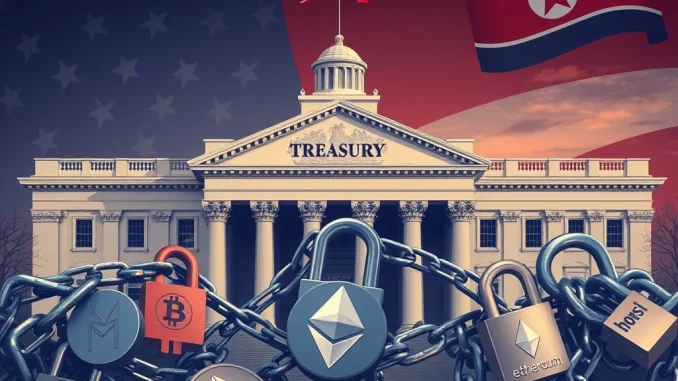
The global cryptocurrency landscape faces constant scrutiny. This is especially true concerning its potential for illicit activities. A recent announcement from the U.S. Department of the Treasury highlights this ongoing challenge. Specifically, the Office of Foreign Assets Control (OFAC) has imposed **North Korea crypto sanctions**. These actions target a network of bankers and institutions. Their involvement in sophisticated crypto money laundering schemes is clear.
Unveiling North Korea’s Crypto Laundering Network
The U.S. Department of the Treasury’s Office of Foreign Assets Control (OFAC) recently announced significant actions. They sanctioned eight North Korean bankers and two institutions. These entities allegedly laundered millions of dollars in cryptocurrency. CoinDesk reported on these developments. A Treasury official confirmed the severity of the situation. Hackers, reportedly backed by the North Korean government, steal and launder these funds. Furthermore, this illicit money directly supports the country’s nuclear weapons program. These **OFAC cryptocurrency sanctions** represent a critical step. They aim to disrupt Pyongyang’s ability to finance its dangerous agenda. The sanctioned individuals operated across multiple countries. These included China, Russia, and the United Arab Emirates. Their network facilitated the conversion of stolen digital assets into fiat currency. This process allowed North Korea to access global financial systems, despite international restrictions. Consequently, the Treasury’s action sends a clear message. It demonstrates a firm commitment to combating global financial crime.
The sanctioned individuals played key roles in this extensive network. For example, one individual, Ri Kyong-Ho, reportedly managed significant funds. He worked for the Foreign Trade Bank (FTB) in China. The FTB itself is already under U.S. sanctions. Another banker, Kim Kwang-Sok, operated in Russia. He facilitated transactions for North Korean entities. These individuals often used deceptive practices. They established front companies. They also exploited vulnerabilities in various financial systems. Thus, they obscured the true origin of the funds. The two institutions sanctioned include the Foreign Trade Bank (FTB) and the Korea National Insurance Company. Both are central to North Korea’s state-backed financial operations. This broad reach highlights the complexity of tracking such illicit activities. It also underscores the global nature of **crypto money laundering** operations.
The Modus Operandi: How North Korean Cybercrime Exploits Cryptocurrency
North Korea’s cyber warfare units are highly sophisticated. They have consistently targeted cryptocurrency exchanges and platforms worldwide. These units, such as the infamous Lazarus Group, execute complex hacks. They aim to steal vast amounts of digital assets. Their methods include phishing attacks, malware deployment, and exploiting software vulnerabilities. Once stolen, these assets undergo elaborate **crypto money laundering** processes. This process involves multiple layers of transactions. They move funds through various wallets and mixing services. Mixing services combine illicit funds with legitimate ones. This makes tracing the origin extremely difficult. Moreover, these groups often convert one cryptocurrency into another. This adds further complexity to the investigative efforts. The ultimate goal is to convert the laundered crypto into fiat currency. This cash then directly funds North Korea’s prohibited weapons programs.
The scale of **North Korean cybercrime** is alarming. Reports indicate billions of dollars in cryptocurrency have been stolen over the years. These thefts represent a significant revenue stream for the regime. This revenue circumvents traditional financial sanctions. Therefore, cryptocurrency provides an alternative funding mechanism. The U.S. Treasury has identified these tactics repeatedly. They recognize the evolving threat. These criminal activities pose a direct challenge to international security. They also undermine the integrity of the global financial system. Consequently, governments and regulatory bodies must adapt. They need new strategies to counter these sophisticated threats. This involves enhanced intelligence sharing. It also requires advanced blockchain analytics tools. The digital nature of cryptocurrency offers both opportunities and challenges for law enforcement. While transactions are recorded on a public ledger, anonymity features can complicate identification.
OFAC’s Decisive Stand: Combating Cryptocurrency Illicit Finance
OFAC’s recent **OFAC cryptocurrency sanctions** are part of a broader strategy. The U.S. Treasury actively combats **cryptocurrency illicit finance**. This commitment is unwavering. The Treasury uses its authority to target individuals and entities globally. These entities facilitate the evasion of sanctions. They also engage in money laundering. This includes those operating within the digital asset space. Treasury officials consistently emphasize the need for vigilance. They work to protect the U.S. financial system from abuse. Furthermore, they aim to disrupt the funding of malign activities. This includes terrorism and proliferation. The sanctions serve as a powerful deterrent. They warn those who assist North Korea’s illicit financial endeavors. The message is clear: involvement carries severe consequences.
The Treasury’s approach involves several key components:
- Enhanced Intelligence: Collecting and analyzing data on illicit crypto activities.
- Targeted Sanctions: Identifying and sanctioning key individuals and networks.
- International Cooperation: Working with global partners to share information and coordinate actions.
- Public Guidance: Issuing advisories and guidance to the private sector. This helps them identify and mitigate risks.
These actions demonstrate the U.S. government’s adaptability. They recognize the changing landscape of financial crime. Digital assets present new challenges. However, they also offer new avenues for enforcement. The Treasury’s expertise in this area continues to grow. They leverage advanced technologies. They also collaborate with blockchain analysis firms. This strengthens their ability to trace and seize illicit funds. Their efforts are crucial. They maintain the integrity of both traditional and digital financial systems.
Global Implications and the Path Forward
The **North Korea crypto sanctions** carry significant global implications. They highlight the urgent need for international cooperation. Governments worldwide must work together. They need to close loopholes exploited by rogue states. This includes harmonizing regulations across jurisdictions. It also involves strengthening anti-money laundering (AML) and counter-terrorist financing (CTF) frameworks for digital assets. The cryptocurrency industry also bears a responsibility. It must implement robust compliance measures. This helps prevent its platforms from being used for illicit purposes. Proactive measures are essential. These include enhanced Know Your Customer (KYC) procedures. They also require advanced transaction monitoring systems. This collective effort is vital. It safeguards the global financial system from persistent threats.
These sanctions serve as a stark reminder. The fight against illicit finance is continuous. As technology evolves, so do the methods of criminals. Therefore, vigilance and adaptation are paramount. The U.S. Treasury remains committed to its mission. It protects national security and the global financial order. By targeting **cryptocurrency illicit finance**, the Treasury disrupts critical funding channels. This makes the world safer. It also reinforces the principle that no financial system, digital or traditional, should be a haven for criminals.
In conclusion, the recent U.S. sanctions against North Korean bankers and institutions mark a critical development. They underscore the ongoing battle against **crypto money laundering** and its ties to dangerous state-sponsored activities. These decisive actions by OFAC aim to dismantle illicit financial networks. They ultimately protect global security. The focus remains on disrupting the funding for North Korea’s nuclear weapons program. This action sends a clear message. International cooperation and robust regulatory frameworks are essential. They ensure the integrity of the evolving digital finance ecosystem.
Frequently Asked Questions (FAQs)
What are the recent US sanctions against North Korea related to cryptocurrency?
The U.S. Department of the Treasury’s OFAC recently sanctioned eight North Korean bankers and two institutions. These entities were involved in laundering millions of dollars in cryptocurrency. These funds were used to support North Korea’s nuclear weapons program.
Who specifically was sanctioned by OFAC?
OFAC sanctioned eight North Korean bankers. These individuals operated in countries like China, Russia, and the UAE. They also sanctioned two key institutions: the Foreign Trade Bank (FTB) and the Korea National Insurance Company. These entities are central to North Korea’s state-backed financial operations.
How does North Korea use cryptocurrency for illicit activities?
North Korean state-backed hackers, such as the Lazarus Group, steal cryptocurrency through sophisticated cyberattacks. They then use complex **crypto money laundering** techniques. These include moving funds through various wallets and mixing services. The goal is to convert the digital assets into fiat currency. This cash then funds the country’s nuclear weapons program.
What is the purpose of these OFAC cryptocurrency sanctions?
The sanctions aim to disrupt North Korea’s ability to access and utilize the global financial system. They specifically target channels used for **cryptocurrency illicit finance**. By doing so, the U.S. seeks to cut off funding for North Korea’s weapons of mass destruction programs and protect international financial integrity.
What are the broader implications for the cryptocurrency industry?
These sanctions highlight the need for enhanced compliance within the cryptocurrency industry. Exchanges and platforms must implement stronger AML/CTF measures, including robust KYC procedures and transaction monitoring. This helps prevent their services from being exploited for illicit activities and strengthens the industry’s credibility.
How does the U.S. Treasury combat cryptocurrency illicit finance?
The U.S. Treasury combats **cryptocurrency illicit finance** through several strategies. These include enhanced intelligence gathering, targeted sanctions, and international cooperation. They also provide public guidance to the private sector. These efforts aim to identify, disrupt, and deter illicit financial activities in the digital asset space.