The world of unique digital collectibles is buzzing again. After a period of quieter activity, the **NFT market** is experiencing an incredible resurgence, driven by significant high-value transactions that are capturing global attention. This renewed vigor suggests a shift in investor sentiment, particularly towards established, blue-chip digital assets. If you’ve been wondering about the future of NFTs, the latest developments offer compelling insights into their evolving role in the broader cryptocurrency ecosystem.
The Monumental CryptoPunks Sale: A Catalyst for Revival
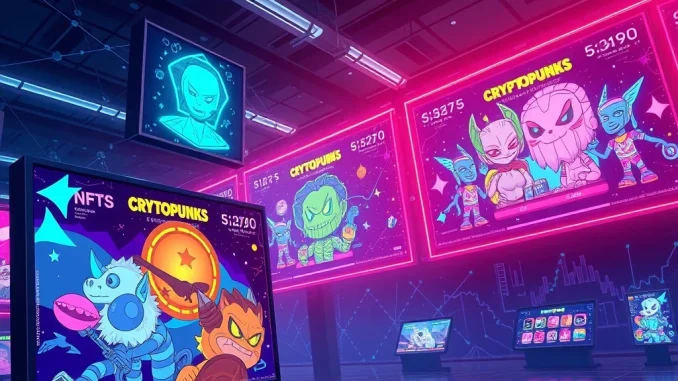
At the heart of this recent surge is a landmark transaction: a single buyer acquired six rare hooded **CryptoPunks** for over $4.3 million. This substantial purchase, executed through OpenSea, stands as one of the largest in recent months and is a clear indicator of renewed institutional and retail interest in these iconic digital collectibles. CryptoPunks, known for their historical significance and scarcity, continue to be perceived as cornerstone assets within the NFT space.
This high-profile sale not only made headlines but also sent ripples across the entire **NFT market**, signaling confidence in its long-term potential. Such large transactions often act as market sentiment indicators, encouraging other investors to re-evaluate their positions and explore opportunities within the sector.
NFTs Lead the Charge: Market Cap and Top Collections Soar
The impact of this renewed interest is quantifiable. The overall **NFT market** capitalization surged to $6.6 billion in July, marking an impressive 94% increase from earlier levels. This growth reflects a broader trend of capital flowing back into digital art and collectibles.
Several top collections are leading this charge, demonstrating significant floor price gains:
- CryptoPunks: Saw a 29% increase, with floor prices reaching approximately $190,000.
- Pudgy Penguins: Experienced a substantial 66.7% rise.
- Bored Ape Yacht Club (BAYC): Gained 9.8% in floor price.
The broader NFT market’s 66% growth in 30 days highlights a discernible shift in investor behavior. There’s a growing preference for scarcity-driven **NFTs** and established collections, suggesting a move away from purely speculative ventures towards assets perceived to have enduring value.
Navigating the Evolving Landscape of Digital Assets
While the current surge is impressive, it’s important to contextualize it within the broader history of the market. The recent activity, though robust, remains below the peak of $16.6 billion observed in 2021 and 2022. This difference points to structural changes within the sector.
Some platforms, like X2Y2, which once held significant market share, have ceased operations due to declining activity. This consolidation indicates a maturing market where only the most adaptable platforms survive through diversified trading strategies. While analysts attribute the current surge in the wider crypto ecosystem to factors like Ethereum’s growing adoption and ETF-related inflows, these factors have yet to directly translate into a sustained increase in **digital assets** trading volume within the NFT space.
Despite elevated floor prices, the market also shows signs of short-term volatility, with a 27% decline in overall NFT sales over the past month. Reports indicate a June trading volume peak of $51 million, followed by a correction. This ebb and flow underscore the dynamic nature of the market, where high-value transactions in dominant collections, such as the doubling of a buyer’s CryptoPunks holdings to 12, continue to serve as key indicators of market sentiment and influence broader market dynamics.
The Blockchain Foundation: Sustainability and Future Trajectories
The resurgence of the **NFT market** is deeply intertwined with the underlying **blockchain** technology that powers it. As the crypto ecosystem matures, NFTs are increasingly being perceived not just as speculative commodities but as legitimate store-of-value assets. This fundamental shift in perception could attract further institutional participation, adding stability and depth to the market.
However, experts caution that while strong demand exists, the sustainability of recent price and volume growth remains uncertain. Macroeconomic pressures and speculative trading patterns continue to influence market behavior. The sector’s inherent volatility, evidenced by the recent 27% sales drop, necessitates a cautious approach for investors.
Looking ahead, the evolution of the NFT landscape will likely be shaped by two critical factors: regulatory clarity and platform interoperability. Clear regulations can provide a framework for growth and investor protection, while enhanced interoperability will make it easier for users to manage and trade their **digital assets** across different platforms, fostering a more robust and accessible ecosystem.
Summary: A New Chapter for Digital Collectibles
The recent surge in the NFT market, highlighted by the monumental CryptoPunks sale, marks a significant new chapter for digital collectibles. While challenges like volatility and market maturity persist, the growing perception of NFTs as store-of-value assets and the increasing interest from institutional players point towards a more resilient and integrated future within the broader blockchain economy. As the market continues to evolve, understanding its dynamics will be key for anyone looking to engage with these unique digital assets.
Frequently Asked Questions (FAQs)
1. What is driving the recent surge in the NFT market?
The recent surge is primarily driven by high-value transactions involving blue-chip NFT collections like CryptoPunks, signaling renewed interest from both institutional and retail investors. This activity, combined with a broader shift towards scarcity-driven assets, has significantly boosted market capitalization.
2. Which NFT collections are currently performing best?
Top-performing collections include CryptoPunks, Pudgy Penguins, and Bored Ape Yacht Club (BAYC). These collections have seen substantial increases in their floor prices and are leading the market’s recovery.
3. How does the current NFT market compare to its peak in 2021-2022?
While the market is experiencing a significant resurgence, its current capitalization of $6.6 billion remains below the $16.6 billion peak observed in 2021 and 2022. This indicates a maturing market with structural changes, including consolidation among platforms.
4. Are NFTs now considered a good long-term investment?
There’s a growing perception of NFTs, especially blue-chip ones, as store-of-value assets rather than purely speculative commodities. However, experts caution about short-term volatility and macroeconomic pressures. As with any investment, thorough research and understanding of risks are crucial.
5. How does Ethereum’s adoption impact the NFT market?
Ethereum’s growing adoption and related inflows contribute to a more robust crypto ecosystem, which indirectly benefits the NFT market since many high-value NFTs are minted and traded on the Ethereum blockchain. While direct impacts on NFT trading volume are still evolving, a healthy Ethereum ecosystem generally supports NFT growth.
6. What are the main challenges facing the NFT market’s sustainability?
Key challenges include short-term volatility, macroeconomic pressures, and speculative trading patterns. The market’s long-term sustainability will also depend on regulatory clarity and improved platform interoperability to foster wider adoption and stability.