The digital asset landscape frequently experiences volatility. Recently, the **NFT floor price** for several prominent collections saw significant drops. This downturn has captured the attention of investors and enthusiasts alike. Many are now examining the underlying causes and potential future implications.
Understanding the Current NFT Floor Price Downturn
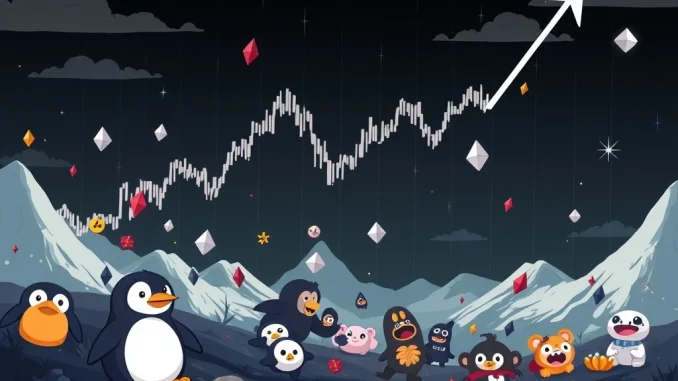
Popular NFT collections recently faced substantial declines. These included Pudgy Penguins, Bored Ape Yacht Club (BAYC), and Doodles. Reports indicate double-digit percentage drops over the past seven days. This trend signals a period of weakness in the broader digital collectibles market.
Specifically, data from DeFiLlama highlights the extent of these reductions. The floor price for **Pudgy Penguins** notably decreased by approximately 17.3%. Similarly, the **Bored Ape Yacht Club** (BAYC) saw its floor price fall by 14.7%. Among the major series, Doodles experienced the most significant drop, declining by 18.9%. These figures underscore a challenging period for top-tier NFTs. Consequently, investors are closely monitoring market movements.
The Impact of Ethereum Decline on Digital Assets
Analysts largely attribute the recent **NFT floor price** downturn to the short-term weakness in Ethereum (ETH). Ethereum, the blockchain powering most high-value NFTs, recently reached an all-time high. However, its subsequent correction impacted the entire ecosystem. Therefore, a dip in ETH’s value often translates directly into a decrease in the fiat value of NFTs. Most NFTs are priced in ETH. As a result, when ETH depreciates, the perceived value of NFTs also diminishes.
Furthermore, broader market sentiment plays a crucial role. A decline in ETH often reflects a cautious or bearish outlook across the cryptocurrency market. This sentiment naturally extends to digital collectibles. Investors become more hesitant to spend significant amounts on NFTs during such periods. Thus, the **Ethereum decline** creates a ripple effect, reducing demand and putting downward pressure on floor prices. This interconnectedness is a fundamental aspect of the NFT market dynamics.
Key Collections Facing Pressure: Pudgy Penguins and Doodles
The recent market correction particularly affected iconic collections like **Pudgy Penguins** and **Doodles**. Pudgy Penguins, known for its vibrant community and strong branding, experienced a notable 17.3% fall. This collection has built significant cultural relevance. Therefore, its decline is particularly striking. Many holders consider Pudgy Penguins a blue-chip NFT. Its performance often serves as a barometer for the wider market’s health.
Meanwhile, Doodles, another highly regarded collection, saw the largest drop among the major series, falling by 18.9%. Doodles stands out with its distinctive art style and strong focus on community-driven initiatives. Its substantial price correction indicates that even well-established projects are not immune to market pressures. These significant drops highlight the current fragility. Investors are now reassessing their portfolios in light of these movements.
Bored Ape Yacht Club (BAYC) Navigates Market Turbulence
The **Bored Ape Yacht Club** (BAYC) also felt the market’s pressure. BAYC’s floor price declined by 14.7% over the past week. BAYC remains one of the most recognizable and valuable NFT collections globally. It is often seen as a benchmark for the entire NFT space. Its sustained prominence has attracted celebrities and major brands. Consequently, a drop in BAYC’s floor price sends a clear signal across the market. This movement suggests that even the most liquid and culturally significant NFTs are susceptible to broader economic forces. The community closely watches BAYC’s performance for signs of market direction. Its resilience, or lack thereof, can influence investor confidence.
The decline in BAYC’s value underscores the interconnected nature of the crypto and NFT markets. When Ethereum, the primary currency for these assets, experiences a downturn, the value of the assets built upon it naturally follows. This relationship is critical for understanding **NFT market trends**. Investors must consider this correlation when making decisions. The current situation emphasizes the importance of a holistic market view.
Broader NFT Market Trends and Investor Sentiment
Beyond individual collections, the overall NFT market capitalization also decreased. According to NFTPriceFloor, the total market cap fell by about 5% over the last seven days. It now stands at $7.7 billion. This aggregate decline reflects a cooling period for the entire sector. Such a reduction indicates shifting investor sentiment. Many investors are becoming more cautious. They might be taking profits or reallocating assets during periods of uncertainty.
These **NFT market trends** are not uncommon in nascent industries. Volatility often accompanies rapid growth. However, the current decline prompts important questions about sustainability and long-term value. Investors are now evaluating the intrinsic value of their digital assets. They also consider the external factors influencing their prices. Understanding these broader trends is essential for navigating the dynamic NFT landscape effectively. It allows for more informed decision-making.
Strategies for Navigating Volatility in the NFT Space
In times of market volatility, strategic approaches become crucial for NFT holders and prospective buyers. Firstly, conducting thorough due diligence remains paramount. Researching the project’s team, roadmap, and community strength can provide valuable insights. Secondly, understanding your risk tolerance is essential. The NFT market can experience rapid swings. Therefore, only invest what you can afford to lose. Thirdly, consider diversification, even within the NFT space. Holding a variety of collections or types of digital assets can mitigate risk.
Furthermore, staying informed about broader cryptocurrency market movements, particularly concerning Ethereum, is vital. As demonstrated, the **Ethereum decline** directly impacts NFT values. Monitoring these trends helps anticipate potential shifts. Lastly, adopt a long-term perspective if your investment strategy allows. While short-term fluctuations are common, many believe in the long-term potential of NFTs. Patience and a well-thought-out strategy can help weather market storms. These strategies empower investors to make more resilient choices.
Conclusion: Assessing the Future of NFT Floor Price
The recent double-digit drops in **NFT floor price** for major collections like Pudgy Penguins, BAYC, and Doodles highlight the inherent volatility of the digital asset market. These declines are largely attributable to the short-term **Ethereum decline**. This interconnectedness underscores a fundamental aspect of the NFT ecosystem. While challenging, such periods also present opportunities for reassessment and strategic positioning. The market will continue to evolve, and understanding these dynamics is key for all participants. Future stability will likely depend on broader crypto market recovery and sustained interest in digital collectibles.
Frequently Asked Questions (FAQs)
Q1: What is an NFT floor price?
The NFT floor price represents the lowest price for an NFT within a specific collection. It indicates the minimum cost to acquire any piece from that series, often serving as a key metric for a collection’s overall health and demand.
Q2: Why did major NFT collections experience double-digit drops?
Major NFT collections, including Pudgy Penguins, Bored Ape Yacht Club, and Doodles, saw significant drops primarily due to the recent short-term weakness and decline in the price of Ethereum (ETH). Since most NFTs are priced in ETH, a fall in ETH’s value directly reduces their fiat equivalent.
Q3: How does Ethereum’s price affect NFT values?
Ethereum’s price directly influences NFT values because ETH is the primary cryptocurrency used to buy and sell most NFTs. When ETH’s value decreases, the purchasing power for NFTs also drops, and the fiat equivalent value of NFTs held by investors declines, impacting their floor prices.
Q4: Are all NFTs affected equally by market downturns?
No, not all NFTs are affected equally. While major, blue-chip collections like BAYC and Pudgy Penguins often see declines during broader market downturns, the extent of the drop can vary. Less liquid or newer collections might experience even greater volatility, while some niche projects could remain relatively stable.
Q5: What should investors do during an NFT market correction?
During an NFT market correction, investors should conduct thorough research, understand their risk tolerance, and consider a long-term perspective. Diversifying assets, staying informed about market trends, and avoiding impulsive decisions are also crucial strategies.