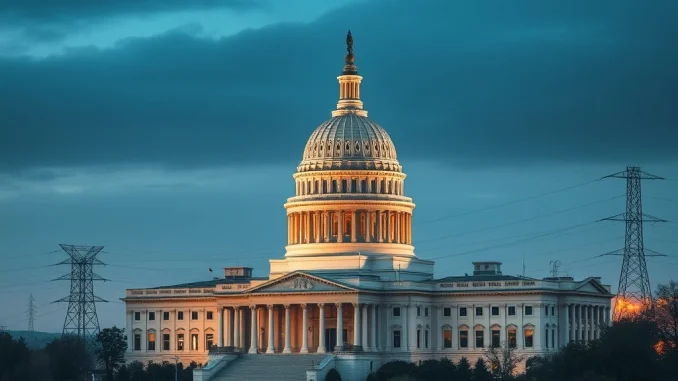
The legislative landscape in New York is shifting significantly for the cryptocurrency industry. Specifically, Democratic lawmakers in the New York State Assembly have initiated a process to impose a substantial electricity tax on proof-of-work (PoW) cryptocurrency mining. This move could profoundly reshape the operations of many **New York cryptocurrency** businesses.
Understanding the Proposed New York Crypto Mining Tax
Lawmakers introduced Assembly Bill A9138. This proposed legislation aims to levy a special excise tax on electricity consumed during cryptocurrency mining activities. The bill has already been referred to the influential Ways and Means Committee for further consideration. Furthermore, this action follows the introduction of a similar companion bill, S8518, in the State Senate earlier this month. Senator Liz Krueger, a prominent Democratic Senator and chair of the Senate Finance Committee, sponsored the Senate version. Consequently, this indicates a concerted effort across both legislative chambers to address the energy consumption associated with crypto mining.
The core of this legislative push centers on environmental concerns. Critics often highlight the significant energy footprint of PoW mining. Therefore, this **New York crypto mining tax** seeks to mitigate these perceived environmental impacts. It aims to make high-energy consumption operations more costly. The state government views this as a step towards sustainable energy practices.
The Impact on PoW Mining New York Operations
The proposed **crypto electricity tax** could have far-reaching implications for businesses engaged in **PoW mining New York**. Currently, many mining operations thrive in New York due to access to relatively affordable electricity, particularly from hydroelectric sources. However, an excise tax would directly increase their operational costs. This could significantly reduce profitability for miners.
For instance, some smaller mining farms might find it unsustainable to continue operations within the state. Larger entities might consider relocating to states with more favorable regulatory and energy cost environments. Consequently, this could lead to a decline in local investment and job creation within the crypto sector. The long-term viability of **PoW mining New York** hangs in the balance. Stakeholders are closely watching the legislative process.
Broader Implications of Crypto Electricity Tax
New York’s proposed **crypto electricity tax** sets a potential precedent. Other states grappling with energy concerns might observe New York’s approach. This could lead to similar **crypto mining legislation** emerging across the United States. The debate over cryptocurrency’s environmental impact is not unique to New York. Therefore, legislative actions in one state can influence national discussions.
The distinction between different consensus mechanisms remains crucial. PoW, famously used by Bitcoin, requires extensive computational power. Conversely, proof-of-stake (PoS) mechanisms consume significantly less energy. This legislation specifically targets PoW mining. This highlights a regulatory focus on the most energy-intensive forms of cryptocurrency validation. Furthermore, this tax could accelerate the industry’s shift towards more energy-efficient alternatives. This transition is already underway in many parts of the crypto ecosystem.
Navigating New York Crypto Regulation
New York has a history of proactive cryptocurrency regulation. The state introduced the BitLicense framework several years ago. This framework established strict licensing requirements for virtual currency businesses. Consequently, the state is no stranger to implementing comprehensive rules for the crypto industry. This new **crypto mining legislation** represents another layer of regulatory oversight. It specifically targets the energy aspect of mining.
The legislative process involves several stages. After being referred to committee, bills undergo review, potential amendments, and votes. Industry groups and environmental advocates will undoubtedly engage in intense lobbying efforts. Their input will shape the final form of the legislation. Therefore, the outcome is not yet certain. However, the intent to regulate remains clear. This demonstrates New York’s continued commitment to shaping the future of **New York cryptocurrency** operations within its borders.
What This Means for New York Cryptocurrency Industry
The proposed tax could significantly impact the broader **New York cryptocurrency** industry. It might deter new mining operations from establishing themselves in the state. Furthermore, it could encourage existing ones to leave. This potential exodus could affect local economies that have benefited from mining investments. Rural areas, in particular, have seen job creation and infrastructure development from these operations.
Ultimately, the legislation seeks to balance economic development with environmental sustainability. However, striking this balance proves challenging. The cryptocurrency community argues that innovation should not be stifled by punitive taxes. They also point to the economic benefits that mining operations bring. As the legislative process unfolds, stakeholders will continue to voice their perspectives. The future of crypto mining in New York depends on these critical discussions. The state’s approach will undoubtedly influence the national dialogue on crypto regulation.
In conclusion, New York lawmakers are actively pursuing a **crypto electricity tax** on PoW mining. This **crypto mining legislation** has generated considerable debate. It highlights the ongoing tension between technological innovation, economic growth, and environmental concerns. The outcome will significantly shape the future of **PoW mining New York** and set a precedent for **New York cryptocurrency** regulation.
Frequently Asked Questions (FAQs)
Q1: What is Assembly Bill A9138?
A1: Assembly Bill A9138 is proposed **crypto mining legislation** in New York. It aims to impose a special excise tax on the electricity consumed by proof-of-work (PoW) cryptocurrency mining operations within the state.
Q2: Why are New York lawmakers proposing this electricity tax?
A2: Lawmakers are primarily motivated by environmental concerns. They aim to address the significant energy consumption and carbon footprint associated with PoW cryptocurrency mining. The tax seeks to incentivize more sustainable energy practices.
Q3: How might this New York crypto mining tax affect cryptocurrency miners?
A3: The tax would increase operational costs for PoW miners. This could reduce their profitability and potentially force some operations to relocate or cease activity in New York. It directly impacts the economic viability of **PoW mining New York**.
Q4: Is this the first time New York has regulated the cryptocurrency industry?
A4: No. New York previously introduced the BitLicense framework. This established stringent licensing requirements for virtual currency businesses operating within the state. This new bill extends regulation to the energy aspect of mining.
Q5: What is the difference between PoW and PoS mining in the context of this bill?
A5: The bill specifically targets proof-of-work (PoW) mining. PoW, used by Bitcoin, consumes vast amounts of electricity. Proof-of-stake (PoS) is an alternative consensus mechanism that is significantly more energy-efficient. This legislation focuses solely on the energy-intensive PoW method.
Q6: What is the current status of the proposed crypto mining legislation?
A6: Assembly Bill A9138 has been referred to the Ways and Means Committee in the State Assembly. A companion bill, S8518, is also under consideration in the State Senate. Both bills are currently undergoing the legislative review process.