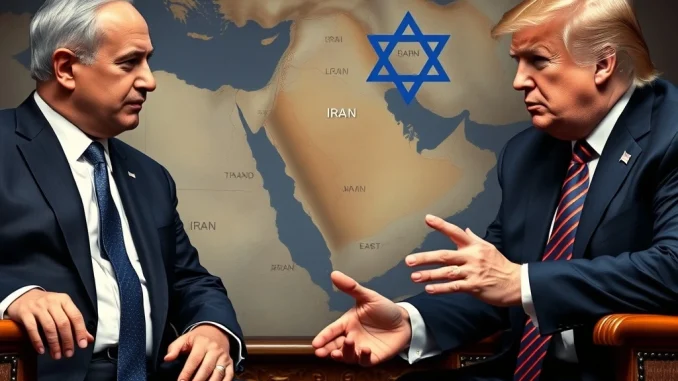
In a high-stakes move, Israeli Prime Minister Benjamin Netanyahu informed former U.S. President Donald Trump that a military strike on Iran was unavoidable due to Tehran’s violation of the ceasefire agreement. This development could have far-reaching implications for global markets, including cryptocurrencies, as geopolitical tensions often trigger volatility.
Why Did Netanyahu Push for an Iran Strike?
According to reports from Axios, Netanyahu emphasized that Iran’s actions left no room for de-escalation. Key reasons behind his stance include:
- Iran’s alleged breach of the ceasefire terms.
- The need to deter further aggression.
- Regional security concerns for Israel.
How Could This Impact Global Markets?
Geopolitical tensions, especially in the Middle East, often lead to market instability. Here’s what could happen:
| Market | Potential Impact |
|---|---|
| Cryptocurrencies | Increased volatility as investors seek safe havens. |
| Oil Prices | Spike due to supply chain disruptions. |
| Stocks | Decline in risk-on assets. |
What’s Next for U.S.-Israel Relations?
The conversation between Netanyahu and Trump highlights the delicate balance of diplomacy and military action. Key takeaways:
- U.S. support for Israel remains strong.
- Future actions could shape Middle East policies.
- Global allies are closely monitoring the situation.
Conclusion: A Tense Standoff With Global Repercussions
The Netanyahu-Trump discussion underscores the fragility of Middle East geopolitics. Investors should brace for potential market swings as tensions escalate.
Frequently Asked Questions (FAQs)
1. Why did Netanyahu insist on an Iran strike?
Netanyahu cited Iran’s violation of the ceasefire as the primary reason, arguing that a military response was necessary for deterrence.
2. How could this affect Bitcoin and other cryptocurrencies?
Cryptocurrencies may experience volatility as investors react to geopolitical risks, often viewing them as alternative assets during uncertainty.
3. What was Trump’s response to Netanyahu?
Details of Trump’s response remain undisclosed, but the discussion highlights ongoing U.S.-Israel coordination on security matters.
4. Could this lead to a broader conflict in the Middle East?
While possible, much depends on Iran’s next moves and international diplomatic efforts to de-escalate tensions.