Are you ready to witness a seismic shift in how real estate is bought and sold? Japan’s financial giant, Mitsubishi UFJ Financial Group (MUFG), is making a bold move that could redefine property investment. By acquiring a massive ¥100 billion Osaka property, MUFG is not just buying a building; it’s laying a foundational brick for the widespread adoption of tokenized real estate across Japan. This isn’t just a corporate acquisition; it’s a strategic maneuver poised to unlock new opportunities for investors, both big and small, in the rapidly evolving world of digital securities.
MUFG’s Groundbreaking Move: A ¥100B Osaka Property Paves the Way for Tokenized Real Estate
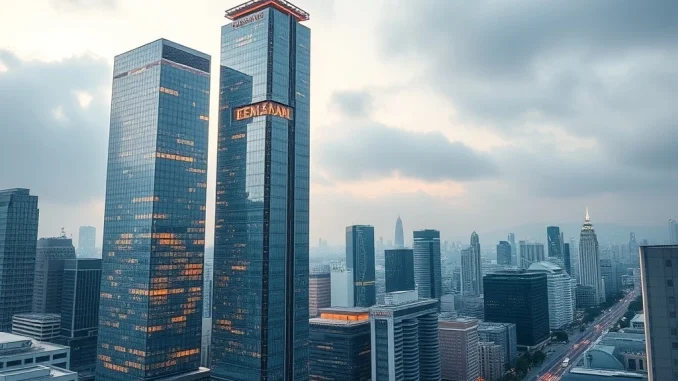
In a significant development that underscores Japan’s proactive stance on digital assets, MUFG has announced the acquisition of a high-rise property in Osaka valued at ¥100 billion (approximately $681 million). This isn’t just another real estate deal for the banking behemoth. Through its trust banking unit, MUFG intends to transform this prime asset into a flagship for tokenized real estate, marking a strategic pivot towards expanding digital securities in the Japanese market.
The plan is two-fold:
- Private REITs for Institutions: The building will first be converted into a private real estate investment trust (REIT), primarily targeting institutional investors such as life insurance firms. This offers a familiar, conventional entry point for large players.
- Tokenized Slices for Retail: Crucially, smaller, fractionalized ownership stakes of the property will be tokenized and offered to retail buyers. This innovative approach aims to democratize access to large commercial assets, allowing everyday investors to participate in a market traditionally reserved for the wealthy.
This initiative by MUFG aligns perfectly with a broader trend observed in Japan since 2021. The nation has shown a distinct preference for tokenizing commercial property over digital bonds, with real estate accounting for a staggering 80% of the 63 digital securities issued, totaling ¥194 billion ($1.3 billion) in that period. It’s clear that Japan sees immense potential in leveraging blockchain technology to transform its robust real estate sector.
Decoding Japan’s Digital Securities Landscape: Why Real Estate Reigns Supreme
Why is Japan so focused on tokenized real estate? The answer lies in the unique advantages and market dynamics that make property an ideal candidate for digitization. Unlike traditional bonds, which already have well-established digital trading mechanisms, real estate presents significant barriers to entry due to its high capital requirements and illiquidity. Tokenization directly addresses these issues by:
- Fractional Ownership: Breaking down expensive assets into smaller, affordable units.
- Increased Liquidity: Potentially making illiquid assets more easily tradable on secondary markets.
- Enhanced Transparency: Blockchain’s immutable ledger provides a clear record of ownership.
- Lower Transaction Costs: Streamlining processes by reducing intermediaries.
The focus on digital securities, particularly in the real estate sector, is a strategic move to unlock dormant capital and create new investment avenues. MUFG’s acquisition of the Osaka property is a testament to this vision, setting a precedent for future developments in the Japanese market.
Unlocking Access: How Tokenized Real Estate Benefits Every Investor
The beauty of tokenized real estate lies in its ability to democratize investment. For too long, direct participation in lucrative commercial property markets has been out of reach for most retail investors. MUFG’s dual-track approach aims to change this:
For Retail Investors:
- Lower Entry Barrier: Invest in prime commercial properties with significantly less capital than traditional methods require.
- Portfolio Diversification: Easily add real estate exposure to a diversified investment portfolio.
- Potential for Liquidity: While still nascent, the long-term goal is to enable easier buying and selling of these tokens on secondary markets.
For Institutional Investors:
- Familiar Structure: The private REIT format offers a conventional, trusted investment vehicle.
- Efficiency Gains: Digitalization can streamline administrative processes and reduce operational overhead.
- New Asset Classes: Access to a digitally enhanced version of a traditional asset class, potentially offering new yield opportunities.
By leveraging its expertise and vast network, MUFG is not just facilitating transactions; it’s building an ecosystem where both seasoned institutions and budding retail investors can find a foothold in Japan’s promising digital securities market.
Navigating the Nuances: Challenges and Competition in Japan’s Digital Asset Market
Despite the immense potential, the journey for tokenized real estate is not without its hurdles. The market, while growing, remains in its early stages. For instance, the Osaka Digital Exchange’s START market currently lists only six real estate tokens, with monthly trade volumes a modest ¥23 million ($157,000). This low liquidity suggests that broader adoption hinges on overcoming operational challenges and building greater trust in digital ownership mechanisms.
The competitive landscape is also evolving. While MUFG is a dominant force, other players are making significant strides. Mitsui Digital Asset Management, a key player in tokenized real estate, previously partnered with MUFG Trust for legal frameworks. However, Mitsui recently launched its own Alterna Trust system to accelerate its offerings, signaling a competitive shift. Mitsui now independently issues 16 tokenized real estate deals, with 14 delivered via its Alterna platform.
Despite this competitive dynamic, a strategic collaboration remains through Progmat, MUFG’s security token platform. Mitsui has agreed to continue using Progmat for future projects, and MUFG’s 42% stake in Progmat ensures ongoing backend revenue. This hybrid strategy balances direct competition with strategic collaboration, reflecting the fragmented yet growing digital securities ecosystem in Japan.
The Future Vision: MUFG’s Strategic Play in Japan’s Evolving Digital Finance
MUFG’s ability to monetize its infrastructure while simultaneously advancing its own tokenization goals will be a critical determinant of its success in this burgeoning market. The acquisition of the Osaka property is more than just an investment; it’s a statement of intent, positioning MUFG at the forefront of Japan’s cautious yet deliberate adoption of blockchain for asset tokenization.
With regulatory clarity and infrastructure development still catching up with demand, market participants like MUFG and Mitsui are actively testing boundaries to establish scalable models. The long-term success of tokenized real estate in Japan will depend on fostering greater liquidity, enhancing investor education, and refining the regulatory and technical frameworks to build a robust, trusted digital asset market. MUFG’s bold move is a significant step in that direction, promising a future where real estate investment is more accessible and efficient for everyone.
Conclusion
MUFG’s landmark acquisition of the ¥100 billion Osaka property marks a pivotal moment for tokenized real estate and the broader digital securities market in Japan. By strategically positioning this asset for fractionalized ownership and institutional REITs, MUFG is not only expanding its digital footprint but also championing the democratization of investment. While challenges like market liquidity and evolving competition persist, this bold initiative underscores Japan’s commitment to leveraging blockchain technology to transform traditional finance. The future of real estate investment is undoubtedly digital, and MUFG is leading the charge in shaping that exciting new reality.
Frequently Asked Questions (FAQs)
1. What is tokenized real estate?
Tokenized real estate involves representing ownership of a property or a fractional share of it as a digital token on a blockchain. This allows for easier, more transparent, and potentially more liquid trading of real estate assets, breaking down large properties into smaller, more affordable units for investors.
2. Why is MUFG acquiring a ¥100 billion Osaka property for tokenization?
MUFG’s acquisition of the Osaka property serves as a flagship asset to accelerate the expansion of digital securities in Japan. It aims to create both private REITs for institutional investors and tokenized slices for retail buyers, democratizing access to large commercial real estate assets and setting a precedent for future tokenization efforts.
3. How does tokenized real estate benefit retail investors?
For retail investors, tokenized real estate significantly lowers the entry barrier to investing in high-value commercial properties. It allows them to buy fractional ownership stakes with smaller capital, diversify their portfolios, and potentially benefit from increased liquidity in the long run.
4. What are the main challenges facing the tokenized real estate market in Japan?
Key challenges include low liquidity in existing token markets (as seen with the Osaka Digital Exchange’s START market), the need for further regulatory clarity, and the ongoing development of robust technical infrastructure. Competition among major players like MUFG and Mitsui also shapes the market’s evolution.
5. What is Progmat and its role in MUFG’s strategy?
Progmat is MUFG’s security token platform. It plays a crucial role as an underlying infrastructure for digital asset issuance. Even with competition from entities like Mitsui Digital Asset Management developing their own systems, MUFG’s significant stake (42%) in Progmat ensures continued backend revenue and strategic influence in the broader digital asset ecosystem in Japan.