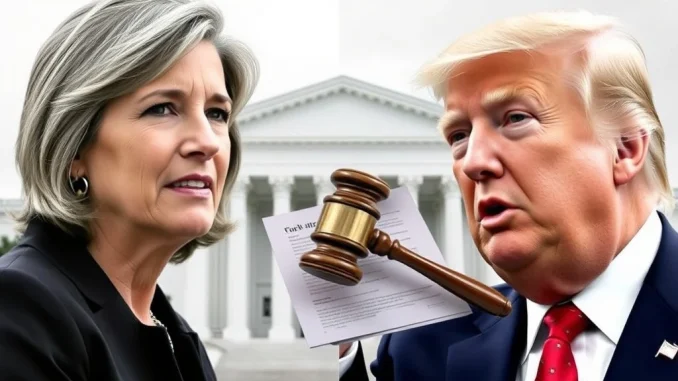
A significant legal battle looms. Federal Reserve Governor Lisa Cook reportedly plans to file an **explosive lawsuit** against former U.S. President Donald Trump. This action directly challenges her dismissal, as first reported by Walter Bloomberg. This development could ignite a major **government legal challenge**, drawing intense scrutiny. It raises critical questions about presidential authority and the independence of the nation’s central bank. Furthermore, the outcome may have broad implications for **US monetary policy** and financial markets.
The Impending Lisa Cook Lawsuit
The report from Walter Bloomberg indicates that **Federal Reserve Governor** Lisa Cook is preparing legal action. She aims to contest her removal by then-President Donald Trump. This move marks a rare and potentially contentious confrontation. Governors of the Federal Reserve typically serve 14-year terms. They are designed to be insulated from political pressure. This structure ensures stability and independence in economic decision-making. Therefore, any challenge to such a dismissal carries substantial weight. It could set a significant precedent for future presidential appointments and removals.
Lisa Cook assumed her role as a Governor on the Federal Reserve Board. She is a distinguished economist with a strong academic background. Her expertise spans macroeconomics, international finance, and economic history. She has served in various advisory capacities. Her appointment brought valuable perspectives to the Fed’s policy deliberations. A forced departure, especially one leading to a **Lisa Cook lawsuit**, would disrupt the Board’s composition. It could also potentially destabilize its decision-making processes. Such an event would undoubtedly attract global attention from financial observers and policymakers alike.
Understanding the Donald Trump Dismissal Claim
The core of the upcoming legal challenge centers on the alleged **Donald Trump dismissal**. The specifics of this dismissal remain under close examination. Presidents typically appoint Fed Governors with Senate confirmation. However, removing them is a far more complex and legally ambiguous process. The Federal Reserve Act outlines the terms of service. It generally protects governors from arbitrary removal. Legal scholars will closely analyze the grounds for dismissal. They will also scrutinize the procedures followed. This case could test the boundaries of executive power. It highlights the delicate balance between presidential authority and institutional independence. The outcome could redefine how future presidents interact with the central bank.
Sources suggest the lawsuit will argue the dismissal lacked proper legal justification. It will also contend it violated the established protocols for removing a **Federal Reserve Governor**. The legal team for Governor Cook will likely focus on these procedural and substantive issues. They will seek to establish that the removal was unlawful. Conversely, former President Trump’s legal representatives would likely defend his actions. They would assert presidential prerogative. They might also cite specific reasons for the dismissal. The public will watch this legal battle closely. It will undoubtedly shape future discussions about government oversight.
Implications for US Monetary Policy and Economic Stability
The independence of the Federal Reserve is a cornerstone of **US monetary policy**. It ensures decisions are based on economic data, not political whims. A successful challenge to a presidential dismissal would reinforce this independence. It would send a clear message about the sanctity of the Fed’s autonomy. Conversely, if the dismissal were upheld, it could weaken this critical safeguard. Such an outcome might introduce greater political influence into monetary policy. This prospect could unnerve financial markets. It could also lead to increased uncertainty regarding future economic directions.
Monetary policy decisions impact everything from interest rates to inflation. Therefore, stability in Fed leadership is paramount. Any perceived political interference can undermine confidence. This lack of confidence might affect investment decisions. It could also influence consumer spending. Consequently, the **Lisa Cook lawsuit** holds significant weight beyond the individuals involved. It touches upon fundamental principles of governance and economic management. Investors, businesses, and everyday citizens rely on a stable and predictable monetary policy environment. Therefore, the implications of this case are far-reaching.
Government Legal Challenges and Precedent
This **government legal challenge** is not without historical context. There have been past tensions between presidents and the Federal Reserve. However, direct lawsuits challenging the dismissal of a Fed Governor are exceedingly rare. This case could establish a new legal precedent. It might clarify the limits of presidential power concerning independent agencies. The courts will weigh arguments about “for cause” removal versus presidential discretion. This distinction is crucial for understanding the separation of powers. Legal experts are already debating the potential outcomes and their broader implications.
The outcome of this lawsuit could redefine the relationship between the executive branch and independent regulatory bodies. It will undoubtedly influence how future administrations approach such appointments. Furthermore, it highlights the importance of institutional checks and balances. These mechanisms are vital for maintaining democratic integrity. The legal proceedings will likely be protracted. They will involve complex constitutional and administrative law arguments. This case will become a landmark in American legal history, regardless of the final verdict.
Broader Market Sentiment and Digital Assets
While this lawsuit directly concerns a Federal Reserve Governor, its effects could ripple through financial markets. Uncertainty surrounding the Fed’s leadership or its independence often creates market volatility. Investors seek stability and predictability. Therefore, significant legal or political challenges can erode confidence. This erosion can affect traditional asset classes. It might also influence the broader economic outlook. Changes in **US monetary policy** expectations, for instance, often lead to shifts in investor behavior.
Digital assets, while distinct, are not entirely immune to these broader market forces. They often react to shifts in global economic sentiment. Major political or legal disputes, especially those involving key financial institutions, can impact overall market risk appetite. A perceived weakening of the Fed’s independence, for example, could lead to concerns about inflation or economic stability. Such concerns might prompt investors to re-evaluate their portfolios. This dynamic could indirectly affect the cryptocurrency market. However, it is crucial to note that the primary focus of this lawsuit remains on constitutional and administrative law, not digital asset regulation.
The Road Ahead: Legal Proceedings and Potential Outcomes
The path forward for the **Lisa Cook lawsuit** will be complex. Legal proceedings often involve multiple stages. These include initial filings, discovery, and potentially appeals. Both sides will present their arguments rigorously. The courts will then render a judgment based on the evidence and legal interpretations. Possible outcomes range from a judicial order reinstating Governor Cook to a ruling upholding the dismissal. Each scenario carries distinct implications for the Federal Reserve and the executive branch. The legal process itself could take considerable time to resolve fully.
Ultimately, this case underscores the vital role of the Federal Reserve. It also highlights the importance of its independence. The outcome will be closely watched by economists, politicians, and market participants globally. It will shape future debates about the governance of independent agencies. It will also influence the limits of presidential power. This legal challenge represents a significant moment in American political and economic history.
Frequently Asked Questions (FAQs)
Q1: Who is Federal Reserve Governor Lisa Cook?
A1: Lisa Cook is an accomplished economist and a current Governor on the Federal Reserve Board. She holds a Ph.D. in economics and has extensive experience in macroeconomics and international finance. Her appointment to the Fed aimed to bring diverse perspectives to monetary policy discussions.
Q2: Why is Lisa Cook reportedly suing Donald Trump?
A2: Governor Cook reportedly plans to file a **Lisa Cook lawsuit** challenging her dismissal by former President Donald Trump. The lawsuit will likely argue that her removal was unlawful and violated the established procedures for dismissing a **Federal Reserve Governor**.
Q3: What are the potential implications of this lawsuit for US monetary policy?
A3: The lawsuit could have significant implications for **US monetary policy**. It tests the independence of the Federal Reserve from political influence. If successful, it would reinforce the Fed’s autonomy. If unsuccessful, it could potentially introduce greater political interference into monetary policy decisions, affecting economic stability.
Q4: How rare are such government legal challenges against a President?
A4: Direct **government legal challenges** from a Fed Governor against a President over dismissal are extremely rare. This case is notable because it could set a new legal precedent regarding executive power and the independence of regulatory agencies like the Federal Reserve.
Q5: Will this lawsuit affect cryptocurrency markets?
A5: While the lawsuit directly concerns traditional governance and monetary policy, it could indirectly affect cryptocurrency markets. Broader financial market uncertainty or shifts in **US monetary policy** expectations, stemming from political or legal disputes involving key institutions like the Fed, can influence overall investor sentiment and risk appetite, which may then ripple into digital asset valuations.