In the ever-evolving landscape of global finance, geopolitical tremors often send ripples across all markets, including the dynamic world of cryptocurrencies. While seemingly distinct, the latest development involving a significant U.S. Lawmakers Subpoena to financial titans JPMorgan Chase & Co. and Bank of America Corp. underscores how traditional finance and international relations profoundly impact investor sentiment and regulatory outlooks. This high-stakes move centers on the banks’ involvement in the CATL IPO, a Chinese battery manufacturing giant, raising serious National Security Concerns and highlighting the intensifying complexities of U.S.-China Financial Relations.
The Unprecedented U.S. Lawmakers Subpoena: A Closer Look
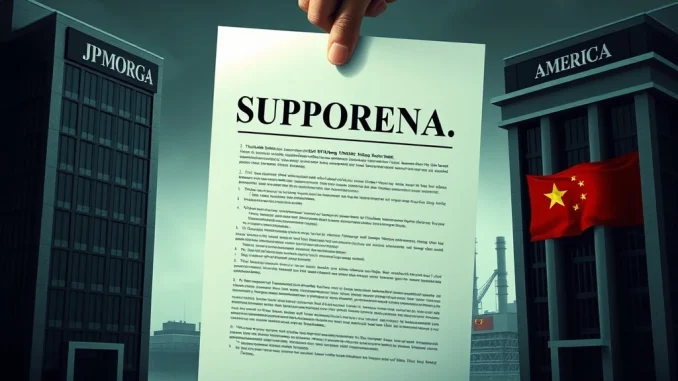
The financial world is abuzz following the issuance of subpoenas to the CEOs of JPMorgan Bank of America. This isn’t just a routine inquiry; it’s a direct challenge from U.S. lawmakers demanding accountability for the banks’ roles in the 2020 initial public offering (IPO) of Contemporary Amperex Technology Co. Ltd. (CATL). This unprecedented step signals a growing willingness by Congress to leverage its oversight powers to scrutinize the deep financial ties between U.S. institutions and Chinese entities, particularly when potential national security risks are at stake.
Key details of the subpoena:
- Targeted Institutions: JPMorgan Chase & Co. and Bank of America Corp.
- Key Executives: Jamie Dimon (JPMorgan CEO) and Brian Moynihan (Bank of America CEO).
- Subject: Their banks’ underwriting roles in CATL’s 2020 IPO.
- Underlying Concern: Allegations of CATL’s links to the Chinese military and the facilitation of transactions that could pose strategic risks to the U.S.
This move highlights a significant shift in Washington’s approach, prioritizing national security over purely commercial interests in financial dealings. For cryptocurrency investors, this signals a broader trend of increased regulatory scrutiny and geopolitical risk assessment that can influence capital flows and market stability.
Why the CATL IPO Raises National Security Concerns
At the heart of this legislative probe are profound National Security Concerns surrounding CATL. While CATL is globally recognized as a major supplier to electric vehicle giants like Tesla Inc., it has also faced persistent allegations of having business ties to China’s defense sector. These alleged connections transform a seemingly commercial IPO into a matter of strategic importance for the U.S.
Lawmakers argue that if U.S. financial institutions facilitated the IPO of a company with military affiliations, it could inadvertently contribute to the strengthening of a potential adversary’s defense capabilities. The core questions being posed include:
- Due Diligence: What level of scrutiny did JPMorgan and Bank of America apply to CATL’s background before underwriting its IPO?
- Risk Assessment: Were potential national security risks adequately identified and mitigated?
- Compliance Frameworks: Do current U.S. banking regulations sufficiently address the complexities of cross-border investments involving entities with dual-use technologies or military ties?
This situation underscores the intricate web connecting global finance, technology, and national defense, making it a critical area of focus for policymakers.
JPMorgan Bank of America’s Stance: Navigating a Geopolitical Minefield
For financial giants like JPMorgan Bank of America, operating across global markets means navigating a complex and often contradictory landscape of international laws, economic opportunities, and geopolitical sensitivities. Jamie Dimon, CEO of JPMorgan, has publicly defended his bank’s actions, stating, “If we thought it was wrong, we wouldn’t do it,” while acknowledging the need for transparency. This statement reflects the challenging position multinational banks find themselves in: balancing lucrative global opportunities with increasing demands for ethical and national security-aligned conduct.
The banks’ dilemma can be summarized:
- Global Reach vs. National Interests: U.S. banks are key players in international capital markets, facilitating crucial investment flows. However, this global reach now comes under intense scrutiny when dealing with nations perceived as strategic rivals.
- Due Diligence Complexity: Performing exhaustive due diligence on every client, especially large state-affiliated enterprises in complex geopolitical environments, is a monumental task.
- Regulatory Ambiguity: The lines between purely commercial transactions and those with national security implications are often blurred, leading to reactive rather than proactive regulatory frameworks.
This probe sets a precedent, suggesting that U.S. financial institutions will face heightened pressure to demonstrate robust due diligence and ethical considerations in their cross-border dealings, particularly with Chinese firms.
The Broader Implications for U.S.-China Financial Relations
This U.S. Lawmakers Subpoena is not an isolated incident but rather a clear symptom of escalating tensions in U.S.-China Financial Relations. For years, the two economic superpowers have been engaged in a complex dance of cooperation and competition. However, recent years have seen a marked shift towards increased strategic rivalry, impacting everything from trade to technology and now, finance.
This probe reflects a broader pattern of heightened regulatory and political scrutiny of U.S. banks’ foreign partnerships. Similar inquiries have targeted financial institutions for underwriting IPOs in regions deemed to pose national security threats. Analysts note that compliance challenges for multinational banks are intensifying as geopolitical tensions evolve. Historical precedents suggest that such investigations could lead to stricter regulatory frameworks, potentially limiting U.S. banks’ participation in IPOs involving entities with ties to adversarial nations.
The potential long-term implications are significant:
- Decoupling Pressure: Increased pressure for a partial financial decoupling, where U.S. capital is increasingly restricted from flowing into certain Chinese sectors.
- Compliance Burden: U.S. banks will face more stringent compliance requirements, compelling them to reassess their underwriting strategies for cross-border deals, especially in sensitive sectors.
- Investment Landscape Shift: Industries reliant on Chinese partnerships, including technology and manufacturing, now face amplified risks and may need to diversify supply chains and investment sources.
The outcome of these subpoenas could set a critical precedent for how financial institutions navigate geopolitical complexities in future IPOs, particularly in sectors with dual-use technologies or defense-related applications.
Market Impact and Future Outlook: What Does This Mean for You?
While the immediate market impact on equities and crypto assets has been relatively muted, the long-term implications of this intensified scrutiny on U.S.-China Financial Relations remain uncertain. For crypto investors, it’s crucial to understand that major shifts in traditional finance, especially those driven by geopolitical concerns, can indirectly influence digital asset markets.
Here’s what to consider:
Potential Ripple Effects:
- Reduced Global Capital Flows: Stricter regulations on cross-border IPOs could reduce overall global capital flows, potentially impacting the liquidity and growth of nascent markets, including crypto.
- Increased Volatility: Geopolitical uncertainties often lead to increased market volatility as investors seek safer havens or react to news.
- Regulatory Spillover: The heightened focus on due diligence and national security in traditional finance might inspire similar calls for scrutiny within the crypto space, especially concerning stablecoins or DeFi protocols with international exposure.
Actionable Insights for Investors:
- Stay Informed: Keep a close watch on developments in U.S.-China relations and financial regulation. These macro trends often dictate broader market sentiment.
- Diversify: As always, diversification remains a key strategy to mitigate risks associated with concentrated exposure to any single market or geopolitical risk.
- Understand the Landscape: Recognize that the lines between traditional finance, geopolitics, and digital assets are becoming increasingly blurred. What happens in one domain can affect the others.
The ongoing probe into JPMorgan Bank of America‘s role in the CATL IPO serves as a stark reminder that the global financial system is deeply interconnected and constantly influenced by political and strategic considerations. As regulators continue to grapple with the balance between fostering international capital markets and safeguarding national interests, the rules of engagement for global finance are clearly being rewritten.
Conclusion: A New Era of Financial Scrutiny
The U.S. Lawmakers Subpoena to JPMorgan Bank of America over the CATL IPO marks a pivotal moment in the ongoing redefinition of U.S.-China Financial Relations. It underscores a clear shift towards prioritizing national security in financial transactions, signaling a new era of heightened scrutiny for global banks and the companies they facilitate. While the immediate impact on crypto markets may seem distant, the underlying themes of regulatory oversight, geopolitical risk, and the integrity of global capital flows are deeply relevant. As the world navigates these complex dynamics, financial institutions, businesses, and investors alike must adapt to an environment where geopolitical considerations increasingly shape economic opportunities and challenges.
Frequently Asked Questions (FAQs)
1. Why are U.S. lawmakers subpoenaing JPMorgan and Bank of America?
U.S. lawmakers have issued subpoenas to the CEOs of JPMorgan Chase & Co. and Bank of America Corp. due to their banks’ roles in the 2020 initial public offering (IPO) of Chinese battery manufacturer CATL. The core concern is alleged links between CATL and the Chinese military, raising national security risks for the United States.
2. What is the significance of the CATL IPO in this investigation?
CATL (Contemporary Amperex Technology Co. Ltd.) is a major global battery manufacturer, supplying companies like Tesla. Lawmakers are investigating whether U.S. banks, by underwriting the CATL IPO, inadvertently facilitated transactions that could benefit a company with ties to China’s defense sector, thus posing a national security threat to the U.S.
3. How have JPMorgan and Bank of America responded to the subpoenas?
JPMorgan CEO Jamie Dimon has publicly defended the bank’s actions, stating they would not have proceeded with the IPO if they believed it was wrong, while also acknowledging the need for transparency. Both banks are now under pressure to provide detailed accounts of their due diligence processes for the CATL IPO.
4. What are the broader implications for U.S.-China financial relations?
This probe highlights escalating tensions in U.S.-China financial relations. It suggests a growing trend of U.S. lawmakers prioritizing national security over commercial interests, potentially leading to stricter regulatory frameworks, increased compliance burdens for multinational banks, and a possible re-evaluation of U.S. capital flows into certain Chinese sectors.
5. Could this investigation impact the cryptocurrency market?
While the immediate direct impact on crypto assets has been muted, such high-profile investigations in traditional finance can create ripple effects. Increased geopolitical tensions and regulatory scrutiny in traditional markets can influence overall investor sentiment, global capital flows, and potentially lead to calls for similar due diligence and national security considerations within the evolving cryptocurrency regulatory landscape.