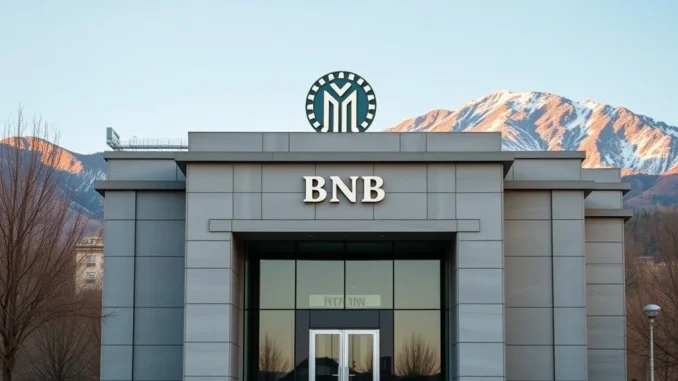
Kyrgyzstan is making a significant move in the global financial landscape. The nation has officially established Bereket Bank, a dedicated Kyrgyzstan digital asset bank. This pivotal development follows a direct proposal from Changpeng Zhao, the influential founder of Binance. This new institution aims to attract crucial foreign investment and robustly develop the country’s burgeoning cryptocurrency sector.
The Vision Behind Kyrgyzstan Digital Asset Bank
The establishment of Bereket Bank marks a bold step for Kyrgyzstan. This specialized financial institution focuses entirely on digital assets. Significantly, it positions the Central Asian nation as an emerging player in the global crypto economy. The move aligns with a broader national strategy to modernize financial infrastructure. Therefore, it aims to foster economic growth through technological innovation. The government believes this bank will serve as a gateway for international investors. They can now access Kyrgyzstan’s market through regulated digital channels. This initiative also reflects a growing global trend. More countries are exploring the integration of blockchain technology into their traditional financial systems.
Furthermore, the bank’s creation directly responds to the evolving demands of the digital age. It seeks to provide secure and compliant services for managing digital assets. This includes various cryptocurrencies and other tokenized instruments. The bank will operate under specific regulatory frameworks. These frameworks ensure both investor protection and market integrity. Ultimately, the goal is to create a trusted environment for digital asset transactions. This environment will support both local and international participants.
Bereket Bank: A New Era for Investment
Bereket Bank is not just another financial institution; it represents a strategic pivot. Its primary mission involves attracting substantial foreign investment into Kyrgyzstan. This focus is crucial for the nation’s economic diversification. The bank will facilitate transactions involving digital assets. It will also provide services for their secure storage and management. For instance, international investors often seek regulated pathways into new markets. Bereket Bank aims to provide exactly that for the digital asset space.
Moreover, the bank’s operations will extend beyond simple transactions. It plans to offer a suite of services. These services include digital asset custody, exchange services, and perhaps even lending. Such offerings could significantly boost liquidity within the local crypto ecosystem. The establishment of Bereket Bank also signals Kyrgyzstan’s commitment to innovation. It demonstrates a forward-thinking approach to finance. Consequently, this could attract tech companies and blockchain startups to the region. This creates a vibrant hub for digital innovation.
The bank’s structure will likely incorporate advanced security protocols. These protocols are essential for safeguarding digital assets. They protect against cyber threats and unauthorized access. Therefore, building trust among users will be paramount. Bereket Bank is poised to become a cornerstone of Kyrgyzstan’s digital economy. It offers a secure and regulated environment for digital asset activities.
The Influence of Binance Founder Zhao
The involvement of Binance founder Zhao underscores the significance of this development. Changpeng Zhao, widely known as ‘CZ’, is a prominent figure in the global cryptocurrency industry. His proposal likely provided a critical impetus for Kyrgyzstan’s government. Zhao’s insights and experience in building one of the world’s largest crypto exchanges are invaluable. His advocacy for the establishment of a digital asset bank suggests a strategic alignment. This alignment could benefit both Kyrgyzstan and the broader crypto community.
Previously, Zhao had publicly mentioned Kyrgyzstan’s progressive stance on digital currencies. He notably stated that Kyrgyzstan had issued a national stablecoin. This stablecoin, he indicated, was based on BNB, Binance’s native cryptocurrency. While official confirmation on the BNB-based stablecoin is still awaited from Kyrgyz authorities, Zhao’s statement highlights a proactive engagement. It shows a willingness to explore advanced blockchain applications. His continued interest in the region indicates potential for further collaborations. These collaborations could further integrate Kyrgyzstan into the global digital economy. Therefore, Zhao’s influence has clearly played a role in shaping Kyrgyzstan’s digital asset strategy.
Bolstering the Cryptocurrency Sector in Central Asia
The creation of Bereket Bank directly aims to bolster Kyrgyzstan’s cryptocurrency sector. This sector is still in its nascent stages across much of Central Asia. However, with this new institution, Kyrgyzstan seeks to take a leadership position. The bank will provide essential infrastructure and regulatory clarity. These elements are vital for fostering growth and adoption. Local businesses and entrepreneurs can now explore digital asset opportunities with greater confidence. This confidence comes from having a regulated banking partner.
Moreover, a thriving cryptocurrency sector can bring numerous benefits. It can attract investment, create new jobs, and stimulate technological development. It also offers alternative financing mechanisms for startups. Small and medium-sized enterprises (SMEs) could particularly benefit. They might gain easier access to capital through tokenization or decentralized finance (DeFi) platforms. Kyrgyzstan’s initiative could also serve as a model for neighboring countries. Other nations in Central Asia might observe its success. They could then consider similar ventures. This regional impact would significantly broaden the adoption of digital assets.
The development of the cryptocurrency sector requires a balanced approach. This approach combines innovation with robust regulation. Bereket Bank is designed to strike this balance. It offers a secure environment for growth. Furthermore, it protects against potential risks associated with digital assets. This careful strategy will be crucial for long-term success.
Exploring the National Stablecoin Initiative
The mention of a national stablecoin based on BNB adds another layer of intrigue. A national stablecoin offers several potential advantages. It can provide a stable digital currency for transactions. This stability is often pegged to a fiat currency or a basket of assets. For instance, it could simplify cross-border payments. It might also reduce transaction costs. Furthermore, it could enhance financial inclusion for unbanked populations. The use of BNB as a base suggests a potential partnership with Binance. Such a partnership could leverage Binance’s technological expertise and global reach.
However, implementing a national stablecoin involves complex considerations. These include regulatory oversight, technological infrastructure, and monetary policy implications. The Central Bank of Kyrgyzstan would need to carefully manage its issuance and redemption. This ensures its stability and prevents financial instability. A successful national stablecoin could significantly digitize Kyrgyzstan’s economy. It would streamline payments and foster greater financial efficiency. The details of this stablecoin initiative will be crucial to watch. They will reveal the full scope of Kyrgyzstan’s digital financial ambitions.
The integration of a stablecoin with a digital asset bank like Bereket Bank creates a powerful synergy. The bank could act as a primary custodian and distribution channel for the national stablecoin. This would ensure seamless integration into the country’s financial system. It would also provide a secure and regulated environment for its use. This comprehensive approach positions Kyrgyzstan at the forefront of digital currency innovation.
Conclusion: Kyrgyzstan’s Digital Leap Forward
Kyrgyzstan’s establishment of Bereket Bank, a dedicated Kyrgyzstan digital asset bank, marks a significant milestone. This initiative, inspired by Binance founder Zhao, signals a clear commitment. The nation aims to embrace digital finance and foster a robust cryptocurrency sector. By attracting foreign investment and potentially launching a national stablecoin, Kyrgyzstan is setting a new precedent. This move could position it as a leader in digital asset innovation within Central Asia. As the bank begins its operations, the world will watch closely. Its success could pave the way for similar developments in other emerging economies. This strategic vision promises to unlock new economic opportunities for the nation.
Frequently Asked Questions (FAQs)
Q1: What is Bereket Bank and what is its primary purpose?
Bereket Bank is Kyrgyzstan’s newly established digital asset bank. Its primary purpose is to attract foreign investment and develop the country’s cryptocurrency sector by providing regulated services for digital assets.
Q2: Who proposed the establishment of Bereket Bank?
The establishment of Bereket Bank followed a proposal from Changpeng Zhao, the founder of Binance, a leading global cryptocurrency exchange.
Q3: How will Bereket Bank impact Kyrgyzstan’s economy?
Bereket Bank is expected to boost Kyrgyzstan’s economy by attracting foreign investment, creating new jobs, stimulating technological development in the cryptocurrency sector, and providing secure, regulated digital asset services.
Q4: What is the significance of a national stablecoin for Kyrgyzstan?
A national stablecoin could digitize Kyrgyzstan’s economy, simplify cross-border payments, reduce transaction costs, and enhance financial inclusion. The mention of it being based on BNB suggests potential collaboration with Binance.
Q5: Is Kyrgyzstan the first country in Central Asia to take such a step?
While several countries in Central Asia are exploring digital assets, Kyrgyzstan’s establishment of a dedicated digital asset bank and its proactive stance on a national stablecoin position it as a pioneer in the region for such comprehensive initiatives.
Q6: What kind of services will Bereket Bank offer?
Bereket Bank is expected to offer a range of services including digital asset custody, exchange services, and potentially lending. It will operate under specific regulatory frameworks to ensure security and compliance for both local and international participants.