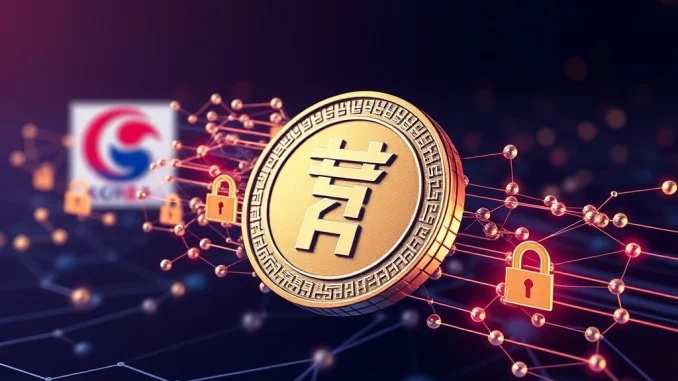
Get ready for a potentially game-changing development in the digital asset space! A major player in the South Korean financial sector, Korea Investment and Securities, is making waves with its reported consideration of a trademark filing for a won-based stablecoin. This isn’t just a minor technicality; it signals a serious intent from a traditional financial powerhouse to step into the world of digital currencies, potentially reshaping how we think about payments, investments, and financial stability in the region.
What’s Driving Korea Investment and Securities into Stablecoins?
The move by Korea Investment and Securities (KIS) isn’t arbitrary. According to Yonhap Infomax, the company has already established an internal task force dedicated to this ambitious project. This task force isn’t just brainstorming; it’s actively studying international precedents and preparing for the inevitable rollout of a robust stablecoin regulation framework. This proactive approach suggests KIS aims to be at the forefront of this digital transformation, rather than merely reacting to it.
Their focus isn’t just on creating a digital won; it’s about practical utility. The company is deeply exploring how a won-based stablecoin could be seamlessly integrated with various existing and new financial products. Imagine a future where transactions are faster, cheaper, and more accessible, all powered by a digital currency pegged directly to the Korean Won.
Navigating the Landscape of Stablecoin Regulation
The journey into stablecoins, especially for a regulated financial entity, is inextricably linked with the regulatory environment. Korea Investment and Securities’ proactive stance on studying stablecoin regulation highlights their commitment to compliance and security. Regulatory clarity is crucial for widespread adoption and trust in any digital asset.
What might this anticipated regulatory framework entail? It’s likely to cover several key areas:
- Consumer Protection: Safeguarding users’ funds and ensuring transparency.
- Anti-Money Laundering (AML) & Counter-Terrorist Financing (CTF): Preventing illicit use of stablecoins.
- Issuance and Redemption Mechanisms: Clear rules on how stablecoins are created and converted back to fiat.
- Reserve Requirements: Ensuring that the stablecoin is fully backed by equivalent assets.
- Operational Resilience: Requirements for the stability and security of the underlying technology.
By preparing for these regulations, KIS is laying the groundwork for a secure and trustworthy digital asset that could benefit the broader South Korean financial services sector.
Integrating Won-Based Stablecoins with Financial Products: The Future is Here?
The real potential of a won-based stablecoin lies in its integration with a wide array of financial products. This isn’t just about faster payments; it’s about unlocking new possibilities within the traditional financial ecosystem and beyond. Korea Investment and Securities is looking at practical applications that enhance usability.
Consider these potential integrations:
| Application Area | Traditional Approach | With Won-Based Stablecoin |
|---|---|---|
| Cross-Border Remittances | Slow, high fees, intermediary banks | Near-instant, lower fees, direct transfers |
| Retail Payments | Credit cards, bank transfers | Instant settlement, potentially lower merchant fees, direct digital payments |
| Investment & Trading | Fiat deposits, lengthy settlement cycles | 24/7 access, immediate settlement for digital assets, enhanced liquidity |
| DeFi (Decentralized Finance) | Limited direct fiat access | Seamless entry into DeFi protocols, enhanced liquidity for won-denominated assets |
| Supply Chain Finance | Complex, paper-based, delayed payments | Automated, transparent, real-time payments |
This integration could significantly boost the practical use of digital assets, making them a part of everyday financial life for many in South Korea.
The Broader Impact on South Korean Financial Services
A successful won-based stablecoin initiative by a prominent institution like Korea Investment and Securities could have a profound impact on the entire landscape of South Korean financial services. It could:
- Spur Innovation: Encourage other financial institutions to explore similar digital asset initiatives.
- Enhance Competitiveness: Position South Korea as a leader in digital finance innovation globally.
- Improve Efficiency: Streamline existing financial processes, reducing costs and time.
- Increase Financial Inclusion: Potentially provide easier access to financial services for underserved populations.
- Attract Investment: Draw more domestic and international investment into the country’s digital economy.
This strategic move is not just about a single company; it’s about setting a precedent for the future of finance in a technologically advanced nation.
A New Era for Stablecoins and Digital Finance
The consideration by Korea Investment and Securities for a won-based stablecoin trademark filing underscores a growing trend: the increasing convergence of traditional finance and the digital asset world. As regulatory frameworks mature and institutions like KIS commit resources, stablecoins are poised to become a significant bridge between fiat currencies and the blockchain ecosystem.
This development is a strong signal that major financial players are recognizing the immense potential of digital currencies, not just as speculative assets, but as fundamental building blocks for future financial infrastructure. The journey is just beginning, but the steps taken by Korea Investment and Securities could pave the way for a more integrated, efficient, and innovative financial future.
Summary: A Strategic Leap Towards Digital Won
Korea Investment and Securities is taking a significant step towards embracing digital finance by exploring a trademark for a won-based stablecoin. This proactive move involves establishing an internal task force to study international precedents and prepare for forthcoming stablecoin regulation. Their focus extends to the practical application of this digital currency, aiming for seamless financial products integration that could revolutionize South Korean financial services. This initiative signals a clear commitment to innovation and could position South Korea at the forefront of the global digital asset landscape, paving the way for a new era of financial efficiency and accessibility.
Frequently Asked Questions (FAQs)
Q1: What is a won-based stablecoin?
A won-based stablecoin is a type of cryptocurrency designed to maintain a stable value, pegged directly to the value of the Korean Won (KRW). This means one won-based stablecoin would always be equivalent to one Korean Won, aiming to avoid the price volatility often associated with other cryptocurrencies like Bitcoin or Ethereum.
Q2: Why is Korea Investment and Securities interested in a stablecoin?
Korea Investment and Securities, a major financial services provider, is exploring a won-based stablecoin to innovate within the South Korean financial sector. They aim to leverage the efficiency and speed of blockchain technology to enhance existing financial products and services, prepare for anticipated stablecoin regulation, and potentially offer new digital financial solutions to their clients.
Q3: How would stablecoin regulation impact this initiative?
Robust stablecoin regulation is crucial for the success and widespread adoption of a won-based stablecoin. It provides legal clarity, ensures consumer protection, prevents illicit activities, and builds trust among users and institutions. Korea Investment and Securities is proactively studying international cases to align its efforts with upcoming regulatory frameworks, ensuring compliance and security.
Q4: What kind of financial products could integrate a won-based stablecoin?
A won-based stablecoin could be integrated with various financial products, including cross-border remittances for faster and cheaper transfers, retail payments for instant settlements, and investment platforms for quicker trading and asset management. It could also facilitate entry into decentralized finance (DeFi) protocols and streamline supply chain finance, enhancing overall efficiency in the South Korean financial services landscape.
Q5: What are the potential benefits for South Korean financial services?
The introduction of a won-based stablecoin by a major institution could bring several benefits to South Korean financial services, including increased transaction efficiency, reduced costs, enhanced financial inclusion, and a boost to the country’s competitiveness in the global digital economy. It could also encourage further innovation within the traditional finance sector.