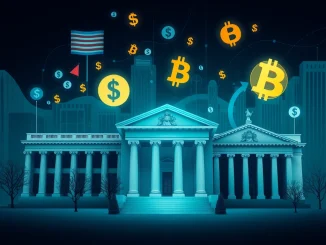
The cryptocurrency market often reacts strongly to macroeconomic shifts, especially decisions from central banks like the Federal Reserve. Therefore, news regarding potential interest rate adjustments is always crucial. JPMorganChase, a leading global financial institution, has recently shared its outlook on the Federal Reserve’s upcoming monetary policy. The bank suggests that a **Fed rate cut** in September is improbable, despite earlier indications of a potential easing cycle.
JPMorganChase’s Stance on the Federal Reserve’s Next Move
JPMorganChase holds a firm position regarding the **Federal Reserve’s** immediate plans. According to a report by South Korean outlet News1, the banking giant anticipates the Fed will maintain its current interest rate levels at the September Federal Open Market Committee (FOMC) meeting. This expectation comes even as Chair Jerome Powell has hinted at a possible shift towards more accommodative monetary policy.
The bank’s analysis highlights several factors influencing this outlook. Firstly, the composition of the FOMC itself has seen changes. Stephen Miran recently joined the committee, replacing Adriana Kugler. Miran is perceived as a more dovish voice, which means he generally favors lower interest rates to stimulate economic growth. This shift could make a unanimous decision on holding rates less likely, effectively leaving Chair Powell with the decisive ‘swing vote.’ However, despite these internal dynamics, JPMorganChase emphasizes that significant **inflation risks** persist, making an immediate rate cut an unlikely scenario.
Understanding the FOMC Meeting and Its Significance
The Federal Open Market Committee (FOMC) is the monetary policymaking body of the Federal Reserve System. It comprises twelve members: seven members of the Board of Governors, the president of the Federal Reserve Bank of New York, and presidents of four other Federal Reserve Banks on a rotating basis. This committee meets eight times a year, approximately every six weeks, to discuss and decide on the federal funds rate target. These decisions profoundly impact everything from consumer lending rates to global investment flows, including the sentiment in the crypto markets.
The September **FOMC meeting** is particularly under scrutiny because market participants are eager for clarity on the Fed’s future direction. A rate cut would signal confidence in the economy’s ability to handle lower borrowing costs and could potentially boost risk assets like cryptocurrencies. Conversely, holding rates steady or even hinting at further hikes could dampen market enthusiasm. Therefore, JPMorganChase’s prediction offers a critical insight into what to expect.
Navigating Persistent Inflation Risks
Central to JPMorganChase’s forecast is the ongoing concern about **inflation risks**. The Federal Reserve has a dual mandate: to achieve maximum employment and maintain price stability. While the labor market has shown resilience, inflation remains a key challenge. Despite some moderation, consumer prices have not consistently returned to the Fed’s target of 2%. Elevated energy costs, supply chain disruptions, and strong wage growth can all contribute to inflationary pressures.
If inflation remains stubbornly high, the Fed might feel compelled to keep interest rates elevated for longer. This approach aims to cool down the economy, thereby reducing demand and ultimately bringing prices under control. From the bank’s perspective, the potential for inflation to re-accelerate outweighs the desire to ease monetary policy. This cautious stance underscores the delicate balancing act the Federal Reserve faces in its efforts to steer the economy.
The Dovish vs. Hawkish Divide and Powell’s Role
The Federal Reserve’s committee members often fall into two camps: dovish or hawkish. Dovish members typically advocate for lower interest rates to stimulate economic growth and employment. They may prioritize growth even if it means tolerating slightly higher inflation. Hawkish members, on the other hand, prioritize controlling inflation, even if it means higher interest rates and potentially slower economic growth. The addition of Stephen Miran to the committee strengthens the dovish contingent, introducing more varied viewpoints.
Chair Jerome Powell, as the leader of the Federal Reserve, plays a pivotal role in guiding the committee’s consensus. His public statements and press conferences are meticulously scrutinized for any hints about future policy. While Powell has indicated a willingness to consider easing, JPMorganChase believes that the broader economic context, particularly persistent inflation, will likely override the growing dovish sentiment for the September decision. This makes Powell’s ultimate stance on the **Fed rate cut** even more critical.
Potential Impact on Financial Markets and Crypto
The implications of the Federal Reserve holding rates steady in September are significant for various financial markets. For traditional equities, higher interest rates can increase borrowing costs for companies, potentially dampening corporate earnings and stock valuations. Bond markets also react, with yields often moving in anticipation of or response to Fed decisions.
For the cryptocurrency market, the Fed’s policy stance is a major driver. Higher interest rates typically make ‘risk-on’ assets, like Bitcoin and other digital currencies, less attractive compared to safer, interest-bearing investments. Conversely, a clear path to rate cuts often fuels rallies in crypto, as investors seek higher returns in a low-yield environment. Therefore, JPMorganChase’s forecast of no September rate cut suggests that the crypto market might not receive an immediate tailwind from monetary easing, potentially leading to continued volatility or sideways movement until clearer signals emerge.
In conclusion, JPMorganChase’s latest assessment paints a picture of caution from the Federal Reserve. Despite internal committee shifts and hints from Chair Powell, the overriding concern about inflation risks makes a September **Fed rate cut** improbable. Market participants, including those in the cryptocurrency space, should monitor upcoming economic data and the Fed’s communications closely for further insights into the future direction of monetary policy. The bank’s expert analysis offers a valuable perspective as we approach the critical September **FOMC meeting**.
Frequently Asked Questions (FAQs)
What is the Federal Open Market Committee (FOMC)?
The FOMC is the Federal Reserve’s primary monetary policymaking body. It sets the federal funds rate target, influencing interest rates across the economy and impacting financial markets globally.
Why does JPMorganChase expect no September Fed rate cut?
JPMorganChase cites persistent inflation risks as the primary reason. Despite some dovish voices on the committee, the bank believes inflation concerns will lead the Fed to hold rates steady.
How do Federal Reserve interest rate decisions affect the cryptocurrency market?
Higher interest rates generally make ‘risk-on’ assets like cryptocurrencies less attractive. Conversely, lower rates or expectations of cuts can boost crypto as investors seek higher returns.
What are ‘inflation risks’ and why are they important to the Fed?
Inflation risks refer to the potential for consumer prices to rise unsustainably, eroding purchasing power. The Fed’s dual mandate includes maintaining price stability, making inflation control a top priority.
Who is Jerome Powell and what is his role?
Jerome Powell is the current Chair of the Federal Reserve. He leads the FOMC and plays a crucial role in shaping the Fed’s monetary policy decisions and communicating them to the public.
What is the difference between a ‘dovish’ and ‘hawkish’ stance in monetary policy?
A ‘dovish’ stance prioritizes economic growth and employment, often favoring lower interest rates. A ‘hawkish’ stance prioritizes controlling inflation, typically advocating for higher interest rates.