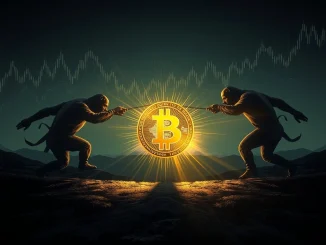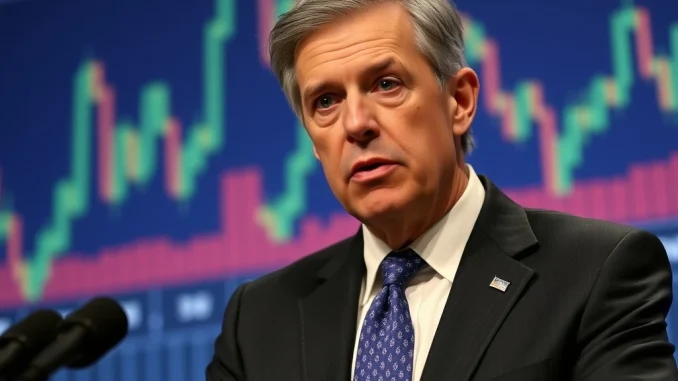
Federal Reserve Chairman Jerome Powell recently delivered a significant message. He stated that a December interest rate cut is not a certainty. This declaration immediately sent ripples across global financial markets. Crypto investors, in particular, pay close attention to such pronouncements. Macroeconomic shifts often dictate sentiment and liquidity within the digital asset space. Therefore, understanding the implications of Powell’s words is crucial for anyone navigating the crypto market impact.
Jerome Powell’s Stance on Monetary Policy
During a recent address, Jerome Powell underscored the Federal Reserve’s cautious approach. The central bank prioritizes stable prices and maximum employment. Currently, inflation remains a primary concern for policymakers. Powell indicated that the Fed would continue to monitor incoming economic data closely. This includes employment figures, consumer spending, and inflation reports. Therefore, any decision regarding interest rates will be data-dependent. He made it clear that premature easing could reignite inflationary pressures. This would undermine progress made so far.
Furthermore, Powell emphasized the need for sustained evidence. Policymakers seek clear signs that inflation is moving sustainably towards the 2% target. They do not want to act hastily. This measured stance reflects a commitment to long-term economic stability. However, it also introduces a degree of economic uncertainty for market participants. Investors must now recalibrate their expectations regarding the timing of potential rate adjustments.
The Federal Reserve’s Role in Global Economics
The Federal Reserve serves as the central bank of the United States. Its actions significantly influence global financial conditions. The Fed employs several tools to manage the economy. These include setting the federal funds rate, conducting open market operations, and regulating banks. Changes to the federal funds rate directly affect borrowing costs. Higher rates typically make it more expensive for businesses and consumers to borrow money. This can slow economic activity and curb inflation. Conversely, lower rates stimulate borrowing and spending. This boosts economic growth.
The Fed’s decisions impact asset prices worldwide. When the Fed raises rates, it often strengthens the U.S. dollar. This can make dollar-denominated assets more attractive. However, it can also reduce the appeal of riskier assets. This includes cryptocurrencies. Therefore, the Fed’s monetary policy is a critical determinant of market direction. Global investors constantly analyze its statements for clues about future economic conditions.
Understanding the Interest Rate Cut Delay
The prospect of a delayed interest rate cut stems from several factors. Recent economic data has shown resilience. The labor market, for instance, has remained surprisingly strong. Consumer spending has also held up better than anticipated. These indicators suggest the economy might not need immediate stimulus. Additionally, geopolitical events and supply chain issues continue to pose inflationary risks. The Fed must balance these complex dynamics. They aim to avoid both an overheating economy and an unnecessary recession. This careful balancing act makes forecasting future rate decisions challenging. Analysts now widely anticipate a ‘higher for longer’ rate environment. This implies that current elevated rates could persist for an extended period.
- Inflation Persistence: Core inflation remains above the Fed’s target.
- Strong Labor Market: Low unemployment supports consumer spending.
- Economic Resilience: Growth has exceeded expectations in recent quarters.
- Data Dependency: Future decisions hinge on evolving economic reports.
Crypto Market Impact and Investor Sentiment
The potential delay in an interest rate cut has significant implications for the crypto market. Cryptocurrencies are often considered risk assets. They tend to perform better in environments with ample liquidity and lower interest rates. When rates are high, investors may prefer less volatile, yield-bearing assets. Traditional safe havens like bonds become more attractive. This can divert capital away from digital assets. Consequently, a prolonged period of high rates might dampen crypto price appreciation. It could also lead to increased selling pressure. Investors seeking returns often shift their portfolios accordingly.
Furthermore, high interest rates increase the cost of capital for crypto projects. This affects venture funding and development. It also influences the profitability of mining operations. Therefore, the Fed’s policy directly shapes the investment landscape for digital currencies. Traders and long-term holders alike closely monitor these developments. They adjust their strategies based on evolving macroeconomic signals. The correlation between Fed policy and crypto performance has become increasingly evident. This highlights the growing maturity of the digital asset space.
Navigating Economic Uncertainty in Digital Assets
The current climate of economic uncertainty demands careful consideration from crypto investors. Volatility often increases during periods of policy ambiguity. This makes precise market timing difficult. Investors might consider diversifying their portfolios. They could also focus on projects with strong fundamentals and clear utility. These assets may demonstrate greater resilience. Bitcoin, for example, is sometimes viewed as a hedge against inflation. However, its performance also correlates with broader risk asset trends. This dual nature adds complexity to its role in a high-rate environment.
Moreover, monitoring global economic indicators is essential. These include GDP growth, employment data, and central bank communications from other major economies. Such factors collectively influence liquidity and investor appetite for risk. Staying informed helps investors make more strategic decisions. It allows them to adapt to changing market conditions effectively. The current environment underscores the interconnectedness of traditional finance and the nascent digital asset world.
The Path Ahead for the Federal Reserve and Markets
Looking forward, the Federal Reserve will likely maintain its data-dependent approach. Market participants will scrutinize every upcoming economic report. Key events include monthly inflation readings and employment surveys. Additionally, future statements from Jerome Powell and other Fed officials will be pivotal. These communications offer insights into the central bank’s evolving perspective. Any shift in tone or guidance could trigger significant market reactions. Investors should prepare for continued volatility. They must also remain agile in their investment strategies.
The global economic landscape remains complex. Factors such as geopolitical tensions and energy prices add further layers of complexity. These elements can influence inflation and growth trajectories. Consequently, the Fed’s path to achieving its dual mandate is not straightforward. The possibility of an interest rate cut in December has diminished. This means market participants must adjust their outlook. They should focus on long-term trends rather than short-term speculation. This prudent approach can help navigate the ongoing market dynamics.
Conclusion: Awaiting Further Clarity
Jerome Powell’s recent comments confirm a cautious stance from the Federal Reserve. A December interest rate cut is far from guaranteed. This introduces continued economic uncertainty across all financial sectors, including the dynamic crypto market. Investors must remain vigilant. They need to monitor economic data and Fed communications closely. Adapting investment strategies to reflect this ‘higher for longer’ rate environment is key. Ultimately, the Fed’s decisions will continue to shape the financial future. Prudent observation and informed decision-making will be essential for navigating the evolving landscape.
Frequently Asked Questions (FAQs)
Q1: What did Jerome Powell say about a December interest rate cut?
Jerome Powell stated that a December interest rate cut is not a certainty. He emphasized that future decisions will depend heavily on incoming economic data, particularly regarding inflation and employment.
Q2: How does the Federal Reserve’s policy affect the crypto market?
The Federal Reserve’s interest rate policy significantly impacts the crypto market. Higher interest rates typically reduce liquidity and make risk assets like cryptocurrencies less attractive. This can lead to decreased investment and price volatility in digital assets.
Q3: Why is the Federal Reserve being cautious about cutting rates?
The Federal Reserve is cautious because inflation remains above its 2% target. Premature rate cuts could cause inflation to rebound. The Fed aims for sustainable price stability and a strong labor market, requiring a data-dependent approach.
Q4: What should crypto investors monitor regarding Fed policy?
Crypto investors should monitor key economic indicators such as inflation reports (CPI, PCE), employment data (non-farm payrolls), and statements from Jerome Powell and other Federal Reserve officials. These provide clues about future interest rate decisions.
Q5: What is ‘economic uncertainty’ in the context of interest rates?
Economic uncertainty refers to the lack of clarity regarding future economic conditions, especially concerning inflation, growth, and monetary policy. For interest rates, it means investors are unsure when the Fed might cut or raise rates, making market forecasting challenging.
Q6: Will a delayed interest rate cut necessarily harm Bitcoin prices?
A delayed interest rate cut can create headwinds for Bitcoin and other cryptocurrencies by making traditional investments more appealing. However, Bitcoin’s long-term trajectory also depends on adoption, technological developments, and its role as a potential inflation hedge. The immediate impact is often negative, but long-term factors also play a role.