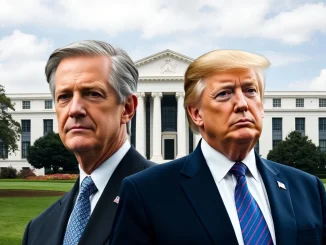
In a significant moment that captured the attention of financial markets and political observers alike, Federal Reserve Chair Jerome Powell definitively quashed rampant speculation regarding his resignation. This denial came amidst intense public pressure from the Trump Administration, particularly President Donald Trump himself, who had been vocal in his demands for aggressive interest rates cuts. For anyone tracking market movements, including the dynamic world of cryptocurrencies, Powell’s steadfastness signaled a critical commitment to the central bank’s autonomy, even as it underscored the deep-seated tension between political desires and independent monetary policy.
Jerome Powell’s Resolute Stand: Quashing the Rumors
The financial world was abuzz with rumors of Fed Chair Jerome Powell‘s impending departure. These whispers, fueled by repeated public criticism and unverified claims from President Trump and his allies, created a palpable sense of uncertainty. However, Powell met these speculations head-on, issuing a clear and unequivocal denial. His statement, emphasizing his dedication to the Federal Reserve’s independence and its data-driven approach to policymaking, was crucial. He stated that “recent rumors suggesting my resignation have no basis in fact,” a declaration that aimed to stabilize market sentiment and reinforce the Fed’s resolve. This resolute stance by Jerome Powell was not merely a personal denial; it was a powerful affirmation of the institution he leads, highlighting the importance of its insulation from short-term political demands.
Navigating the Federal Reserve’s Independence Amidst Political Storms
The core of the controversy lies in the statutory mandate of the Federal Reserve: to conduct monetary policy free from political influence. This independence is considered vital for long-term economic stability, allowing the Fed to make decisions based on economic data rather than political expediency. President Trump, however, has consistently challenged this principle, openly criticizing Powell for not lowering interest rates to his satisfaction. Trump’s pressure tactics, including a visit to the Fed’s headquarters, illustrated a rare public confrontation between a sitting president and the central bank. This standoff highlighted the delicate balance the Federal Reserve must maintain – upholding its dual mandate of maximum employment and price stability, while simultaneously fending off external pressures that could undermine its credibility.
The historical context of the Federal Reserve’s independence is critical to understanding this tension:
- Established Autonomy: The Fed was designed to operate independently to prevent monetary policy from being used for political gain, a lesson learned from past economic instabilities.
- Dual Mandate: Its primary goals are to foster maximum employment and maintain stable prices (low inflation), which sometimes require difficult decisions unpopular with politicians.
- Global Precedent: Many central banks worldwide strive for similar independence, recognizing its role in maintaining economic trust and stability.
The Battle Over Interest Rates: Trump’s Pressure vs. Powell’s Resolve
A central point of contention was President Trump’s insistent demand for lower interest rates. Trump argued that higher rates were stifling economic growth and offsetting the benefits of his proposed tariffs. He even went as far as criticizing the Fed’s $2.5 billion renovation project, suggesting it could be grounds for Powell’s removal. Despite this aggressive rhetoric, Jerome Powell and the Fed held firm, prioritizing their data-driven assessment of the economy over political expediency. Republican Senator Mike Rounds, who questioned Powell about stepping down, acknowledged the chair’s determination to serve his full term, which extends to May 2026. This unwavering commitment, despite significant pressure from the Trump Administration, underscored the Fed’s resolve to make policy decisions based on economic fundamentals rather than political timelines or desires.
Why are lower interest rates often desired by politicians?
Lower interest rates can stimulate economic activity by making borrowing cheaper for businesses and consumers. This can lead to increased investment, spending, and job creation, which are often popular outcomes during an election cycle. However, overly low rates can also lead to inflation or asset bubbles, risks the Fed aims to manage.
Monetary Policy Under Scrutiny: Balancing Stability and External Demands
The ongoing tension has intensified scrutiny of the Fed’s approach to monetary policy. Market observers emphasized the symbolic importance of Powell’s steadfastness in maintaining the central bank’s institutional credibility. His refusal to yield to political pressure was seen as a reinforcement of the Fed’s autonomy, yet it also highlighted the inherent challenges in balancing its dual mandate with external political demands. The absence of immediate rate cuts, despite widespread market expectations fueled by the administration’s rhetoric, raised questions about the Fed’s capacity to navigate conflicting signals. Powell’s adherence to a data-driven decision-making process has largely bolstered confidence in the central bank’s autonomy, but the prolonged political friction risks eroding public trust in both the Fed and the administration’s overall economic governance.
Key aspects of the Fed’s monetary policy framework:
- Data-Driven Decisions: The Fed relies on a wide array of economic indicators (employment, inflation, GDP) to guide its policy decisions.
- Forward Guidance: Communicating its future policy intentions to manage market expectations.
- Tools: Primarily uses the federal funds rate, quantitative easing/tightening, and reserve requirements to influence the economy.
The Trump Administration’s Strategy: A Shifting Stance?
Reports suggested that White House strategists had explored various plans to weaken Jerome Powell‘s position, though specific details remained unclear. Despite the initial aggressive stance, President Trump later hinted that he might not proceed with firing Powell. Allies of the administration framed Powell’s firm stance as a defense of the Fed’s apolitical role, perhaps a subtle shift in the administration’s public narrative. This evolving dynamic from the Trump Administration indicates the complex interplay between executive power and institutional independence. While the immediate crisis of a potential resignation was averted, the episode laid bare vulnerabilities in public communication regarding economic strategies, underscoring the need for clear, consistent messaging to sustain public and market confidence.
The Enduring Impact and Future Outlook
The standoff between the Trump Administration and the Federal Reserve reflects broader debates about the role of independent institutions in a democratic system. While Trump’s rhetoric underscored frustration with what he perceived as slow economic adjustments, the Fed’s cautious approach prioritizes long-term stability over short-term political gains. Jerome Powell‘s denial of resignation rumors not only quelled immediate speculation but also firmly reinforced the institution’s resolve to resist short-term political demands. Analysts warn that prolonged uncertainty could persist, especially with the 2026 elections on the horizon, as Powell’s leadership remains pivotal in shaping U.S. monetary policy. This episode serves as a powerful reminder of the enduring importance of central bank independence and the constant vigilance required to protect it from political pressures, ensuring that economic decisions serve the broader public interest rather than narrow political agendas.
Frequently Asked Questions (FAQs)
Q1: Why were there rumors about Jerome Powell’s resignation?
A1: Rumors about Jerome Powell’s resignation were primarily fueled by repeated public criticism and demands for aggressive interest rate cuts from President Donald Trump and his allies. Trump publicly expressed dissatisfaction with the Fed’s policies and even criticized its renovation project, leading to speculation about Powell’s future.
Q2: What is the core conflict between President Trump and the Federal Reserve?
A2: The core conflict stems from President Trump’s desire for the Federal Reserve to lower interest rates significantly to stimulate the economy and offset tariff impacts, clashing with the Fed’s mandate for independent, data-driven monetary policy focused on long-term price stability and maximum employment.
Q3: Why is the Federal Reserve’s independence important?
A3: The Federal Reserve’s independence is crucial because it allows the central bank to make monetary policy decisions based on economic data and long-term stability goals, free from short-term political pressures. This helps maintain public trust in the currency and prevents policy from being manipulated for political gain.
Q4: How might this tension impact U.S. monetary policy?
A4: While Jerome Powell’s denial reinforced the Fed’s independence, ongoing tension could increase scrutiny on its decisions and potentially erode public trust if not managed carefully. It highlights the challenge for the Fed to communicate its data-driven approach clearly amidst political noise, potentially leading to prolonged market uncertainty.
Q5: Did this situation affect cryptocurrency markets?
A5: The original report noted that despite heightened market speculation regarding Powell’s potential resignation and the broader tension, no immediate significant volatility was observed in major financial assets, including cryptocurrencies. However, prolonged macroeconomic uncertainty stemming from such conflicts can indirectly influence investor sentiment across all asset classes.
Q6: When does Jerome Powell’s term as Fed Chair expire?
A6: Jerome Powell’s current term as the Federal Reserve Chair is set to expire in May 2026. His commitment to serving through his full term was reaffirmed during the period of these rumors.