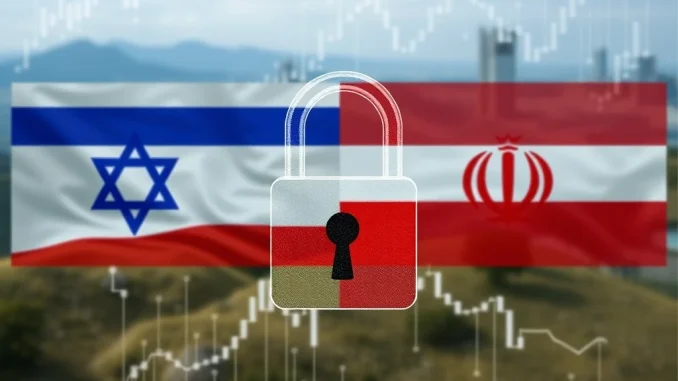
The cryptocurrency world recently faced a significant development. Israel’s National Bureau for Counter Terror Financing (NBCTF) called for a massive **Israel USDT seizure**. This unprecedented request targets 1.5 billion USDT, allegedly held by Iran’s Islamic Revolutionary Guard Corps (IRGC) across 187 distinct addresses. Consequently, this action immediately drew global attention. This move highlights the growing intersection of geopolitical tensions and the digital asset landscape. It also underscores the complex challenges in combating illicit finance within the crypto ecosystem.
Israel’s Urgent Call for USDT Seizure
The NBCTF’s announcement marks a critical escalation in Israel’s efforts against terror financing. They specifically identified 187 blockchain addresses. These addresses, according to Israeli authorities, contain 1.5 billion units of Tether (USDT). The authorities assert that these funds directly benefit the Islamic Revolutionary Guard Corps (IRGC). This entity is designated as a terrorist organization by several countries, including the United States and Israel. Therefore, the demand for this substantial **Israel USDT seizure** carries significant weight. It aims to disrupt the financial operations of a powerful state-sponsored military force. The sheer scale of the requested seizure is notable, reaching a staggering 1.5 billion dollars.
However, the definitive link between these addresses and the IRGC remains a subject of scrutiny. Blockchain data firm Elliptic, a respected authority in the field, expressed reservations. Elliptic stated it could not definitively confirm that all 187 addresses were indeed tied to the Iranian military. This discrepancy introduces a layer of complexity. It underscores the challenges in attributing ownership and activity on a pseudonymous blockchain. Furthermore, such an assertion requires robust, verifiable evidence to withstand international legal challenges. Consequently, the global financial community watches closely for further substantiation of these claims.
The Controversial Link to Iran Crypto Sanctions
This development unfolds against a backdrop of long-standing **Iran crypto sanctions**. The international community has imposed extensive sanctions on Iran. These measures aim to curb its nuclear program and support for various proxy groups. Traditionally, these sanctions targeted conventional banking channels. However, the rise of cryptocurrencies offers new avenues for bypassing such restrictions. The alleged use of USDT by the IRGC exemplifies this evolving challenge. Cryptocurrencies, by design, offer a degree of anonymity and borderless transactions. This makes them attractive to entities seeking to circumvent traditional financial controls. Therefore, the Israeli request points to a perceived loophole in the existing sanctions regime.
Iran has increasingly explored digital assets. Reports suggest the country uses cryptocurrencies for international trade and to mitigate the impact of sanctions. The IRGC, a powerful branch of the Iranian military, plays a significant role in the country’s economy. Allegations of its involvement in crypto transactions raise serious concerns. It suggests a sophisticated strategy to maintain financial fluidity despite international pressure. This situation also highlights the ongoing cat-and-mouse game between sanctioned entities and global financial watchdogs. Each side continuously adapts its methods. Thus, the current focus on **Iran crypto sanctions** extends into the digital realm.
Unpacking the IRGC USDT Allegations
The core of Israel’s claim revolves around the alleged **IRGC USDT** holdings. The Islamic Revolutionary Guard Corps is a key military, political, and economic force in Iran. It has faced numerous sanctions for its alleged involvement in terrorism and human rights abuses. If the allegations prove true, the IRGC’s use of USDT would signify a strategic shift. It indicates a move towards leveraging stablecoins for financial operations. Stablecoins like USDT are pegged to fiat currencies, typically the US dollar. This makes them less volatile than other cryptocurrencies. Consequently, they are suitable for large-scale transfers and value preservation. This makes them an attractive tool for entities like the IRGC.
However, proving the direct link between specific blockchain addresses and the IRGC presents a significant hurdle. Blockchain analytics firms employ sophisticated tools. They trace transactions and identify patterns. Yet, the pseudonymous nature of blockchain means that direct identification of individuals or organizations requires additional intelligence. Elliptic’s caution highlights this difficulty. They noted the complexity of establishing definitive attribution. Without irrefutable evidence, the seizure request faces considerable obstacles. This situation underscores the critical need for advanced forensic capabilities in the crypto space. It also emphasizes the importance of international cooperation in verifying such claims.
The Broader Implications of Tether Seizure
A successful **Tether seizure** of this magnitude would set a powerful precedent. Tether, the issuer of USDT, is a centralized entity. This means it has the technical capability to freeze assets on its network. Such an action would involve blacklisting the specified addresses. Once blacklisted, funds within those addresses become inaccessible and untransferable. Tether has previously cooperated with law enforcement requests to freeze funds. These instances usually involve smaller amounts linked to scams or hacks. However, a $1.5 billion seizure based on geopolitical and counter-terrorism claims is on a different scale entirely. This potential action raises questions about the balance between regulatory compliance and crypto’s decentralized ethos.
The ability of a centralized stablecoin issuer to freeze assets is a double-edged sword. On one hand, it provides a mechanism for combating illicit activities. This capability can enhance the legitimacy of stablecoins in the eyes of regulators. On the other hand, it introduces a point of control that some in the crypto community view with skepticism. They argue that it undermines the core principles of decentralization and censorship resistance. Furthermore, the decision to comply with such a request could have far-reaching implications for Tether’s global operations. It could influence how other nations view and interact with the stablecoin. Therefore, the outcome of this situation will undoubtedly shape the future of stablecoin regulation.
Combatting Crypto Terror Financing
The alleged **crypto terror financing** by the IRGC underscores a persistent challenge for global security. Governments worldwide are grappling with how to regulate cryptocurrencies. They seek to prevent their misuse by criminal organizations and terrorist groups. This incident serves as a stark reminder of the urgency of these efforts. International bodies like the Financial Action Task Force (FATF) have issued guidelines. These guidelines aim to help countries implement robust anti-money laundering (AML) and counter-terrorist financing (CTF) frameworks for virtual assets. The focus is on requiring Virtual Asset Service Providers (VASPs), including exchanges and stablecoin issuers, to adhere to these standards.
Regulators are increasingly demanding greater transparency and accountability from crypto firms. They push for strict Know Your Customer (KYC) procedures. These measures help identify users and monitor suspicious transactions. However, the global nature of cryptocurrencies means that a coordinated international approach is essential. Unregulated jurisdictions can become havens for illicit activities. This incident highlights the need for continued collaboration among nations. It also stresses the importance of sharing intelligence to effectively combat the use of digital assets for illegal purposes. Consequently, the debate around **crypto terror financing** will intensify, driving further regulatory scrutiny.
In conclusion, Israel’s call for a $1.5 billion **Israel USDT seizure** linked to Iran’s IRGC represents a pivotal moment. It exposes the ongoing struggle to control illicit finance in the digital age. While the definitive attribution of the funds remains contested, the implications are profound. This event will likely accelerate discussions around **Iran crypto sanctions** and the broader issue of **crypto terror financing**. The actions taken by Tether and international regulators in response will set important precedents. They will shape the future of stablecoin governance and the fight against financial crime in the blockchain era. The global community watches closely as this complex situation unfolds.
Frequently Asked Questions (FAQs)
1. What is USDT and why is it relevant to this situation?
USDT, or Tether, is the largest stablecoin by market capitalization. It is pegged to the US dollar. Its stability and liquidity make it a preferred medium for large transactions. This makes it attractive for both legitimate and illicit financial activities, including alleged **crypto terror financing**.
2. Who is the Islamic Revolutionary Guard Corps (IRGC)?
The IRGC is a major branch of Iran’s armed forces. Several countries, including Israel and the U.S., designate it as a terrorist organization. It wields significant political, military, and economic influence within Iran. The alleged **IRGC USDT** holdings are a key part of Israel’s claim.
3. Can Tether (USDT) actually be seized or frozen?
Yes, Tether, as a centralized issuer, has the technical capability to freeze USDT held at specific blockchain addresses. This is done by blacklisting those addresses. They have complied with law enforcement requests for **Tether seizure** in the past, primarily for funds linked to hacks or scams.
4. What challenges exist in linking crypto addresses to specific entities like the IRGC?
Blockchain transactions are pseudonymous. While transparent, identifying the real-world owners of addresses requires sophisticated blockchain analytics and intelligence. Firms like Elliptic often highlight the difficulty in definitively attributing ownership without additional, corroborating evidence. This is a central issue in the **Israel USDT seizure** claim.
5. How do governments generally combat the use of crypto for illicit activities?
Governments implement Anti-Money Laundering (AML) and Counter-Terrorist Financing (CTF) regulations. They require crypto exchanges and service providers to conduct Know Your Customer (KYC) checks. They also monitor transactions for suspicious patterns. International cooperation and intelligence sharing are also crucial in fighting **crypto terror financing**.
6. What are the potential broader implications of this alleged Israel USDT seizure?
This event could set a significant precedent for how stablecoins are regulated globally. It may intensify scrutiny on stablecoin issuers. It could also further integrate crypto into geopolitical conflicts. Furthermore, it might accelerate the development of more robust regulatory frameworks for digital assets worldwide.