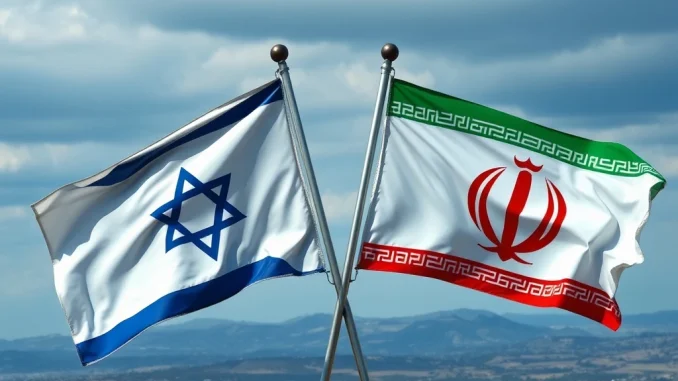
In the ever-interconnected world we inhabit, geopolitical tremors can send ripples far beyond their immediate epicenters, often impacting seemingly unrelated sectors like the cryptocurrency market. Recent statements from Israel’s defense minister regarding potential military action against Iran have reignited concerns about Israel Iran tensions in the Middle East. For crypto enthusiasts and investors, understanding these developments isn’t just about current affairs; it’s about anticipating shifts in global stability that could influence market sentiment and asset valuations.
The latest declaration comes from Israel’s Defense Minister, Israel Katz, who, according to a report by the Walter Bloomberg economic news account on X, has asserted that Israel will once again carry out military action against Iran if threatened. This isn’t just a casual remark; it’s a clear signal from a high-ranking official, indicating a potential escalation in an already volatile region. Such pronouncements often precede significant geopolitical shifts, making it crucial for global observers and market participants to pay close attention.
Understanding Israel Iran Tensions: A Deep Dive into the Historical Context
The relationship between Israel and Iran has been fraught with animosity for decades, evolving from a once-covert alliance into a fierce rivalry. This long-standing antagonism is rooted in a complex web of ideological differences, regional power struggles, and strategic objectives. Understanding the historical backdrop is key to grasping the gravity of current warnings.
- Ideological Divide: Following the 1979 Islamic Revolution in Iran, the new regime adopted an anti-Israel stance, viewing the state as an illegitimate entity and a Western outpost in the Muslim world.
- Regional Hegemony: Both nations vie for influence in the Middle East. Iran’s support for various proxy groups, such as Hezbollah in Lebanon and Houthi rebels in Yemen, is often seen by Israel as a direct threat to its borders and security.
- Nuclear Program: Iran’s nuclear ambitions are a primary concern for Israel, which views a nuclear-armed Iran as an existential threat. Israel has historically taken preemptive action against perceived nuclear threats in the region.
- Proxy Conflicts: Much of the direct confrontation occurs through proxy forces in Syria, Lebanon, and Gaza, where both nations support opposing factions. This allows for deniable actions but keeps the underlying tensions simmering.
The recent statement from Defense Minister Israel Katz underscores that this is not merely a war of words, but a strategic posture indicating readiness for kinetic responses if certain red lines are crossed. This makes the situation particularly delicate, as miscalculations can lead to rapid escalation.
The Critical Stakes of Middle East Conflict: Why Global Geopolitical Stability is Paramount
When we talk about potential military action in the Middle East, the implications extend far beyond the immediate combat zones. This region is a global crossroads, vital for energy supplies, trade routes, and international relations. A significant Middle East conflict could trigger a cascade of negative effects worldwide.
Why should this concern you, particularly if you’re invested in cryptocurrencies or global markets?
- Energy Market Volatility: The Middle East is home to a substantial portion of the world’s oil and natural gas reserves. Any disruption in production or transit routes can send energy prices soaring, impacting everything from manufacturing costs to consumer spending.
- Supply Chain Disruptions: Key shipping lanes, such as the Strait of Hormuz, are critical for global trade. Conflict could impede maritime traffic, leading to delays, increased shipping costs, and shortages of goods.
- Investor Confidence: Heightened geopolitical risk typically leads to a flight to safety, where investors pull money from riskier assets (like equities and cryptocurrencies) and move it into perceived safe havens like gold, the U.S. dollar, or government bonds.
- Humanitarian Crisis: Beyond economic impacts, any large-scale conflict would inevitably lead to immense human suffering, displacement, and a humanitarian crisis that demands international attention and resources.
Maintaining geopolitical stability in this region is therefore not just a regional concern but a global imperative. The ripple effects of instability can undermine economic growth and confidence across continents.
Assessing Iran Israel Military Posturing: Deterrence and Escalation Risks
The threat of renewed Iran Israel military action is not made lightly. Both nations possess formidable military capabilities, though their doctrines and strategic approaches differ significantly. Israel maintains a technologically advanced military with a focus on air superiority, intelligence gathering, and precision strikes. Iran, while possessing a large conventional force, also relies heavily on asymmetric warfare, missile technology, and a network of regional proxies.
The concept of deterrence is central to their strategic interactions. Each side aims to dissuade the other from taking aggressive action by threatening severe retaliation. However, this delicate balance can be easily disrupted by:
- Miscalculation: An action intended as a warning could be perceived as an act of aggression, leading to an unintended escalation.
- Proxy Provocations: Actions by non-state actors supported by either side could trigger a response that draws in the main powers.
- Domestic Pressures: Internal political or social pressures within either country could push leaders towards more aggressive stances.
The defense minister’s statement highlights a readiness to cross the threshold from deterrence to direct action if Israel’s security is directly threatened. This signifies a heightened state of alert and a lower tolerance for perceived provocations.
Navigating Market Volatility Amidst Middle East Conflict: Insights for Investors
For investors, particularly those in the dynamic world of digital assets, understanding how geopolitical events translate into market movements is critical. While cryptocurrencies often claim to be uncorrelated with traditional markets, major global crises tend to see a ‘risk-off’ sentiment that affects all asset classes, including crypto.
Here’s what investors should consider:
- Increased Volatility: News of escalating tensions can cause sharp price swings in both traditional stocks and cryptocurrencies. Bitcoin, often dubbed ‘digital gold,’ sometimes acts as a safe haven, but its correlation with tech stocks also means it can fall during broader market downturns.
- Impact on Commodities: Oil prices are the most direct beneficiaries of Middle East instability. Rising oil prices can fuel inflation, which in turn influences central bank policies and overall economic sentiment.
- Currency Fluctuations: The U.S. dollar often strengthens during times of global uncertainty as investors seek its stability, potentially impacting exchange rates and the cost of international transactions.
- Long-Term vs. Short-Term: While immediate reactions can be sharp, the long-term impact depends on the duration and scope of any conflict. Short, contained conflicts might have limited lasting effects, whereas prolonged engagements can fundamentally alter market landscapes.
Actionable insights for investors in times of heightened Israel Iran tensions include:
Stay informed, diversify your portfolio to mitigate risk, and avoid making impulsive decisions based on headlines. Understanding the macro environment helps in making more informed investment choices.
What Does This Mean for the Future of Regional Stability?
The pronouncement by Israel’s Defense Minister is a stark reminder of the fragile peace in the Middle East. While the immediate trigger for military action remains a ‘threat’ from Iran, the interpretation of what constitutes a threat can be broad. The situation calls for careful diplomatic engagement and de-escalation efforts from international actors.
The challenges to achieving lasting peace are immense, involving deep-seated historical grievances, proxy networks, and competing national interests. However, the global community has a vested interest in preventing a wider Middle East conflict, given its potential for catastrophic humanitarian and economic consequences.
In conclusion, the explicit warning from Israel’s Defense Minister regarding potential military action against Iran signals a critical juncture in the long-standing Israel Iran tensions. This development underscores the precarious nature of geopolitical stability in the Middle East and its profound implications for global markets, including the cryptocurrency sector. Investors and global citizens alike must remain vigilant, understanding that events in one part of the world can send powerful ripples across the entire interconnected system. The call for action is clear: watch, understand, and prepare for potential shifts in the global landscape.
Frequently Asked Questions (FAQs)
Q1: What exactly did Israel’s Defense Minister say about Iran?
Israel’s Defense Minister, Israel Katz, stated that if Iran threatens Israel, Israel will once again carry out military action against Iran. This statement was reported by the Walter Bloomberg economic news account on X.
Q2: Why are Israel and Iran in conflict?
The conflict between Israel and Iran is rooted in ideological differences stemming from Iran’s 1979 Islamic Revolution, regional power struggles, Iran’s nuclear program, and their support for opposing proxy groups across the Middle East.
Q3: How could escalating Israel Iran tensions affect global markets?
Escalating tensions could lead to increased volatility in global markets, higher oil prices due to potential disruptions in energy supplies, and a general ‘risk-off’ sentiment where investors move away from riskier assets like stocks and cryptocurrencies towards safer havens.
Q4: What is the significance of the ‘Walter Bloomberg economic news account’ in this context?
The Walter Bloomberg economic news account on X (formerly Twitter) is a widely followed source for rapid, real-time economic and geopolitical news. Its reporting of the Defense Minister’s statement indicates that the information is considered significant and impactful enough to be shared quickly with a broad financial audience.
Q5: What are the primary concerns for Israel regarding Iran’s actions?
Israel’s primary concerns include Iran’s nuclear program, which it views as an existential threat, and Iran’s extensive network of proxy forces in the region (like Hezbollah), which are seen as direct security challenges to Israel’s borders and stability.