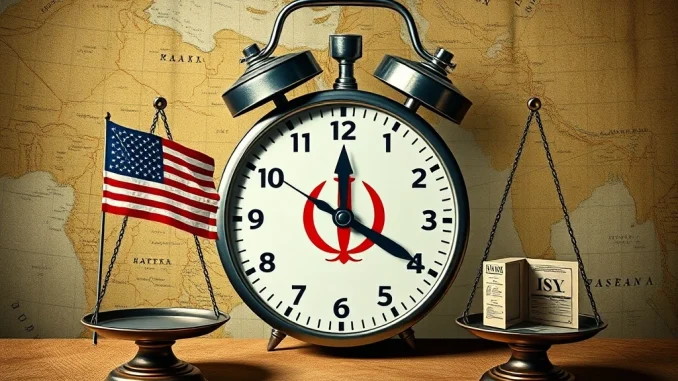
In a world where digital assets often react to the slightest tremor, a critical deadline involving Iran sanctions is now casting a long shadow over global stability. While cryptocurrency markets might seem detached from traditional geopolitics, major international developments can send powerful ripple effects across all financial sectors, including the volatile realm of digital currencies. The latest news, as reported by Axios, reveals a significant pivot in international diplomacy: the United States and its key allies have reportedly agreed to impose a strict August deadline for ongoing nuclear negotiations with Iran. Failure to reach a final agreement by this time could trigger severe new sanctions, fundamentally altering the global economic and political landscape. For anyone tracking market movements, understanding these high-stakes geopolitical plays is crucial.
Why is the Iran Sanctions Deadline So Critical?
The core of the issue revolves around Iran’s nuclear program, which has been a source of international concern for decades. The international community, led by the US and its allies, seeks to prevent Iran from developing nuclear weapons capabilities. Iran, on the other hand, maintains its program is for peaceful energy purposes. This August deadline represents a significant escalation in diplomatic pressure, aiming to force a resolution to a protracted standoff. It’s a make-or-break moment that could either pave the way for a new era of stability or plunge the region into deeper uncertainty.
The reported agreement among the US and its major allies signals a unified front. This concerted effort emphasizes the seriousness with which these nations view the potential threat. Setting a firm deadline suggests a shift from open-ended discussions to a more decisive approach, driven by a desire to achieve concrete results and prevent further proliferation risks.
Unpacking the Nuclear Negotiations: What’s Truly at Stake?
The current nuclear negotiations are a continuation of complex diplomatic efforts that have spanned years, most notably encapsulated in the 2015 Joint Comprehensive Plan of Action (JCPOA), often referred to as the Iran nuclear deal. This agreement aimed to limit Iran’s nuclear activities in exchange for sanctions relief. However, the US withdrew from the JCPOA in 2018, reimposing sanctions and leading to Iran gradually rolling back its commitments.
What’s at stake in these renewed talks is nothing less than regional stability and global non-proliferation efforts. A successful agreement would ideally:
- Prevent Nuclear Proliferation: Ensure Iran’s nuclear program remains exclusively peaceful, with robust international oversight.
- De-escalate Tensions: Reduce the risk of military conflict in the Middle East, a region already prone to volatility.
- Stabilize Energy Markets: A resolution could potentially bring Iranian oil back to global markets more freely, impacting prices.
- Foster Diplomacy: Demonstrate that complex international disputes can be resolved through negotiation rather than confrontation.
Conversely, a failure to reach an agreement could lead to a dangerous escalation, with unpredictable consequences for global security and markets.
How Do US Iran Relations Shape Global Dynamics?
The relationship between the US Iran relations has been fraught with tension for over four decades, marked by periods of diplomatic engagement, proxy conflicts, and economic pressure. This long history of mistrust and animosity deeply influences the current negotiations. From the US perspective, Iran’s regional actions, support for various non-state actors, and missile program are significant concerns, intertwined with the nuclear issue.
For Iran, the narrative often centers on sovereignty, resistance to external pressure, and the right to develop its nuclear program for peaceful purposes. The perception of US sanctions as economic warfare further complicates any diplomatic breakthroughs. The interplay of these deeply entrenched positions makes finding common ground incredibly challenging, yet absolutely essential for broader global stability.
The dynamics of this relationship extend beyond the two countries, impacting allies and adversaries alike, influencing regional power balances, and shaping global energy politics. Every step taken, or not taken, in these negotiations sends ripples across the international stage.
What Economic Pressure Tools Are on the Table?
The threat of ‘strong sanctions’ is the primary leverage being used by the US and its allies. Economic pressure has historically been a powerful tool in international diplomacy, aiming to compel behavioral changes by imposing significant costs. For Iran, sanctions have severely impacted its oil exports, banking sector, and access to international financial systems, leading to economic hardship for its citizens.
If the August deadline passes without an agreement, the international community could implement a range of new or enhanced sanctions. These might include:
- Oil Embargoes: Further restricting Iran’s ability to sell crude oil, its primary source of revenue.
- Financial Sanctions: Cutting off Iranian banks from the global SWIFT system, making international transactions nearly impossible.
- Shipping and Port Restrictions: Limiting Iran’s ability to import and export goods.
- Targeted Sanctions: Aimed at specific individuals, entities, or sectors involved in Iran’s nuclear or missile programs.
- Secondary Sanctions: Penalizing third-country entities or individuals who conduct business with sanctioned Iranian entities, effectively forcing other nations to choose between doing business with Iran or with the US and its allies.
Here’s a simplified look at potential sanction types and their historical impacts:
| Sanction Type | Description | Potential Impact on Iran |
|---|---|---|
| Oil Embargo | Restrictions on buying Iran’s crude oil. | Significant reduction in state revenue, budget deficits. |
| Financial Sanctions | Blocking access to international banking systems (e.g., SWIFT). | Difficulty in international trade, inflation, currency depreciation. |
| Arms Embargo | Prohibition on sale or transfer of weapons to Iran. | Limits military modernization and defense capabilities. |
| Targeted Sanctions | Freezing assets or travel bans on specific individuals/entities. | Disruption of specific programs, pressure on decision-makers. |
The aim of these measures is to create enough economic pain to force a change in Iran’s nuclear policy. However, sanctions can also have unintended consequences, such as fueling anti-Western sentiment or strengthening hardline factions within Iran.
Could Geopolitical Tensions Impact Your Portfolio?
The answer is a resounding yes. Major geopolitical tensions, particularly those involving key energy producers like Iran, can send shockwaves through global markets. When uncertainty rises, investors often seek safer assets, leading to shifts in capital flows. Here’s how potential escalation could affect various markets:
- Oil Prices: Iran is a major oil producer. Any disruption to its output or threats to shipping lanes in the Persian Gulf could cause oil prices to spike, impacting energy costs worldwide.
- Stock Markets: Increased geopolitical risk can lead to market volatility, with investors pulling out of riskier assets and causing stock market indices to decline.
- Gold and Safe Havens: Gold, and to some extent, cryptocurrencies like Bitcoin, are often seen as safe-haven assets during times of geopolitical instability. Demand for these could increase, potentially driving up their value. However, a broader market downturn could also pull crypto prices down.
- Supply Chains: New sanctions or regional instability could disrupt global supply chains, affecting trade and manufacturing.
- Inflation: Higher energy costs and supply chain disruptions can contribute to inflation, impacting consumer purchasing power.
For cryptocurrency enthusiasts, it’s important to recognize that while digital assets offer decentralization, they are not entirely immune to global economic shifts. A significant downturn in traditional markets due to geopolitical events can often drag crypto down with it, especially as institutional adoption grows and crypto becomes more integrated with the broader financial system. Conversely, in extreme cases of traditional financial system instability, some might view crypto as a hedge, though this correlation is complex and not always consistent.
Challenges and the Road Ahead
The path to a final agreement by the August deadline is fraught with challenges. Both sides hold firm positions, and trust is in short supply. Key sticking points likely include the scope of Iran’s uranium enrichment, the timeline for sanctions relief, and the verification mechanisms for compliance.
Moreover, domestic political considerations in both the US and Iran, as well as the varying interests of other international players (like China, Russia, and European allies), add layers of complexity. The stakes are incredibly high, not just for the involved nations but for the entire global community.
Actionable Insights for the Informed Citizen
While you may not directly influence the negotiations, staying informed about these developments is an actionable insight in itself. Understanding the macro-economic and geopolitical forces at play can help you:
- Assess Market Risk: Be aware of potential volatility in traditional and crypto markets.
- Contextualize News: Distinguish between speculation and verified reports regarding international relations.
- Understand Global Interconnectedness: Recognize how events in one part of the world can have far-reaching consequences everywhere.
This situation is a stark reminder that even in a digital age, traditional geopolitical power plays remain profoundly impactful.
Conclusion: A Deadline with Global Ramifications
The reported August deadline for Iran sanctions and nuclear negotiations marks a pivotal moment in international relations. The decision by the US and its major allies to impose such a firm timeline underscores the urgency and gravity of the situation. Whether this diplomatic pressure will lead to a breakthrough agreement or trigger a new phase of heightened tensions and economic measures remains to be seen. The outcomes will undoubtedly shape the geopolitical landscape, influence global energy markets, and send significant signals across financial systems, including the ever-evolving world of cryptocurrency. As the clock ticks towards August, the world watches with bated breath, hoping for a peaceful resolution but preparing for potential fallout.
Frequently Asked Questions (FAQs)
Q1: What is the core issue with Iran’s nuclear program?
The core issue is the international community’s concern that Iran’s nuclear program, particularly its uranium enrichment capabilities, could be diverted from peaceful purposes to develop nuclear weapons. Iran maintains its program is for civilian energy generation.
Q2: Who are the “major allies” involved in setting this deadline?
While Axios did not specify all allies, traditionally, the P5+1 group (United States, United Kingdom, France, Germany, Russia, and China) have been involved in nuclear negotiations with Iran, alongside the European Union. The “major allies” likely refer to key Western powers aligned with the US stance.
Q3: What kind of sanctions are being considered if no agreement is reached?
If no agreement is reached, “strong sanctions” could include further restrictions on Iran’s oil exports, stricter financial sanctions cutting off its access to international banking, and potentially targeted sanctions on specific individuals or entities involved in its nuclear or military programs.
Q4: How could this situation affect global markets, including cryptocurrencies?
Increased geopolitical tensions and new sanctions could lead to spikes in oil prices, volatility in stock markets, and disruptions to global supply chains. For cryptocurrencies, while sometimes seen as a hedge, they are increasingly correlated with broader market sentiment. A significant downturn in traditional markets due to such events could also impact crypto prices.
Q5: What was the JCPOA, and how does it relate to current negotiations?
The JCPOA (Joint Comprehensive Plan of Action), or Iran nuclear deal, was a 2015 agreement between Iran and several world powers. It aimed to limit Iran’s nuclear activities in exchange for sanctions relief. The current negotiations are largely an attempt to revive or create a new agreement after the US withdrew from the JCPOA in 2018.
Q6: What are the potential outcomes if no agreement is reached by the deadline?
If no agreement is reached, potential outcomes include the imposition of new, stronger sanctions on Iran, increased regional instability, a heightened risk of military escalation, and a more pronounced nuclear proliferation crisis. This could lead to significant economic and political repercussions globally.